Queen of Tears Female Lead: Yin Earth Energy in Saju
Why does Hong Hae-in in Queen of Tears feel so unmistakably Yin Earth? A Saju breakdown of her energy, pride, and why she fights for her marriage.
Why Hong Hae-in Feels Like Pure Yin Earth Energy (A Saju Reading of Queen of Tears)
If you watched Queen of Tears and found yourself equal parts annoyed and completely obsessed with Hong Hae-in, you are not alone. There is something about her that feels deeply familiar to anyone who has studied Saju. The cold exterior. The inability to ask for help. The way she holds her marriage together through sheer will and dignity instead of just saying "I love you." That is not just good writing. That is textbook Yin Earth (己土) energy, and the moment I started watching this drama, I could not stop seeing it everywhere in her character.
If you want to explore your own elemental energy before we get into Hae-in's chart breakdown, grab a free reading and see which element dominates your Four Pillars.
What Is Yin Earth Energy in Korean Astrology?
In Saju (사주), the Five Elements (오행 Ohaeng) are not static symbols. They are living, moving energies. And Earth (土) has a very specific quality that most people get wrong.
Earth's movement is centering and settling. It is the element of transitions, late summer, the pause between seasons. It is not dramatic like Fire or cutting like Metal. Earth is the ground beneath everything. Stable, reliable, and quietly load-bearing in a way nobody notices until it shifts.
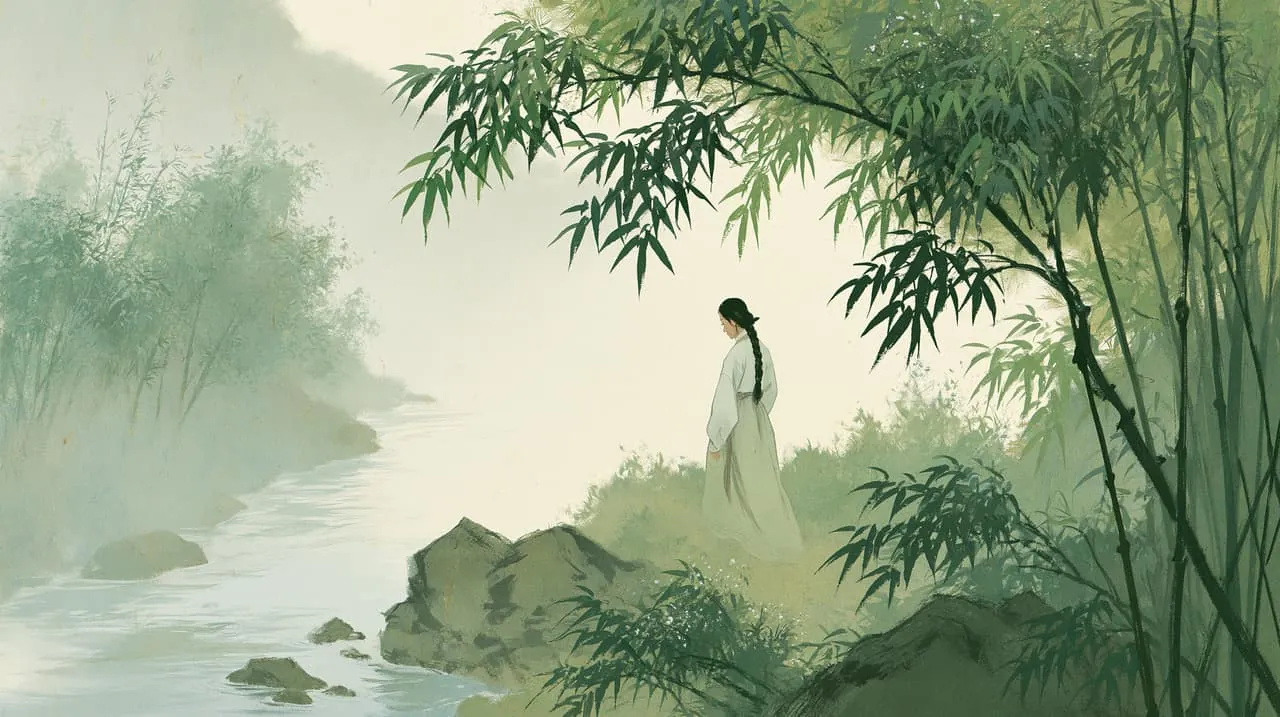
Yin Earth specifically, the stem 己 (Ji), is like cultivated soil. Rich farmland. It is soft on the surface but incredibly dense underneath. And that is Hae-in to her core.
She is not a Yang Earth mountain (戊土), all visible strength and imposing presence. She is the quiet field that looks gentle but has been compacted over years of pressure. You do not realize how immovable she is until you try to push her.
The Provider Archetype: Why Hae-in Cannot Just Walk Away
Here is the thing about Earth energy people in Saju. Their core emotional architecture is built around being relied on. The provider archetype runs so deep that walking away from a commitment, even a painful one, feels like a fundamental identity collapse.
Earth is fed by stability, by being needed, by consistency. It is drained by constant change and by being forced to choose sides between two conflicting realities. Sound familiar? The entire first half of Queen of Tears is Hae-in being forced to hold two truths at once: she knows her husband wants to leave, and she refuses to let that be real yet.
That is not denial in the psychological-crisis sense. That is Earth energy processing. Earth does not move fast. It settles. It weighs. And when it finally acts, that action is permanent.
I have seen this exact pattern in so many Earth Day Master clients, the ones who stay in situations longer than anyone else thinks they should, not because they lack self-respect, but because their internal timeline operates differently. They are not slow. They are thorough.
Pride vs. Love: The Real Yin Earth Emotional Pattern
This is where it gets interesting, and honestly, this is one of the most misunderstood things about Earth energy in Korean astrology.
Earth's core emotion is worry (憂). Not fear, not grief, not anger. Worry. That constant low-grade awareness of what could fall apart if you stop holding it together.
For Hae-in, her marriage is not just a relationship. It is a structure she has built her identity around. Losing it would not just mean losing Hyun-woo. It would mean the entire load-bearing wall of who she is comes down with it.
So she fights for the marriage through pride because pride, for Earth energy, is actually a form of love. It is the refusal to let the structure fail. It is the "I will not let this collapse on my watch" energy that looks cold from the outside but is desperately, quietly devoted on the inside.
The controlling cycle in Saju (상극) tells us that Wood controls Earth, breaks into it, disrupts it. Hyun-woo's character has that restless, upward-moving quality that keeps destabilizing her center. And yet, even in the controlling relationship, Earth does not disappear. It absorbs. It takes the impact and stays.
Her Relationship Dynamic and What Saju Says About Attraction
Hae-in and Hyun-woo's push-pull chemistry makes complete sense through a Saju lens. The pairing of Earth and Wood creates what we call the Builder Pair. Wood brings vision, direction, momentum. Earth brings stability, containment, longevity.
The risk in this pairing? Wood bulldozes boundaries. Wood's energy, always rising and expanding, can override Earth's careful boundaries without even meaning to. Hyun-woo literally planned to leave her. He made a whole secret life around his exit strategy. That is Wood energy run unchecked, pushing through walls that Earth built for good reasons.
But here is what the drama gets right: Earth does not just get bulldozed and disappear. Earth redirects. Earth compresses that pressure into something dense and powerful. By the end, it is not Wood running the show anymore.
If you are fascinated by how these elemental dynamics play out in real relationships, the Saju love reading goes deep on exactly this kind of compatibility pattern.
The 12 Life Stages and Hae-in's Arc
One more layer I cannot skip. In Saju, we use 12 Life Stages to read the quality of energy someone is moving through, not as fixed fate, but as an energy phase.
Hae-in's arc in Queen of Tears maps almost perfectly onto what we call the Decline to Death phase transition (쇠 to 사). Decline is when wisdom starts replacing force. You stop being able to win through sheer dominance and start having to adapt. Death in Saju is NOT doom. It is the stage of letting go, of dormancy before transformation.
Her illness, her memory loss, her gradual softening, none of that is weakness in the Saju framework. It is the Death stage doing its work. Stripping away what was held through ego so something more genuine can take root underneath.
And then Renewal comes. That Conception spark (태). The moment where the drama pivots and you finally see real love instead of pride holding the marriage together.
That arc is so elegantly Yin Earth it almost feels like the writers had a Saju practitioner in the writers' room.
Why This Character Resonates So Deeply
Characters like Hae-in hit differently because they represent something real about how certain people love. Not loudly. Not easily. Not by saying the right thing at the right moment. But by refusing, on an almost cellular level, to let something precious fall apart.
Earth energy people often get labeled as cold, proud, or emotionally unavailable. And sometimes that is fair. But what is actually happening underneath is a depth of commitment that most people cannot sustain. The worry. The quiet holding. The "I will carry this even when it breaks me" quality.
That is Yin Earth love. It does not look like a rom-com. It looks like Queen of Tears.
Frequently Asked Questions
What Saju element does Hong Hae-in from Queen of Tears represent?
Hong Hae-in most strongly represents Yin Earth (己土) energy based on her personality patterns: her centering role in relationships, her provider archetype, her emotional pattern of worry, and her tendency to maintain stability through will rather than open emotional expression. In Saju, the Day Master (일간 Ilgan) determines core identity, and Hae-in's character behavior aligns closely with a 己土 Day Master.
Why does Hae-in hold her marriage together through pride instead of love in Queen of Tears?
From a Saju perspective, this comes from Earth energy's core emotional driver: worry about structural collapse. Earth element people, especially Yin Earth, build identity around being relied upon and maintaining stability. For Hae-in, the marriage represents a foundational structure. Defending it through pride is actually how Yin Earth expresses devotion. It is not the absence of love. It is love expressed through refusal to let things fall apart.
What is Yin Earth (己土) in Korean astrology?
Yin Earth (己土) is one of the ten Heavenly Stems in Saju (Four Pillars of Destiny). It represents cultivated soil, farmland, the quiet but dense earth that sustains growth without being dramatic about it. Yin Earth people tend to be providers, emotionally steady, slow to trust but deeply loyal. They are fed by consistency and being needed, and they struggle with constant change or being forced into emotional chaos.
What does the Earth and Wood pairing mean in Saju compatibility?
Earth and Wood form what is called the Builder Pair in Saju relationship analysis. Wood brings vision and upward movement, Earth brings stability and containment. The productive tension between them can create something lasting, but the risk is that Wood's expansive nature keeps pushing past Earth's carefully maintained boundaries. The controlling cycle (상극) shows Wood breaking into Earth, which creates friction but also drives growth when managed well.
Ready to find out your own Day Master and what it says about the way you love, work, and hold things together?
Discover Your Destiny
Curious about your own chart?
Get a free mini reading, then unlock your full Four Pillars report from a certified Saju master.