BTS Members Saju Compatibility: All 7 Day Masters, Ranked by Elemental Fit
Which BTS member has the strongest saju chart? We analyzed all 7 Day Masters using Korean Four Pillars astrology. See their elements, pillar strength, and compatibility map.
BTS saju compatibility is an unusual case study in Korean Four Pillars astrology: seven people who have worked together for over a decade, each with a distinct elemental makeup that complements the others. We analyzed all seven BTS saju charts using authentic Four Pillars astrology methodology. This is a creative-collaboration analysis built on each member's verified birth data, not a romantic shipping post. We're looking at how their elemental makeup interacts from a saju reading perspective. Think of it as the energetic chemistry that shapes how seven different personalities create together, lead together, and balance each other on stage and off.

Photo: Adam Schultz, White House, via Wikimedia Commons (Public Domain)
How Saju Compatibility Actually Works
Saju (사주명리학), or Four Pillars astrology, maps your life using four pillars: Year, Month, Day, and Hour. Each pillar has a Heavenly Stem (천간) and an Earthly Branch (지지). Your Day Master (일간) is the Heavenly Stem of your Day Pillar. It represents your core self.
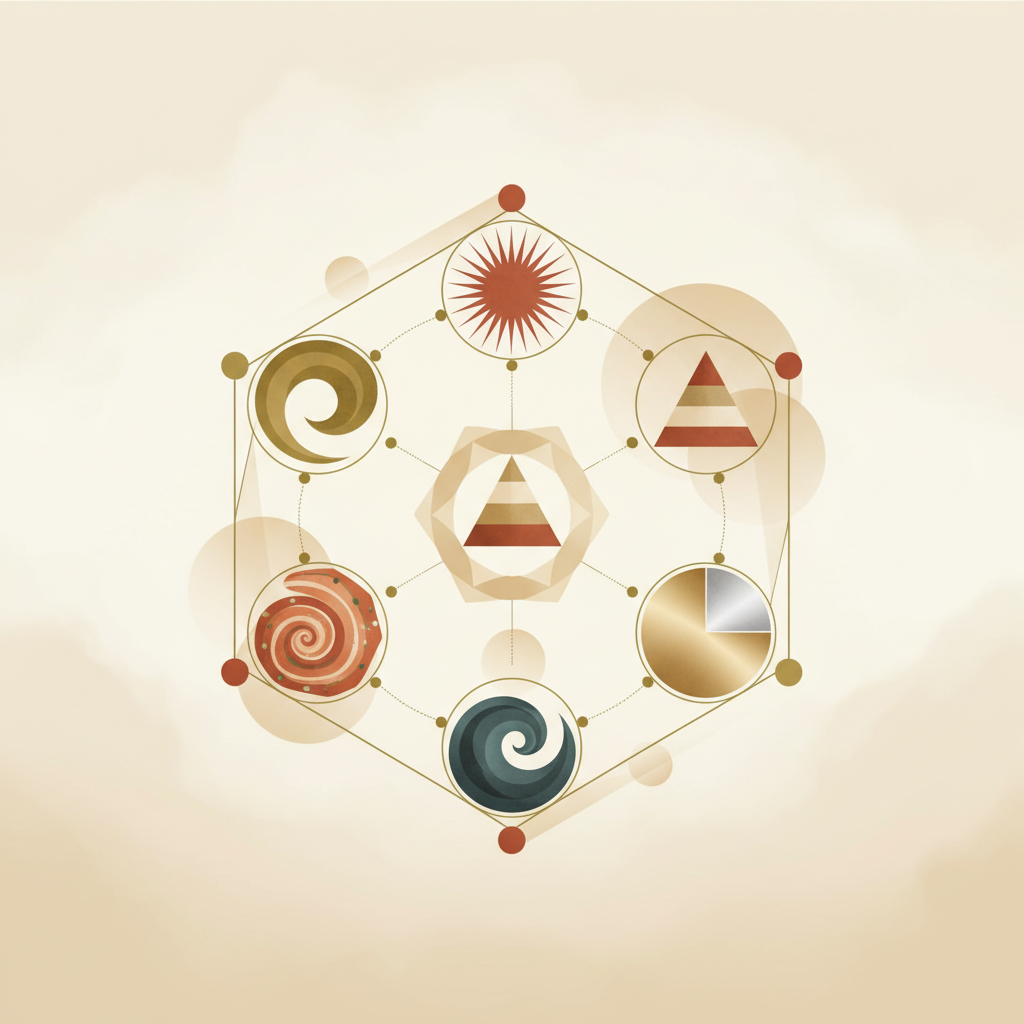
Saju compatibility works by comparing the Five Elements (오행) between two charts: Wood, Fire, Earth, Metal, Water. Elements can generate each other (Wood feeds Fire, Fire creates Earth, Earth births Metal, Metal enriches Water, Water nourishes Wood) or control each other (Wood parts Earth, Earth dams Water, Water quenches Fire, Fire melts Metal, Metal cuts Wood). When two people's elements harmonize through the generating cycle, they support each other naturally. When they interact through the controlling cycle, one balances or challenges the other.
Pillar strength (신강 means strong, 신약 means weak, 중 means moderate) tells us whether someone has abundant personal resources or needs external support. Strong pillars tend to lead. Weak pillars adapt. Saju reading compatibility analysis starts with the Day Master comparison, then maps the elemental generating and controlling cycles between the two charts. It isn't about romantic destiny. It's about how energies mesh in creative collaboration, leadership dynamics, and group flow.
The 7 BTS Day Masters at a Glance
Here is the complete BTS saju compatibility overview, showing each member's Day Master, pillar strength, and elemental dominance at a glance.
| Member | Day Master | Element | Pillar Strength | Dominant Element | Hook |
|---|---|---|---|---|---|
| Jin | 甲 (Yang Wood) | Wood | 신강 (Strong) | Metal (3) | Rooted leader with sharp support |
| SUGA | 己 (Yin Earth) | Earth | 중신약 (Moderate-Weak) | Earth (4) | Grounded stabilizer, quietly centered |
| j-hope | 乙 (Yin Wood) | Wood | 신강 (Strong) | Wood (3) | Bright growth energy, fiery spark |
| RM | 辛 (Yin Metal) | Metal | 신강 (Strong) | Earth (2), Metal (2) | Precision thinker, balanced core |
| Jimin | 丁 (Yin Fire) | Fire | 극신약 (Extremely Weak) | Earth (2), Fire (2), Water (2) | Soft flame needing fuel, deeply receptive |
| V | 乙 (Yin Wood) | Wood | 신강 (Strong) | Wood (3), Earth (3) | Creative wood rooted in earth, no Metal |
| Jung Kook | 丙 (Yang Fire) | Fire | 중신약 (Moderate-Weak) | Earth (4), Fire (3) | Bright blaze grounded in earth, no Water |
Five Elements Distribution Across BTS
Add up all four pillars across all seven members and here's what you get:
- Wood: 13
- Fire: 8
- Earth: 17 (dominant)
- Metal: 9
- Water: 9
Earth is the group's foundation. With 17 Earth placements, BTS has structural stability baked into their creative DNA. Earth represents grounding, reliability, the ability to build something that lasts. It's no accident that this group has sustained a decade-long career without major internal fractures.
Wood comes in second at 13. Wood is growth, creativity, flexibility. Three members are Wood Day Masters (Jin, j-hope, V). Wood needs water to thrive and fire to express, and the group has both in moderate amounts.
Fire sits at 8, carried primarily by Jimin and Jung Kook (the two Fire Day Masters) plus j-hope's pillar fire. Fire is passion, visibility, the performer's spark. Eight is enough to light up a stage without burning out.
Metal and Water are tied at 9 each. Metal brings precision and structure (RM is the sole Metal Day Master). Water offers depth and intuition. The balance here suggests the group can adapt (Water) while maintaining sharp execution (Metal).
What's missing? V has zero Metal. Jung Kook has zero Water. Jin, SUGA, and V have zero Fire in their individual charts. These gaps matter for saju compatibility because members fill each other's missing pieces.
BTS Saju Compatibility Map
Let's break down key pairings by elemental interaction. This is creative saju reading compatibility, not romantic.
Jin (Yang Wood 甲) and SUGA (Yin Earth 己): Wood controls Earth in the Five Elements cycle. Jin's Yang Wood energy naturally parts SUGA's Yin Earth. In saju compatibility terms, this can create tension or dynamic balance. SUGA's chart is Earth-dominant (4 Earth), which gives him the stability to absorb Jin's strong Wood leadership without destabilizing. Jin's Metal-heavy chart (3 Metal) also feeds into structure, suggesting he respects the boundaries SUGA sets. This pairing likely works as a push-pull: Jin initiates, SUGA grounds.
j-hope (Yin Wood 乙) and RM (Yin Metal 辛): Metal controls Wood, but both are Yin and both are 신강 (strong pillar). RM's Yin Metal cuts with precision, not aggression. j-hope's Yin Wood bends rather than breaks. The saju compatibility here is complementary: RM provides the sharp editing mind, j-hope provides the creative flex. j-hope has Fire in his chart (2 Fire), which can melt Metal, giving him a way to soften RM's edge when needed. RM has balanced Earth and Metal, so he doesn't over-control. This is a classic producer-artist dynamic in elemental form.
Jimin (Yin Fire 丁) and Jung Kook (Yang Fire 丙): Both are Fire Day Masters, but their charts tell different stories. Jimin is 극신약 (extremely weak pillar), meaning his Fire lacks fuel. Jung Kook is 중신약 (moderate-weak) but has 3 Fire placements total, plus 4 Earth. In the generating cycle, Wood feeds Fire and Fire creates Earth. Jimin has only 1 Wood, Jung Kook has 0 Wood. But Jung Kook's Earth-heavy chart can absorb and contain Jimin's softer flame. The saju reading compatibility here is stabilizing: Jung Kook's grounded Fire gives Jimin a steady base. They share the same element, which creates natural understanding, but their strength gap means Jung Kook likely anchors while Jimin adapts.
V (Yin Wood 乙) and Jung Kook (Yang Fire 丙): Wood generates Fire. V's 3 Wood placements can fuel Jung Kook's 3 Fire. This is one of the cleanest generating-cycle pairings in the group. V's chart has zero Metal, so there's nothing cutting his Wood growth. Jung Kook's chart has zero Water, so V's Wood-Water combination (2 Water in his chart) can offer the fluid creativity Jung Kook lacks. In saju compatibility terms, V supports Jung Kook's visibility and output naturally. Jung Kook's Earth-heavy chart (4 Earth) also gives V the stable ground his Wood needs to root. This is mutual nourishment.
RM (Yin Metal 辛) and SUGA (Yin Earth 己): Earth generates Metal in the Five Elements cycle. SUGA's Earth-dominant chart (4 Earth) is a natural resource for RM's Yin Metal (2 Metal in RM's chart). This is textbook saju reading compatibility through the generating cycle. SUGA provides the stable foundation, RM refines it into sharp ideas. Both have moderate-to-strong pillars and both are Yin energy, so the collaboration is likely steady rather than flashy. RM's chart has more elemental variety (all five elements present), while SUGA's leans Earth-heavy, so RM might bring breadth while SUGA brings depth.
Jin (Yang Wood 甲) and j-hope (Yin Wood 乙): Same element, different expression. Jin is Yang Wood (tall tree, visible structure), j-hope is Yin Wood (flexible vine, adaptable growth). Both are 신강 (strong pillar). Jin's chart has 3 Metal, j-hope's has only 1 Metal, so Jin has more external sharpness. j-hope has 2 Fire, Jin has 0 Fire, so j-hope brings the warmth and performer spark Jin's chart lacks. The saju compatibility here is complementary Wood: they understand each other's growth-oriented nature but express it differently. Jin likely leads with structure, j-hope leads with energy.
One note: this is element-level saju compatibility analysis for creative collaboration. We're not endorsing or invalidating any personal dynamic. These are patterns, not predictions.
Strongest Saju Compatibility Patterns in the Group
Three clear patterns emerge when you map saju reading compatibility across all seven charts.
Pattern 1: The Earth Anchors (SUGA, Jung Kook). Both have 4 Earth in their charts. Earth is the group's dominant element overall (17 total), and these two carry the bulk of it. In saju compatibility terms, they're the stabilizers. Everyone else's energy, whether Wood growth or Fire performance or Metal precision, has a ground to land on because of this Earth base.
Pattern 2: The Wood Trio (Jin, j-hope, V). Three Wood Day Masters in one group is rare. Wood is creativity, growth, flexibility. All three are 신강 (strong pillar), meaning they have the resources to initiate and lead. But their charts differ in what supports their Wood. Jin has Metal structure, j-hope has Fire expression, V has Earth stability and Water depth. In saju reading compatibility, the Wood Trio likely shares a creative wavelength but brings different tools to the table.
Pattern 3: The Missing-Element Fill-Ins. V has no Metal, so Jin (3 Metal) and RM (2 Metal) can offer him structure and editing. Jung Kook has no Water, so Jin (2 Water), SUGA (1 Water), j-hope (1 Water), RM (1 Water), Jimin (2 Water), and V (2 Water) collectively provide the flow and intuition his chart lacks. Jin, SUGA, and V have no Fire, so Jimin and Jung Kook (both Fire Day Masters) plus j-hope (2 Fire) bring the stage presence and visibility. The group's saju compatibility works because no one person has to carry everything. The gaps get filled collectively.
BTS Member Saju Readings: All 7 Charts
Jin (甲 Yang Wood): Jin's chart is Yang Wood rooted in a Metal-heavy structure (3 Metal). He's 신강 (strong pillar), which means he has the resources to lead visibly. His Year Pillar 壬申 brings Water-Metal, his Day Pillar 甲寅 is pure Wood strength. The Metal in his chart suggests he values precision and boundaries, even as his Wood nature drives growth. Zero Fire means he relies on others for the performance spark. Jin's full saju reading.
SUGA (己 Yin Earth): SUGA is Yin Earth with an Earth-dominant chart (4 Earth). He's 중신약 (moderate-weak pillar), which means he adapts and absorbs rather than pushes. His Day Pillar 己丑 is double Earth. With zero Fire, his creative output is steady and grounded rather than flashy. The 2 Wood in his chart gives him just enough growth energy to evolve without destabilizing his Earth core. SUGA's full saju reading.
j-hope (乙 Yin Wood): j-hope is Yin Wood with the most Fire in his chart (2 Fire) among the Wood Day Masters. He's 신강 (strong pillar), and his Month Pillar 丙寅 is Fire-Wood, the classic performer combination. His chart has all five elements represented, giving him versatility. The Wood-Fire synergy makes him the group's energetic spark plug. j-hope's full saju reading.
RM (辛 Yin Metal): RM is the only Metal Day Master in BTS. His chart is 신강 (strong pillar) and elementally balanced: all five elements appear. His Day Pillar 辛丑 pairs Yin Metal with Earth, which gives him both precision and stability. The 2 Wood in his chart suggests he can flex and grow even as his Metal core stays sharp. He's the natural editor and strategist. RM's full saju reading.
Jimin (丁 Yin Fire): Jimin's chart is 극신약 (extremely weak pillar), meaning his Yin Fire lacks the fuel to sustain itself alone. His Day Pillar 丁丑 is Fire over Earth, and his chart is elementally scattered (1 Wood, 2 Fire, 2 Earth, 1 Metal, 2 Water). In saju compatibility terms, he's the most receptive member, the one who adapts and absorbs the group's energy. His Fire is soft and needs the Wood and Earth around him to stay lit. Jimin's full saju reading.
V (乙 Yin Wood): V is Yin Wood with the same Day Master as j-hope, but his chart is Earth-heavy (3 Earth) and has zero Metal, zero Fire. He's 신강 (strong pillar), rooted deeply. His Day Pillar 乙未 is Wood over Earth. The absence of Fire means he's more about quiet growth than loud performance, and the absence of Metal means he lacks external sharpness. His 2 Water gives him emotional depth and intuition. V's full saju reading.
Jung Kook (丙 Yang Fire): Jung Kook is Yang Fire with an Earth-dominant chart (4 Earth). He's 중신약 (moderate-weak pillar), meaning his Fire needs grounding. His Day Pillar 丙午 is double Fire, bright and visible. With zero Wood and zero Water, his chart lacks the fuel (Wood) and the flow (Water) that other members bring. But his Earth anchor keeps him stable and capable of sustained output. Jung Kook's full saju reading.
What This Compatibility Reading Is Not
This post is an educational deep dive into saju reading compatibility using the Five Elements framework from Korean Four Pillars astrology. It is not a romantic shipping analysis. We are not pairing members romantically, endorsing any fanon ships, or predicting personal relationships. Saju compatibility in this context refers to creative collaboration, group dynamics, and elemental balance, nothing more.
We also aren't making deterministic predictions. Saju is a lens, not a script. These charts show tendencies and patterns, not fixed outcomes. People grow, circumstances shift, and free will matters. This reading is for entertainment and cultural education. If you want a deeper romantic saju compatibility reading rather than this group-dynamics analysis, that's a separate path.
Check your own saju compatibility with a free reading to see how your chart interacts with this kind of elemental makeup.
Frequently Asked Questions
What is saju compatibility in Korean astrology?
Saju compatibility in Korean astrology (사주궁합) is the practice of comparing two people's Four Pillars birth charts to evaluate how their Five Elements interact. When one person's elements generate another's, the relationship flows naturally. When elements control each other, the dynamic creates tension or balance. Saju compatibility is used for romantic pairings, business partnerships, and group dynamics.
Which BTS member has the strongest saju chart?
Strength in saju is not a ranking. It depends on elemental balance. RM has all five elements represented in his chart, making him the most versatile. Jin, j-hope, and V are all 신강 (strong pillar), meaning their Day Masters are well-supported. Jimin is 극신약 (extremely weak pillar), the most receptive and adaptive of the seven. "Strongest" depends on context: leadership, creativity, or emotional range.
Are BTS members compatible with each other in saju?
Yes. The group's elemental distribution is unusually complementary. No single member carries all five elements, but together the group covers every missing piece. V's zero Metal is offset by Jin and RM's Metal placements. Jung Kook's zero Water is covered by every other member. This collective fill-in pattern is a textbook saju compatibility strength.
How is saju compatibility different from Chinese BaZi?
Saju and BaZi use the same Four Pillars framework but differ in interpretation traditions and terminology. Korean saju (사주명리학) developed its own school of analysis, including specific shinsal (special stars) and compatibility evaluation methods called gunghap (궁합). The core elemental system is shared, but Korean saju has distinct cultural and textual traditions.
Can I check my own saju compatibility with a BTS member?
You can run a free saju reading on this site to get your own Day Master and Five Elements profile. Compare your Day Master element to the BTS member charts in this post using the generating and controlling cycles to see how your energies interact.
Glossary
Day Master (일간): The Heavenly Stem of your Day Pillar. Represents your core identity in saju.
Five Elements (오행): Wood, Fire, Earth, Metal, Water. The building blocks of all saju charts. They generate and control each other in cycles.
Heavenly Stems (천간): The ten celestial energies (甲乙丙丁戊己庚辛壬癸) that form the top half of each pillar. Five elements, each in Yang and Yin form.
Earthly Branches (지지): The twelve terrestrial energies (子丑寅卯辰巳午未申酉戌亥) that form the bottom half of each pillar. Linked to elements and animals.
Pillar Strength (신강/신약): Whether your Day Master is supported (신강, strong) or unsupported (신약, weak) by the other elements in your chart. Affects leadership style and adaptability.
Generating Cycle: Wood feeds Fire, Fire creates Earth, Earth births Metal, Metal enriches Water, Water nourishes Wood. Supportive elemental relationships.
Controlling Cycle: Wood parts Earth, Earth dams Water, Water quenches Fire, Fire melts Metal, Metal cuts Wood. Balancing or challenging elemental relationships.
Discover Your Destiny
Curious about your own chart?
Get a free mini reading, then unlock your full Four Pillars report from a certified Saju master.
Couple Saju Report
Check your real compatibility, not just the elements.
Get a full individual Saju report for each of you, plus your compatibility reading (궁합) at no extra cost. For couples, crushes, or anyone you want to understand.
Get the Couple Report · $55