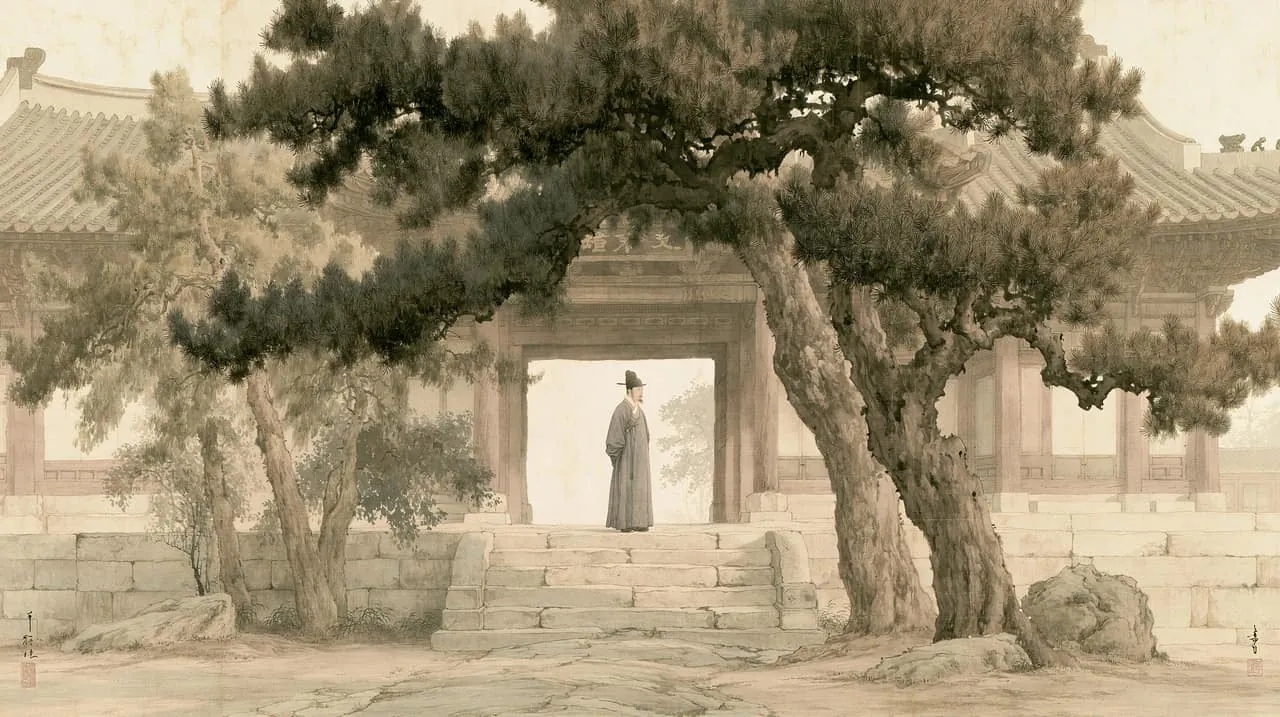
Direct Officer in Saju and the Pull Toward Structure
What does the Direct Officer mean in your Saju chart? Explore how this Ten God shapes your need for rules, status, and discipline in Korean astrology.

Direct Officer in Saju and the Pull Toward Structure
There's a certain type of person who walks into a messy room and immediately starts straightening things. Not because anyone asked them to. Not because it's their job. Just because disorder feels genuinely wrong to them. If that sounds like you, there's a good chance you have a strong Direct Officer presence in your Saju chart.
The Direct Officer (정관 Jeonggwan) is one of the Ten Gods (십신 Sipsin) in Korean astrology, and it carries a very specific energy: rule-following, institutional alignment, and a deep psychological need for things to be in their proper place. I've been reading Four Pillars charts for over 15 years, and this is honestly one of the Ten Gods that shows up the most clearly in a person's life choices. Whether you're drawn to corporate ladders, government work, or just feel deeply uncomfortable breaking the rules, the Direct Officer has something to say about that. If you want to see how it shows up in your specific chart, grab your Korean Saju reading first, then come back here.

What the Direct Officer Actually Is (Technically)
In Saju's Ten God framework, the Direct Officer is the element that controls your Day Master (일간 Ilgan) from the opposite polarity. So if your Day Master is Yang Wood, your Direct Officer is Yin Metal, because Metal controls Wood in the controlling cycle (상극), and the difference in polarity makes it "Direct" rather than "Indirect."
That controlling relationship is key. The Direct Officer literally governs your Day Master. It applies pressure. It sets limits.
For some people, that sounds suffocating. For Direct Officer natives, it actually feels like safety.
The Difference Between Direct and Indirect Officer
People sometimes confuse the Direct Officer (정관 Jeonggwan) with the Seven Killings (칠살 Chilsal, also called the Indirect Officer). Both involve the controlling element, but Seven Killings is the same polarity as your Day Master. That sameness creates an adversarial, aggressive tension.
Direct Officer is different polarity. That small distinction changes everything. It softens the control into something more like structure than domination. Think: the difference between a strict but fair mentor and a demanding boss who just wants to win.
Why Direct Officer People Are Drawn to Structure
Here's the thing. It's not that Direct Officer natives love rules for the sake of rules. It's that rules represent something they genuinely value: fairness, predictability, and a world where doing the right thing actually pays off.
I had a client, a mid-level public sector administrator in her late 30s, whose chart had Direct Officer sitting right in her Day Pillar Branch. She came to me frustrated because she'd been passed over for promotion twice despite doing everything "right." That situation, where working within the system isn't rewarding her the way she expected, is a classic Direct Officer wound.
The Direct Officer energy believes deeply in meritocracy. You do good work, you follow the right channels, the institution rewards you. When that contract breaks, it can feel like an existential betrayal, not just a career setback.
Structure as Identity, Not Just Preference
For a lot of Direct Officer people, structure isn't something they choose. It's something they are. Their sense of self is tied to roles, titles, and responsibilities. Being a "good employee," a "responsible parent," a "respected member of the community" aren't just things they do. They're load-bearing parts of who they are.
This is why Direct Officer energy often correlates with strong professional ambition paired with a genuine commitment to playing by the rules. It's not manipulation. It's sincere alignment with institutional values.
The Direct Officer in the Day Pillar vs. Other Pillars
Where the Direct Officer sits in your chart matters enormously.
Day Pillar: This is the most personal placement. When Direct Officer sits in the Day Branch, it often influences how you approach relationships, self-discipline, and your daily operating mode. You might hold yourself to a very high standard and, let's be honest, extend that same standard to the people around you whether they asked for it or not.
Month Pillar: This is the career and social pillar. Direct Officer here often signals a natural affinity for professional environments with clear hierarchies. Government, law, academia, corporate management. These aren't just compatible careers. They're places where this energy feels genuinely at home.
Year Pillar: Influence comes more from family background and ancestral patterns. You might have grown up in a household with strong rules, or a parent who placed high value on status and respectability.
Hour Pillar: This placement often manifests in how you manage others or how you'll be perceived later in life.
Direct Officer as the Useful God (용신)
When the Direct Officer is your Useful God (용신 Yongsin), this is where things get really interesting. The Useful God is the single element your chart needs most for balance. For a Day Master that's very strong in its own element (lots of companion and resource energy), the controlling pressure of the Direct Officer is exactly what's needed to channel that excess into something productive.
Think of it like a river. A strong, unchecked Day Master is floodwater going everywhere. The Direct Officer is the banks of the river. Suddenly all that force has direction and power.
When your Useful God arrives through a Grand Fortune period (대운 Daeun) or Annual Fortune (연운 Yeonun), things click. Promotions happen. Recognition comes. The effort you've been putting in finally gets seen. I've watched this play out in client after client, and it's genuinely satisfying to witness.
When Direct Officer Becomes a Problem
Okay, so the Direct Officer isn't all stability and promotions. When it becomes excessive in a chart, or when it's fighting against an unfavorable configuration, the shadow side emerges.
An overdose of Direct Officer energy can look like:
- Rigidity bordering on control issues
- Difficulty adapting when systems change or collapse
- Anxiety about making mistakes or being seen as "wrong"
- People-pleasing that comes from fear of authority rather than genuine generosity
- A tendency to judge others who don't follow the rules as harshly as you follow them
The other tricky scenario is when Direct Officer clashes with Hurting Officer (상관 Sanggwan) energy in the chart. These two are essentially natural enemies. Hurting Officer wants to break systems. Direct Officer wants to maintain them. A chart with both in tension often produces someone who is deeply conflicted: the rebel who secretly wants a steady job with benefits.
Direct Officer and Relationships
In traditional Saju interpretation, the Direct Officer represents the husband or committed partner for women with a Yin or Yin-dominant Day Master. That framing is old-school and needs some context for modern life, but the underlying energy is still relevant across all genders and relationship styles.
What Direct Officer signals in love is a preference for commitment, clear roles, and stability over excitement and novelty. Direct Officer people in relationships want to know where things stand. They're not great with situationships or "let's just see how it goes." They want a title. They want a plan.
If your chart has strong Direct Officer energy and you're navigating love and compatibility questions, a Saju love reading can show you where your partner's energy either supports or challenges that need for structure.
Frequently Asked Questions
What is the Direct Officer in Saju?
The Direct Officer (정관 Jeonggwan) is one of the Ten Gods in Four Pillars of Destiny (Saju). It represents the element that controls your Day Master from the opposite polarity. It brings energy of structure, discipline, status, and institutional alignment.
How is Direct Officer different from Seven Killings?
Both involve the controlling element over your Day Master, but Seven Killings shares the same polarity as your Day Master, creating aggressive tension. Direct Officer is opposite polarity, making the control feel more like structure and guidance than pressure or conflict.
Is Direct Officer good or bad in a Saju chart?
It depends entirely on your chart's overall balance. If your Day Master is strong and needs channeling, Direct Officer as your Useful God is excellent. If your chart is already weak or overburdened, too much controlling energy can be draining. Context is everything in Saju.
What careers suit someone with strong Direct Officer energy?
Government, law, corporate management, academia, civil service, compliance, and finance all tend to resonate. These are environments where doing things correctly and earning recognition through proper channels aligns with the Direct Officer's core values.
There's something quietly powerful about people who find meaning in structure. In a cultural moment that celebrates disruption and rule-breaking, the Direct Officer native is often the one making sure the lights stay on and the systems keep running. That's not boring. That's load-bearing.
If you want to know exactly how the Direct Officer sits in your chart, how strong it is, whether it's your Useful God, and what fortune periods activate or suppress it, a full reading gives you the complete picture.
Discover Your Destiny
Curious about your own chart?
Get a free mini reading, then unlock your full Four Pillars report from a certified Saju master.