Dohwasal, the Peach Blossom Star: What It Really Marks
Dohwasal, the Peach Blossom Star in Korean Saju, marks more than charm. Here's what it actually reveals about your personality, love life, and fate.
Dohwasal, the Peach Blossom Star: What It Really Means in Your Chart
Dohwasal. Even the name sounds like something out of a fairytale. In Korean Saju (Four Pillars of Destiny), this is one of the most talked-about mystical stars, and also one of the most misunderstood. People hear "peach blossom" and immediately think romance, beauty, maybe a little danger. And yes, those things are in there. But the full picture is way more nuanced than that.
If you've ever been told you have dohwasal in your chart and you're not sure what that actually means for your life, get a Saju reading and see where it sits in your pillars. That placement changes everything.
Let me break this down properly.

What Dohwasal Actually Is (and Where It Comes From)
Dohwasal (도화살) translates literally as "peach blossom."The 살 (sal) part means a mystical star or divine marker, what we call 신살 (shinsal) in Korean astrology. These aren't planets or physical celestial bodies. They're pattern-based markers derived from the relationship between your Earthly Branches across the Four Pillars.
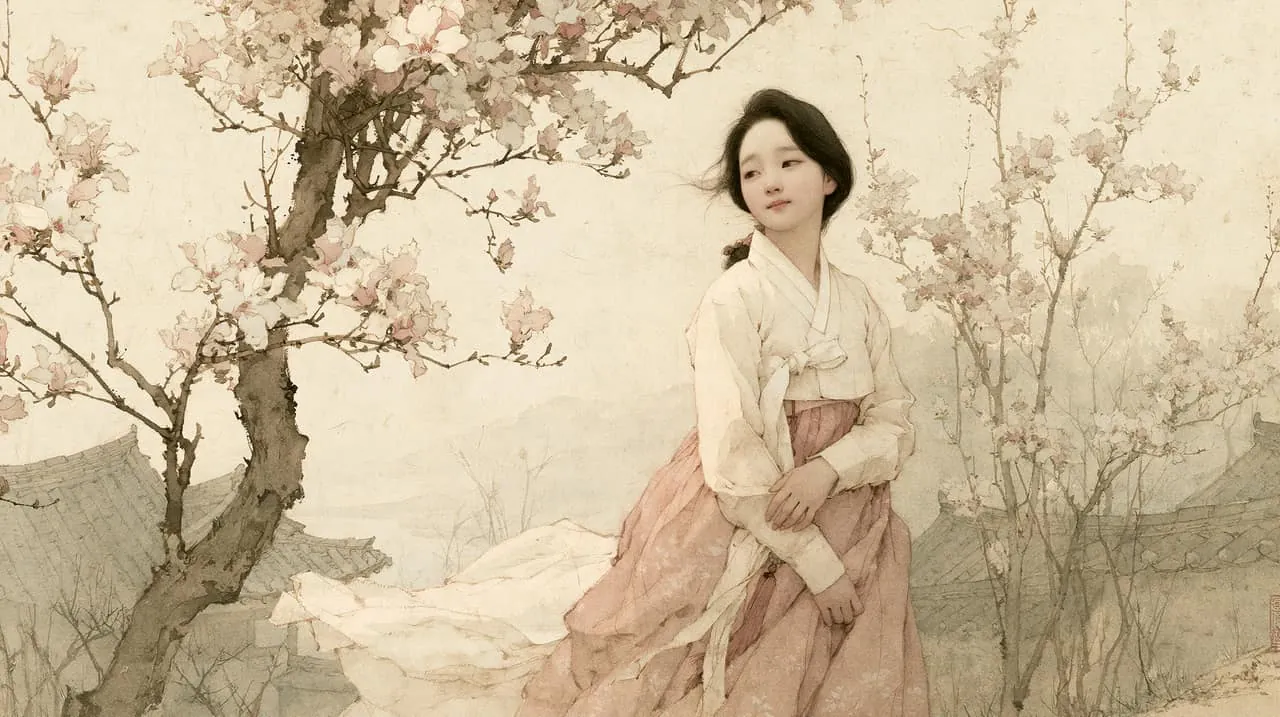
Here's the thing. Peach blossoms in East Asian culture have always symbolized youth, beauty, and a certain kind of seductive pull. The flower blooms fast, looks stunning, and falls just as quickly. That imagery is intentional. Dohwasal carries all of that energy.
In Saju practice, we locate dohwasal by checking specific Earthly Branches in your chart against known combinations. For example, if your day or year branch is 자 (Ja/Rat), the peach blossom marker appears when 酉 (Rooster) shows up elsewhere. Different animal signs trigger the star through different corresponding branches. It's a system, not a vibe.
And where it appears matters enormously. Dohwasal in the Year Pillar hits differently than dohwasal in the Day Pillar. One affects your public image and how strangers perceive you. The other goes right to the core of who you are in relationships.
The Gifts: Charm, Magnetism, and Creative Fire
I've done readings for hundreds of clients with dohwasal, and honestly, you can often tell before you even check the chart. There's a particular quality to these people. Not always conventionally attractive in the way we typically picture it, but magnetic. They walk into a room and something shifts.
Dohwasal people tend to have:
Natural charisma. It's not performed. People are just drawn to them, often without being able to explain why. In Saju terms, this links to a kind of elemental pull, usually tied to the way their Day Master (일간, ilgan) interacts with the peach blossom energy.
Artistic sensitivity. Many of my clients with strong dohwasal are performers, artists, stylists, or work in anything image-related. The star amplifies aesthetic awareness. These people feel things deeply and translate that into creative output.
Social ease. Conversations flow. Connections form quickly. In readings I've done for people navigating career pivots or dating, dohwasal often shows up as a genuine asset because people trust them fast.
In modern life, this shows up as the person who goes viral for seemingly no reason, the colleague everyone likes immediately, the friend whose DMs are always full. It's real. It's in the chart.
The Shadow Side of the Peach Blossom Star
Okay, here's where I need to be honest with you.
Dohwasal has a shadow. In older Korean Saju texts, this star was sometimes viewed with concern, especially for women, because the culture read its romantic magnetism as a kind of liability. I want to be clear: that framing was a product of its time and doesn't belong in a modern reading. The energy itself is neutral. What matters is how balanced the rest of your chart is.
That said, the shadow is real and worth knowing.
Boundary issues. Dohwasal people can become overly attached to how they're perceived. They read the room constantly. They adjust themselves based on the audience. Over time, this can erode a sense of stable identity.
Romantic turbulence. This is the one people ask about most. Dohwasal does increase the volume of romantic attention coming your way, but more attention doesn't automatically mean better choices. I've seen charts where dohwasal sits in a weakened position or clashes with other elements, and the love life becomes a cycle of intense connections that burn out fast. Like the flower itself.
The performance trap. Some dohwasal individuals get so good at being likable that they lose track of what they actually want. The charm becomes armor. It's subtle but I've seen it cause real pain in long-term relationships.
If love patterns are something you're actively trying to understand, a Saju love reading can show you exactly how dohwasal is interacting with your relationship pillars and what that means in practical terms.
How Chart Balance Changes Everything
This is the part that most people skip over when they Google dohwasal, and it's the most important part.
The star doesn't operate in isolation. Everything in a Saju chart is in conversation with everything else. Dohwasal in a well-balanced chart, where the Five Elements (오행, ohaeng) are in productive relationship and your Useful God (용신, yongsin) is supported, expresses as pure gift. Charm, success, magnetism, creative abundance.
Dohwasal in an imbalanced chart? The same energy becomes chaotic. The attractive quality draws the wrong situations. The sensitivity becomes reactivity. The magnetic pull leads to drama instead of connection.
I had a client once, a graphic designer in her early 30s, who came to me completely baffled by her pattern with relationships. Smart, warm, genuinely beautiful person. She had dohwasal in her Day Pillar, which directly touches the Day Master, so it was loud in her chart. But she also had a significant clash between her Earthly Branches that was creating instability. The charm was there. The relational groundedness wasn't. Once we identified this and looked at her current Grand Fortune (대운, daeun), things started to make sense. Timing matters. Balance matters.
Dohwasal and the Annual Fortune Cycle
One thing that comes up a lot in my practice: dohwasal can be activated by annual fortune (연운, yeonun) even if it's not strongly present in your natal chart.
Certain years, based on their Heavenly Stem and Earthly Branch, can light up peach blossom energy for almost everyone, while other years will specifically amplify it for people who already carry the star. This is why some years just feel different romantically or socially. More attention, more opportunity, more temptation too.
If you're curious whether your current year is a peach blossom activation year for your specific chart, this is honestly one of the most useful things a practitioner can check for you.
Frequently Asked Questions
What exactly is dohwasal in Saju?
Dohwasal (도화살) is a mystical star marker in Korean Four Pillars of Destiny (Saju) that signals charm, romantic magnetism, and artistic sensitivity. It's derived from specific Earthly Branch combinations in your birth chart and is one of the shinsal (신살) pattern stars.
Does having dohwasal mean you'll have lots of relationships?
Not necessarily. Dohwasal increases social and romantic energy around you, but outcomes depend on your full chart. A balanced chart with dohwasal tends to produce genuine attractiveness and fulfilling connections. An imbalanced chart can create intense but unstable romantic patterns.
Where in the chart is dohwasal most powerful?
Dohwasal in the Day Pillar tends to be the most personal and relationship-focused, since the Day Pillar governs your core identity (the Day Master) and your intimate partnerships. Dohwasal in the Year Pillar affects public image and social reputation more broadly.
Can dohwasal be activated later in life even if it's weak at birth?
Yes. Grand Fortune (대운) periods and Annual Fortune (연운) cycles can activate or amplify dohwasal energy at specific times in your life, even if the star isn't dominant in your natal chart. This is why some decades or years feel magnetically different from others.
Dohwasal is one of those Saju markers that rewards a closer look. It's not a curse, it's not a guarantee of romance, and it's definitely not just about being pretty. It's a specific kind of energetic signature that, when understood, can actually help you work with your natural gifts instead of being blindsided by their shadow.
If you want to know exactly how dohwasal is showing up in your unique chart, including which pillar it sits in, how it's interacting with your Day Master, and what your current fortune period is doing to it:
Discover Your Destiny
Curious about your own chart?
Get a free mini reading, then unlock your full Four Pillars report from a certified Saju master.