Hae and Pa: The Smaller Frictions in a Saju Chart
Hae and Pa are the subtle tension points in Korean Saju that most readers overlook. Here's what they actually do to your chart energy.
Hae and Pa: The Smaller Frictions in a Saju Chart
Most people who first get into Saju (Four Pillars of Destiny) charts fixate on the big dramatic stuff. The clashes. The destructions. The penalty formations. And yeah, those are loud. But hae (害) and pa (破) are the interactions that quietly shape how a chart actually feels to live in, and they get skipped over constantly. If you've pulled a free reading and wondered why certain areas of your life feel like low-grade friction rather than outright chaos, these two might be exactly what's at play.
Let me be clear upfront: hae and pa are not minor in the sense of being unimportant. They're minor in the sense that they operate subtly. They don't flip a chart upside down. But they create a persistent drag, a kind of elemental interference that makes specific things harder than they should be.
What Is Hae (害), the Harming Relationship?
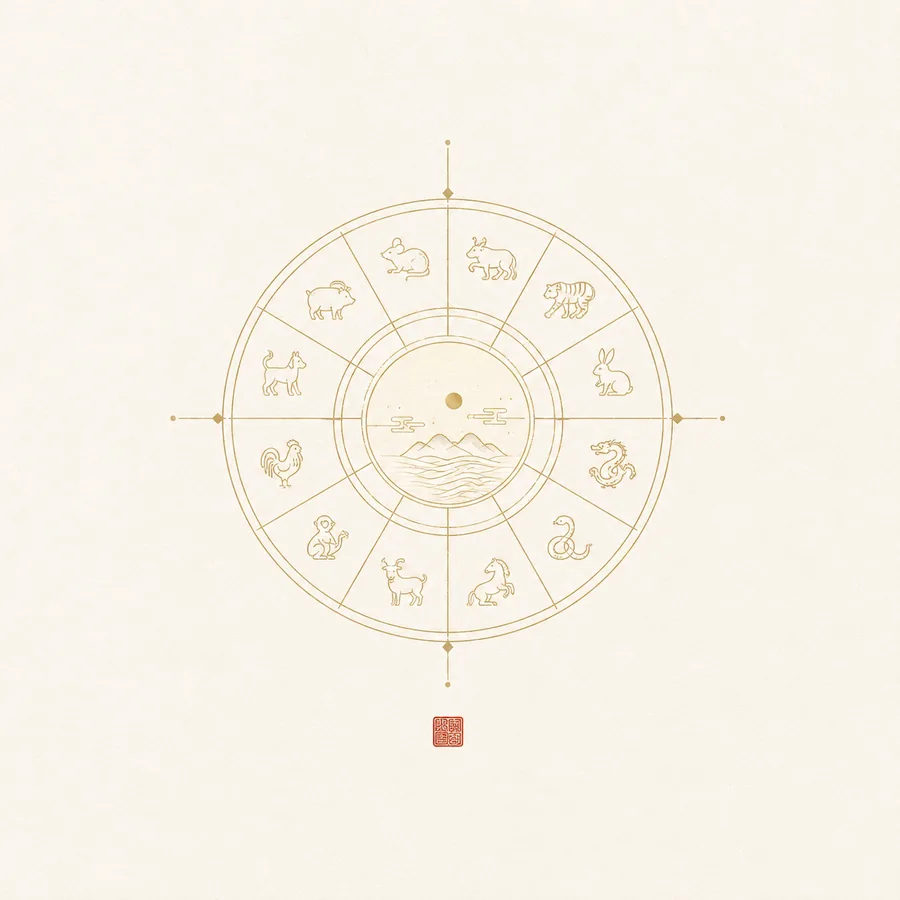
Hae is often translated as "harm" or "injury." Six of these pairings exist between the twelve Earthly Branches, and they always sit between branches that would otherwise work well together through a Three Harmony or Six Harmony formation, except another branch is blocking that connection.
Think of it like this. Two people are about to collaborate on something great. A third person shows up and stands in the way. The original two don't outright fight. They just can't fully connect. That tension between "almost working" and "not quite" is the hae energy.
The six hae pairings are:
- Ja (子) and Wei (未)
- Chou (丑) and Wu (午)
- Yin (寅) and Si (巳)
- Mao (卯) and Chen (辰)
- Shen (申) and Hai (亥)
- You (酉) and Xu (戌)
Why Hae Feels So Persistent
Here's the thing. Because hae doesn't look like a clash (충), it often doesn't get flagged in a surface-level reading. But people with hae between major pillars, especially between the Day and Month, or between the Day and Hour, often describe a specific kind of experience: they work hard, they have real ability, and yet some invisible friction keeps things from landing cleanly.
In my experience reading charts, hae shows up as social friction more than structural breakdown. People with strong hae influence often feel like they're being quietly undermined, not dramatically betrayed. There's a kind of low-level interference in relationships and collaborative efforts. The Wood element, for instance, with its upward rising energy, gets particularly frustrated by hae because it's a rising element that needs clear pathways. Block that, and the frustration (Wood's emotional undercurrent) builds without an obvious cause.
Hae is also sensitive to timing. When an annual fortune (연운 Yeonun) or Grand Fortune (대운 Daeun) cycle brings in a branch that activates a hae in the natal chart, that's when the friction gets louder. Something that felt manageable quietly tips into genuine disruption.
What Is Pa (破), the Breaking Relationship?
Pa means "break" or "rupture." It's a less organized conflict than a full clash, more like a crack in something rather than a full shatter. Pa involves four pairings:
- Ja (子) and You (酉)
- Chou (丑) and Chen (辰)
- Yin (寅) and Hai (亥)
- Mao (卯) and Wu (午)
- Si (巳) and Shen (申)
- Xu (戌) and Wei (未)
(Yes, some classical texts organize this slightly differently. The exact list can vary by lineage, but these six are widely recognized across Korean Saju tradition.)
Pa essentially creates a situation where the energy of a branch can't fully express itself. It's not destroyed. It's interrupted. A branch under pa influence still functions, but there are leaks in that function. Think of it like a pipe with a small crack: water still flows, but not with full pressure.
Pa and the Ten Gods (십신 Sipsin)
This is where pa gets genuinely interesting from a reading perspective. Because the Ten Gods are all about the relationship between the Day Master (일간 Ilgan) and every other element in the chart, a branch under pa that carries a key Ten God can make that archetype inconsistent.
Say someone has the Eating God (식신 Siksin) in a branch that's in a pa relationship with another branch in their chart. The Eating God represents natural creative output, that gentle, sustainable creative energy that produces without strain. But pa disrupts the clean expression of that branch. So instead of steady creative flow, this person might experience bursts followed by blocks. The talent is real. The output is inconsistent. Not because they're lazy or unfocused, but because there's a structural crack in that branch's function.
Same goes for wealth stars. Direct Wealth (정재 Jeongjae) in a pa branch can produce savings patterns that never quite stabilize, not boom-bust like Indirect Wealth (편재 Pyeonjae) naturally is, but more like money that arrives and then quietly leaks away before you notice.
Hae vs. Pa: How to Tell Them Apart in a Chart
People mix these up because they're both described as "minor" negative relationships. Here's a cleaner way to think about it:
Hae is about blocked connection. Something that should have bonded doesn't. Social tension, hidden undermining, collaborative friction.
Pa is about incomplete function. Something still operates but leaks energy. Inconsistency, interrupted flow, partial results.
If you're experiencing persistent interpersonal friction with no obvious source, look for hae. If something in your life is almost working but never quite landing fully (projects, finances, creative output), pa is worth investigating.
Both are more relevant when they involve your Day Pillar specifically, since the Day Master is your core identity. A hae or pa that touches your Day Branch is going to feel more personal than one tucked away between the Year and Month pillars.
Hae and Pa in Timing Cycles
Here's where it gets practical. Natal hae and pa are your baseline texture. But timing cycles can either activate or temporarily dissolve these frictions.
When a 대운 (Daeun) or 연운 (Yeonun) brings in a branch that forms a Three Harmony or Six Harmony combination with one of your affected branches, it can actually ease a hae or pa temporarily. You get a window where that friction lifts. Things that were stuck suddenly move. If you've ever had a random year where a chronic problem just resolved itself without obvious reason, there's a decent chance a timing combination was temporarily overriding a natal friction.
The reverse is also true. A timing cycle that reinforces a hae or pa already present in the natal chart will amplify it. That's when the low-grade friction becomes loud enough to notice, and that's usually when people start looking for answers.
Should You Worry About Hae and Pa?
Honestly, no. Not in the way people worry about big clashes. What hae and pa tell you is more about how to navigate your chart than whether you're doomed in some area. Understanding that a branch is under pa influence means you structure that area of life with more intentional backup systems. You account for leaks. You don't assume smooth continuity.
If you want to understand how all these interactions layer together in your specific chart, a free Saju ebook is a solid place to build the foundational framework first. The frictions make a lot more sense once you know what each branch is supposed to be doing.
Frequently Asked Questions
What is the difference between hae and pa in Saju?
Hae (害) is a "harming" relationship between two Earthly Branches that blocks a natural connection from forming. Pa (破) is a "breaking" relationship that allows function but causes energy leakage or inconsistency. Both are milder than a full clash (충), but they create persistent friction in the areas they affect.
How many hae pairings are there in Saju?
There are six hae (害) pairings in Korean Saju, each formed between branches that are partially blocked from connecting by the presence of a conflicting formation elsewhere in the twelve-branch cycle.
Do hae and pa only matter in the natal chart?
No. While natal hae and pa create a baseline texture, timing cycles (대운 Daeun and 연운 Yeonun) can activate, amplify, or temporarily ease these frictions. A Grand Fortune period that brings in a harmonizing branch can relieve a natal pa for years at a time.
Can hae and pa be positive in some cases?
In certain chart structures, yes. If the branch being "harmed" or "broken" carries an unfavorable god (기신) for your chart, a hae or pa disrupting that branch can actually reduce its negative influence. Context and the Useful God (용신 Yongsin) system are everything here.
The subtlety of hae and pa is exactly what makes them worth understanding. The big dramatic interactions get all the attention, but the charts that feel the most confusing to live in are often the ones with these quieter friction points running in the background. If you want a practitioner to map this out for your specific pillars and tell you exactly where the friction is and why:
Discover Your Destiny
Curious about your own chart?
Get a free mini reading, then unlock your full Four Pillars report from a certified Saju master.