How to Read Saju Sceptically and Still Get Value
Not sure if Saju is "real"? Here's how to approach a Korean Four Pillars reading with healthy skepticism and still walk away with genuine insight.
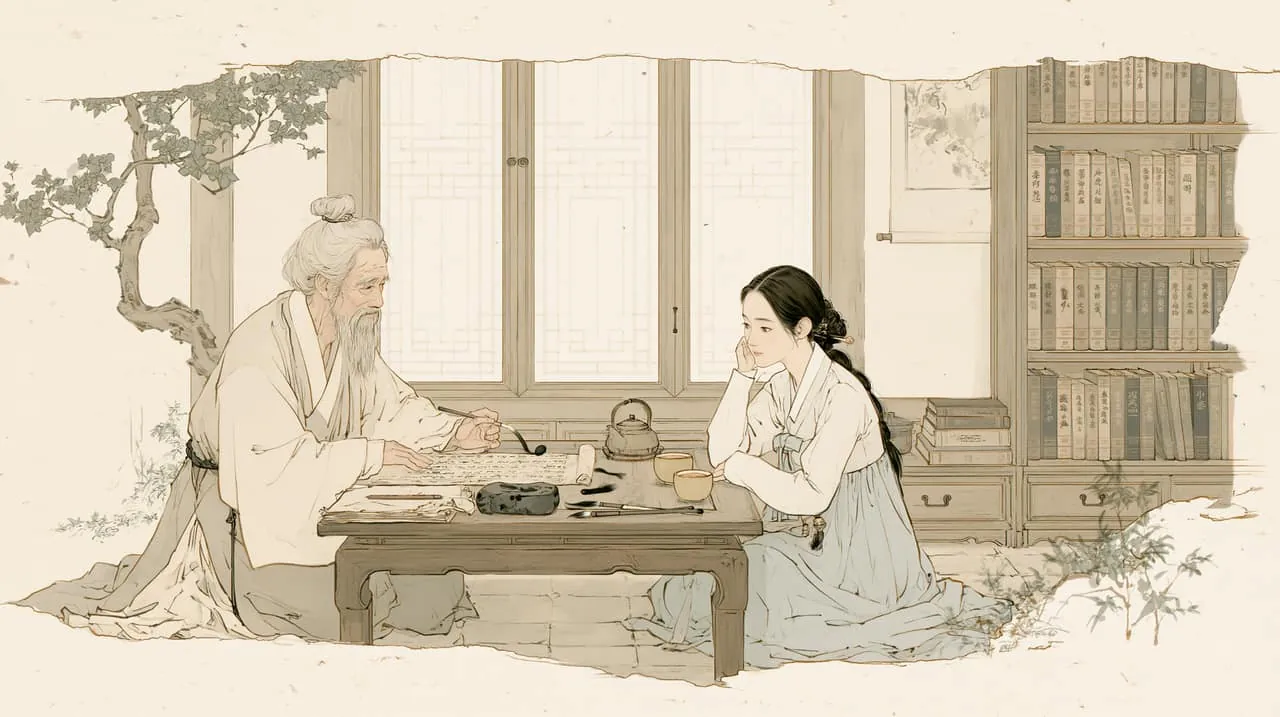
How to Read Saju Sceptically and Still Get Something Real From It
Let's be honest. If you found this post, you're probably somewhere between "this is interesting" and "this feels a bit woo." Maybe a friend dragged you into getting a reading, or you stumbled across Saju through K-drama rabbit holes, and now you're curious but also a little suspicious.
That's actually a great place to start.
I've been doing Saju readings for over 15 years, and some of my most interesting clients have been the skeptics. They push back, they ask hard questions, and they often get more from a reading than true believers do, because they're actually paying attention. If you want to try it for yourself before committing, start with a free reading and see what comes up.

What You're Actually Dealing With When You "Read Saju"
Here's something most people don't realize: Saju, or the Four Pillars of Destiny, is not fortune-telling in the crystal ball sense. It's a system built on five elements (오행 Ohaeng), seasonal energies, and the interaction patterns between them. Your birth chart is a snapshot of elemental forces at the moment you were born. Year, Month, Day, and Hour pillars, each carrying a Heavenly Stem and an Earthly Branch.
The question isn't whether the cosmos "controls" you. The more useful question is: does this symbolic framework produce accurate, actionable insight about human behavior and timing? That's a much more honest framing.
Think of it like how some people use Myers-Briggs or the Enneagram. Those systems aren't "real" in a scientific sense either, but they can still surface useful truths about how you operate.
The Sceptic's Entry Point: Treat It Like a Personality Model
If you're not ready to believe that your birth date literally determines your fate, fine. Don't. Instead, treat Saju as an advanced personality and timing model, and test it against your actual lived experience.
Start with the Day Master (일간 Ilgan), the Heavenly Stem of your Day Pillar. This is considered the core of your identity in Saju. Are you a Wood Day Master? Then the system predicts you're a natural initiator, energized by autonomy, frustrated by bureaucracy, and someone who starts things well but struggles to finish them. Does that land? Adjust for nuance. Push back where it doesn't fit.
In my experience, even clients who come in rolling their eyes get a little quiet when the Day Master description hits home. It's specific enough to be meaningful, not just generic horoscope fuzz.
What the Elements Actually Say About You
The five elements aren't vague archetypes. They have very specific behavioral signatures.
Water types (水) recharge through solitude. They're pattern-recognizers, advisors, people who work well with depth and intellectual content. They're drained by transactional, fast-paced environments. Fire types (火) peak between 9am and 1pm, crave recognition, and are natural personal brand builders. Earth types (土) need routine and consistency to thrive. Metal types (金) are specialists who value precision over volume.
So when a client tells me "I've always needed to be alone to recharge, and I genuinely don't understand how people do open-plan offices," and their chart shows a dominant Water Day Master, I'm not shocked. That's not magic. That's pattern recognition built into a 2000-year-old system.
The sceptic move here is to check the predictions against reality, not accept them blindly.
Saju Sceptically Applied: The Timing Question
Here's where it gets interesting for skeptics, and honestly where Saju earns its keep for me personally.
The timing system in Saju, specifically the Grand Fortune periods (대운 Daeun), is what separates this from a simple personality test. Each 10-year Daeun period brings a different elemental energy into your chart. When that incoming energy matches what your chart needs most, called the Useful God (용신 Yongsin), things tend to click into place. Career opportunities, relationships, momentum. When the incoming energy is unfavorable, the friction shows up in predictable patterns.
I've had clients come back after two or three years and say "you told me this was a Metal period and I'd feel the pressure to cut things back and go deep rather than expand, and that's exactly what happened." That's not cold reading. That's the system working.
You don't have to believe it cosmically. You can treat it as a map, use it where it fits, and ignore the parts that don't.
Where Healthy Skepticism Actually Helps
Blind belief in any system is a problem. I've seen people make genuinely bad life decisions because a practitioner told them their chart showed wealth in a certain year. That's irresponsible reading and irresponsible listening.
Healthy skepticism protects you from that. A few things to stay sharp about:
The Barnum Effect is real. Statements like "you have a deep inner self that others don't always see" are technically true for basically everyone. Good Saju reading should be specific, not just flattering.
The Ten Gods (십신 Sipsin) system has real teeth. If a practitioner tells you you're running an Eating God (식신 Siksin) period, that means something specific: slower, creative, sustainable output. If they tell you it's a Hurting Officer (상관 Sanggwan) period, that means disruptive brilliance with potential fallout. These aren't interchangeable, and a practitioner who can't distinguish them is waving their hands.
Ask for the mechanism. A good practitioner should be able to tell you why something is predicted, not just what. The Five Element cycles, the producing cycle (상생) and controlling cycle (상극), are the actual engine. Wood feeds Fire. Metal cuts Wood. These interactions have specific outcomes. Demand specificity.
If you want to go deeper on how these mechanics actually work, the free Saju ebook breaks it down without requiring you to already be a believer.
What Saju Can't Do (And Shouldn't Be Asked To)
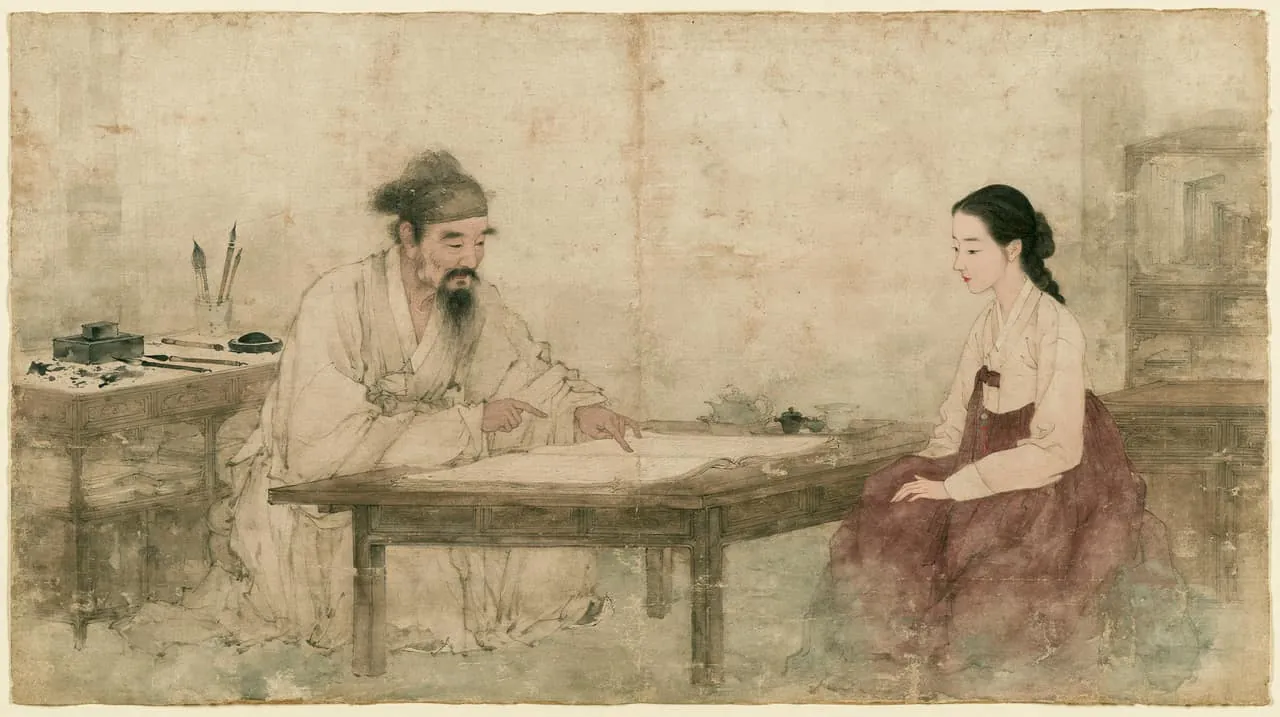
It can't tell you the future with certainty. No honest practitioner will say it can. What it does is map probability fields based on elemental timing. It tells you what kind of year you're walking into energetically, not what your boss will say on a Tuesday in March.
It also shouldn't replace actual decision-making. I've told clients this directly: use the chart as one input among many. If your Daeun suggests a good period for career moves but you haven't developed the skills yet, the opportunity won't materialize just because the chart says it should.
And if you're navigating something personal, like relationships or major life transitions, that's where the human context matters most.
Frequently Asked Questions
Is Saju scientifically proven?
No, and no reputable Saju practitioner will claim it is. What it is, is a structured symbolic system with consistent internal logic. Many people find it useful for self-reflection and timing decisions in the same way they find personality frameworks useful, without requiring it to be empirically verified.
Can I read Saju without believing in fate or destiny?
Absolutely. You can engage with Saju purely as a personality model and timing map. The Five Element dynamics and the Ten Gods system describe patterns of energy and behavior that can be tested against your experience without any metaphysical commitment.
What makes a Saju reading useful vs. just vague?
Specificity. A good reading ties predictions to a clear mechanism, the Five Elements, the Useful God, the current Daeun period. Vague statements that could apply to anyone are a red flag. The system has enough precision that a skilled practitioner should be making specific, falsifiable observations.
How do I know if a practitioner is actually skilled?
Ask them to explain your Day Master (일간 Ilgan) and your current Grand Fortune period (대운 Daeun) and what elemental interaction is driving their interpretation. If they can walk you through the logic, they know what they're doing. If they just give you outcomes without reasoning, be cautious.
Skepticism and Saju aren't opposites. The best readings I've ever given have been to people who brought real questions and pushed back on easy answers. The system is robust enough to handle scrutiny. You just have to engage with it honestly, on your terms.
Discover Your Destiny
Curious about your own chart?
Get a free mini reading, then unlock your full Four Pillars report from a certified Saju master.