Hyeong, the Punishment Relationship Nobody Explains Well
Hyeong (형) is the most misunderstood branch interaction in Saju. Here's what punishment really means in your Four Pillars chart.
What Hyeong Actually Means in Your Birth Chart
Hyeong (형, 刑) is the punishment relationship between Earthly Branches in Korean Saju, and honestly, it's the one interaction that gets butchered the most in casual astrology discussions. People hear "punishment" and immediately assume it means something terrible is about to happen. It doesn't. Not exactly. But it's not nothing, either. If you've ever pulled up your free reading and noticed a hyeong relationship between your branches, this post is going to break down exactly what's happening and why it matters.
Punishment in the Four Pillars of Destiny is not a cosmic slap. It's more like friction that exists for a reason. Think of it as two energies that don't blend smoothly but create heat, and that heat can either forge something useful or burn you if you're not paying attention.
Most English-language resources either skip hyeong entirely or lump it in with clashes (충, chung) and harms (해, hae) as if they're all the same thing. They're not. And the differences matter enormously when you're actually reading a chart.
Why Hyeong Gets Misunderstood So Often
Here's the thing. The word "punishment" carries heavy moral baggage in English. In Korean and Chinese metaphysics, 형 doesn't imply you did something wrong. It's not karma in the pop-culture sense. It's a structural tension between specific Earthly Branch combinations that produces a particular kind of stress.
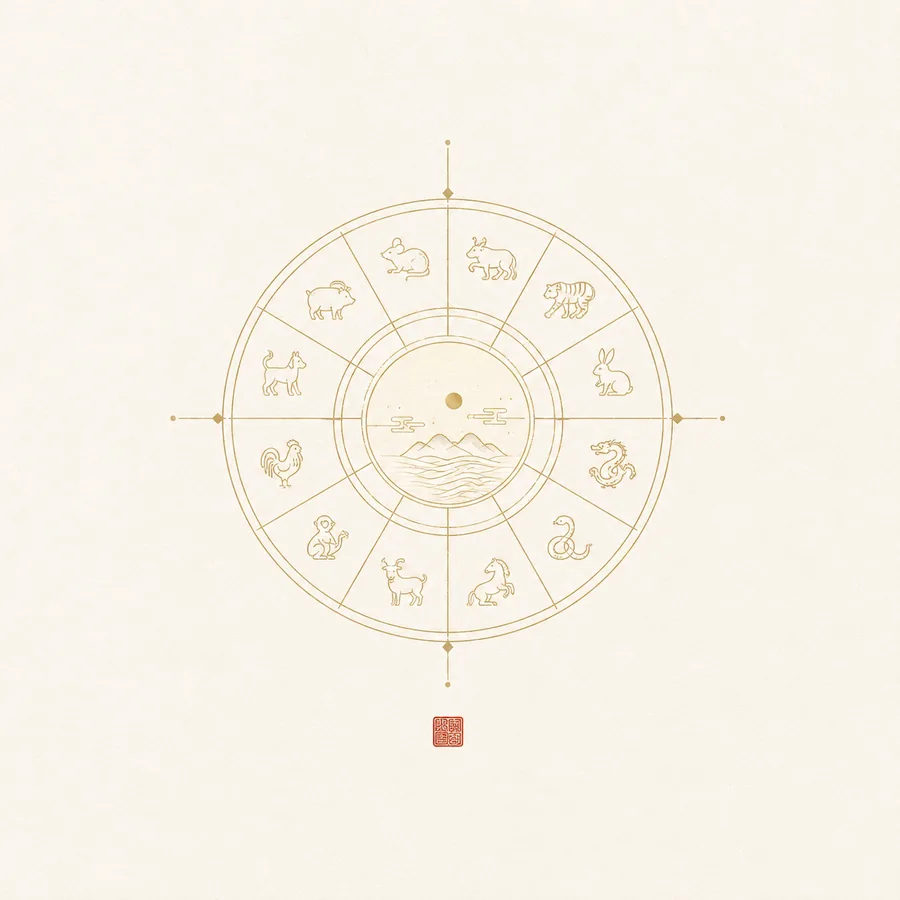
Clashes (chung) are oppositional. Two branches face each other across the zodiac wheel and collide. That's dramatic, visible, often external.
Harms (hae) are more subtle. They erode things slowly. Quiet resentment, quiet damage.
Hyeong is different from both. It's internal pressure that builds until something cracks open. Sometimes what cracks open needed to crack. Sometimes it didn't.
The reason nobody explains it well is that hyeong is contextual in a way that resists simple rules. The same punishment pattern can show up as self-sabotage in one chart and radical personal transformation in another. It depends entirely on the overall elemental balance, which elements are involved, and what the Day Master (일간, Ilgan) actually needs.
The Three Types of Hyeong Punishment
Not all punishment relationships work the same way. Traditional Saju recognizes three main categories, and each operates with a different mechanism.
Unkind Punishment (무은지형, Mueunjihyeong)
This involves the trio of 寅 (Tiger), 巳 (Snake), and 申 (Monkey). When two or all three of these branches appear together in a chart, or when one arrives through a Grand Fortune (대운, Daeun) or Annual Fortune (연운, Yeonun) period, this punishment activates.
What makes this one intense is that all three branches carry hidden stems with strong, competing energies. Tiger holds Wood and Fire. Snake holds Fire and Metal. Monkey holds Metal and Water. They're all ambitious, all capable, and all pulling in different directions.
In practice, this punishment pattern often shows up as interpersonal conflict driven by ambition. Say someone has Tiger in their Month Pillar and Snake in their Day Branch. There's a constant push-pull between how they present themselves professionally and what's actually happening in their private life. When Monkey rolls in through a yearly cycle, all three collide at once.
That's when things get spicy. And by spicy, I mean potentially very disruptive. But also potentially very clarifying.
Rude Punishment (무례지형, Muryejihyeong)
This one involves 丑 (Ox), 未 (Goat), and 戌 (Dog). All three are Earth branches, which makes this punishment sneaky because people assume Earth-Earth interactions should be stable.
They're not. Not here.
Three different flavors of Earth grinding against each other creates a situation where stubbornness meets stubbornness meets stubbornness. Nobody yields. In a chart, this often manifests as someone who gets stuck in cycles of inflexibility. The soil gets so compacted nothing can grow.
I see this pattern a lot in charts where the person describes feeling "stuck" for years at a time, particularly during Grand Fortune periods that bring in the missing piece of the trio. If you already have Ox and Dog in your Four Pillars and you enter a Goat daeun, that's a decade where this friction is quietly active in the background.
The "rude" label refers to how these branches interact without grace. There's no smooth negotiation. Just pressure.
Self-Punishment (자형, Jahyeong)
This is the one that gets the least attention, and honestly, it might be the most important to understand. Self-punishment occurs when the same branch appears twice (or more) in a chart: 辰-辰 (Dragon-Dragon), 午-午 (Horse-Horse), 酉-酉 (Rooster-Rooster), or 亥-亥 (Pig-Pig).
Wait, isn't having the same branch twice just a simple duplication? Technically, yes. But the punishment framework tells us that too much of the same energy creates its own kind of friction.
Take a chart with double Horse. Horse is peak Fire energy (午 is the height of summer). Two of them means an excess of Fire that has nowhere to go. The person might oscillate between intense passion and burnout. They push, push, push, then crash.
Double Rooster (酉) concentrates Metal energy. Sharp mind, sharp tongue, sharp self-criticism. The punishment here is often turned inward. The blade cuts the wielder.
Self-punishment is essentially the chart arguing with itself about having too much of one thing. And unlike external clashes that you can point to ("oh, that's my difficult relationship with my boss"), self-punishment is harder to externalize. It just feels like an internal loop you can't escape.
How Hyeong Interacts with the Useful God
Here's where it gets really interesting for chart reading.
Your Useful God (용신, Yongsin) is the element your chart needs most for balance. If the punishment relationship involves elements that your chart actually needs disrupted, hyeong can be genuinely beneficial.
Let me give a hypothetical. Say someone's Day Master is Yin Water (癸), and their chart is drowning in Earth energy that's damming them up everywhere. If they have Ox and Dog in their pillars and a Goat year triggers the Rude Punishment, all that excessive Earth starts fighting itself instead of oppressing the Water Day Master.
Earth punishing Earth means Earth is too busy with its own internal conflict to keep controlling Water. The Day Master gets breathing room.
This is why blanket statements like "punishment is bad" are useless. Context is everything.
On the flip side, if the punishment disrupts elements that were serving as your Useful God, that's when problems escalate. The support structure you relied on starts fracturing from within.
Hyeong in Relationships
When punishment patterns appear between two people's charts, the dynamic is distinctive. It's not the head-on collision of a clash, and it's not the quiet erosion of a harm. It's more like two people who trigger each other's unresolved stuff.
If your Day Branch forms a hyeong relationship with someone else's Day Branch, there's an intensity to the connection that can feel almost compulsive. You keep going back even when it's uncomfortable because the friction is producing something. Growth, insight, transformation. Or just repeated pain, if neither person is willing to look at what's being surfaced.
This is one of the patterns I pay close attention to in Saju love readings. A punishment connection between partners isn't automatically a dealbreaker. But it does mean the relationship will require more conscious effort than most.
The Forge pairing (Fire + Metal) often carries this flavor naturally, since Fire melts Metal and Metal restricts Fire. When you add a literal hyeong branch interaction on top of elemental tension, the relationship becomes a crucible. Something gets transformed. The question is whether both people survive the heat.
Timing Matters: When Punishment Activates
A punishment pattern sitting quietly in your natal chart is one thing. It's a permanent feature of your elemental architecture, and you've probably developed coping mechanisms for it whether you realize it or not.
The moments that catch people off guard are when the missing piece of a punishment trio arrives through timing.
Grand Fortune (대운) periods last ten years. If your daeun brings in the branch that completes a punishment triangle with branches already in your chart, you're looking at a decade-long activation. This doesn't mean ten years of suffering. It means ten years of that particular friction being present, creating pressure that demands a response.
Annual Fortune (연운) triggers are shorter but sharper. One year of activated punishment can coincide with a specific crisis, a health scare, a career upheaval, a relationship breaking point.
The key thing I always emphasize: knowing the timing in advance changes everything. You can't avoid a hyeong activation, but you can prepare for it. You can make decisions during those periods with awareness instead of being blindsided.
If you want to understand the mechanics more deeply, the free Saju ebook covers how branch interactions work within the broader framework of the Five Elements (오행, Ohaeng).
What to Actually Do When You Have Hyeong in Your Chart
Practical advice. Not mystical hand-waving.
First, identify which type of punishment you're dealing with. The three categories behave differently and require different awareness.
Second, look at the elements involved. Which of the Five Elements is being agitated by this punishment? Is it an element you have too much of, or one that's serving a critical balancing function?
Third, check your timing. Is this punishment currently activated by your Grand Fortune or the current year? If so, that explains a lot about what you might be experiencing right now.
Fourth, and this is the part people don't want to hear: lean into the discomfort a little bit. Hyeong creates friction because something needs to change. Resisting it entirely usually makes the pressure worse. The chart is trying to tell you something.
That doesn't mean recklessly blowing up your life. It means paying attention to where you feel internal pressure building and addressing it before it explodes on its own terms.
Frequently Asked Questions
Is hyeong punishment worse than a branch clash (chung)?
Not necessarily. Clashes are more dramatic and visible, like two forces slamming into each other. Hyeong is slower, more internal, and often harder to identify because it manifests as accumulated tension rather than a sudden event. Which one is "worse" depends entirely on your chart's balance and what elements are being affected.
Can hyeong in my birth chart be a good thing?
Absolutely. If the punishment disrupts an element that's overpowering your Day Master, it can actually restore balance. Punishment creates chaos within the elements involved, and sometimes chaos is exactly what a rigid, imbalanced chart needs. It's not comfortable, but it can be productive.
How do I know if my chart has a hyeong relationship?
You need to check your four Earthly Branches (from your Year, Month, Day, and Hour Pillars) against the three punishment groupings: Tiger-Snake-Monkey, Ox-Goat-Dog, and the self-punishment pairs (Dragon-Dragon, Horse-Horse, Rooster-Rooster, Pig-Pig). Even having two out of three in a trio counts as a partial punishment.
Does hyeong affect health?
It can. In traditional Korean astrology, each Earthly Branch corresponds to body systems through the Five Elements. When punishment creates internal elemental conflict, the associated organs or body areas can be affected. For example, the Unkind Punishment (Tiger-Snake-Monkey) agitates Wood, Fire, and Metal simultaneously, which relates to the liver, heart, and lungs. This doesn't replace medical advice, obviously, but it's a pattern worth noting.
Hyeong is not something to fear. It's something to understand. The charts that contain punishment often belong to people who have the most capacity for growth precisely because they've been given built-in friction that won't let them stay comfortable for too long.
If you want to see exactly where hyeong shows up in your chart and how it interacts with your current timing cycles:
Discover Your Destiny
Curious about your own chart?
Get a free mini reading, then unlock your full Four Pillars report from a certified Saju master.