Korean Saju Myths Even Fans Get Wrong
Think you know Korean Saju? These common misconceptions about Four Pillars of Destiny might surprise even longtime fans and K-culture lovers.

Korean Saju Myths Even Devoted Fans Still Believe
Korean Saju gets a lot of attention these days. K-dramas, K-pop idols openly discussing their birth charts, viral TikToks about compatible signs. But here's the thing: most of what's circulating online about Saju is either oversimplified, borrowed from Western astrology, or just plain wrong.
I've been doing Saju readings for over 15 years, and the number of clients who come in with confident misconceptions has only grown as the practice gets more popular. Before you grab a free reading and walk in thinking you already know your chart, let me clear up some of the biggest myths I see over and over again.
Misconception #1: Saju Is Just "Korean Astrology" Like Western Zodiac
This is probably the most common one. People hear "Korean astrology" and assume it works the same way as sun signs or rising signs. It doesn't. Not even close.
Western astrology is primarily planetary. Saju, or Four Pillars of Destiny (사주), is elemental. Your chart is built from four pillars: Year, Month, Day, and Hour. Each pillar has a Heavenly Stem and an Earthly Branch. That's eight characters total (팔자, Palja), not one sun sign.
The real core of your chart is your Day Master (일간 Ilgan), which is the Heavenly Stem of your Day Pillar. This is your true identity in Saju. Not your birth year. Not your animal sign. Your Day Master is the element that defines how you operate, what drains you, what feeds you, and how you relate to everything around you.
So when someone says "I'm a Dragon in Saju," that's technically just their birth year branch. It tells you something, but it's one character out of eight. Relying on that alone is like reading a novel from a single word.
Misconception #2: The Animal Sign Is the Most Important Part
Connected to the above, but this one deserves its own section because it causes so much confusion, especially among fans who know the 12-animal cycle.
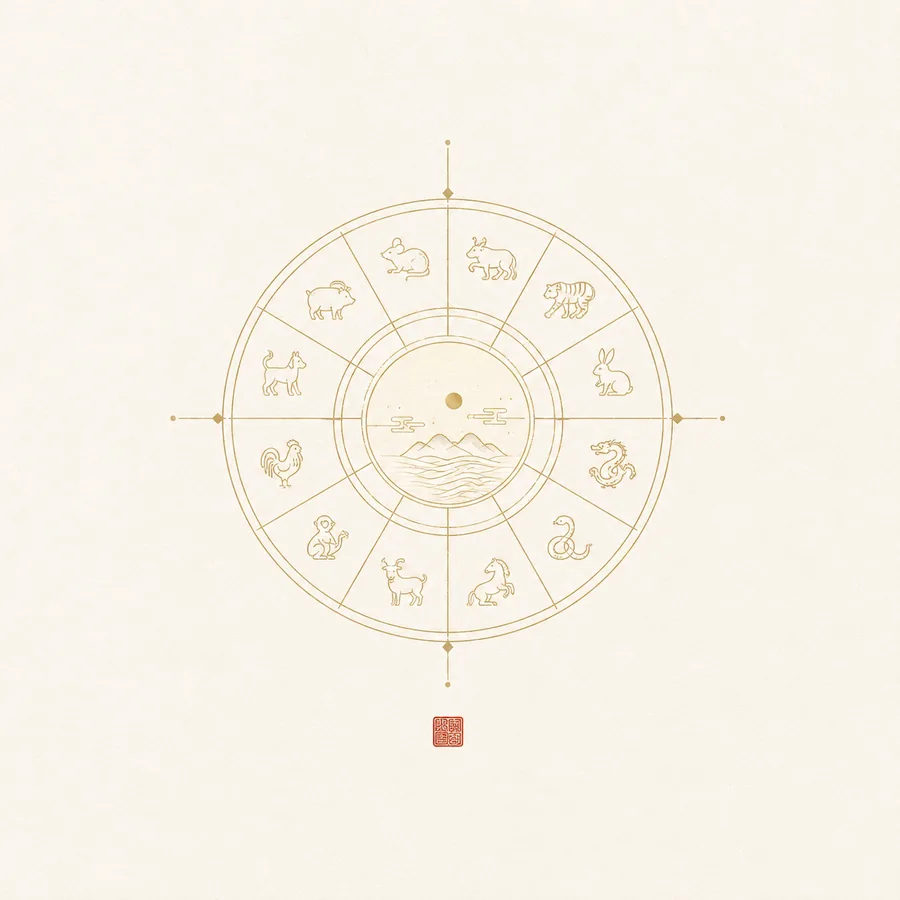
Yes, Ox, Tiger, Dragon, Snake and the rest are part of Saju. They appear as Earthly Branches in all four pillars, not just the Year Pillar. And each branch carries elemental energy, hidden stems, and seasonal context.
But no, the Year Branch animal is not the "main character" of your reading. Honestly, I'd rank it fourth in importance out of the four pillars. The Day Pillar governs your core self and your intimate relationships. The Month Pillar governs your natural talent and career energy. The Hour Pillar governs your inner life and how you're likely to age.
The Year Pillar? It speaks more to your generational backdrop and your family of origin. Important, yes. The whole story? Definitely not.
Misconception #3: Two People With Compatible Signs Are Automatically a Good Match
I get this one from clients constantly, especially when they're hoping to confirm a relationship they're already excited about. They'll say "we're both Fire signs, that must be good, right?"
Compatibility in Saju is not that simple. You don't compare year animals and call it done. A real compatibility reading (what we call 궁합, Gunghap) looks at the interaction between two complete charts. Specifically, how each person's Day Master relates to the other, whether the Five Elements support or drain each other, and how the elemental structure of one chart responds to the other's timing cycles.
Two Fire-heavy charts, for example, might feel electric at first but create a volatile dynamic over time. Meanwhile, a Water Day Master and a Fire Day Master might look like a controlling cycle (Water extinguishes Fire) on paper, but the actual chart dynamics could create a deeply complementary and balancing relationship.
If you're serious about understanding romantic compatibility through Saju, a Saju love reading will give you a much more nuanced picture than sign matching ever could.
Misconception #4: More of Your Favorable Element Is Always Better
This is a subtle one, and even people who've studied a bit of Saju trip over it.
There's a concept called the Useful God (용신 Yongsin). It's the single element your chart needs most to achieve balance. If your Day Master is weak, you probably need supportive elements like Resource or Companion energy. If your Day Master is strong and dominant, you actually need elements that channel or challenge that excess, like Output, Wealth, or Authority energy.
Here's what people get wrong: they assume that once they identify a "good" element for their chart, more of it is always better. It's not. The same element that's your Useful God in one context can become destabilizing when it overwhelms the chart's balance.
I once had a client with a strong Wood Day Master who kept seeking out more Wood energy in his environment, thinking it fed him. It was doing the opposite. His chart needed Metal to structure all that rising energy. When a Metal-dominant Grand Fortune (대운 Daeun) cycle arrived in his late 30s, things finally clicked into place for him professionally and personally.
Misconception #5: Saju Predicts Fixed, Unchangeable Outcomes
This is where I push back the hardest, even with longtime Saju enthusiasts.
Saju is a timing and tendency system. It maps the elemental energies moving through your life in 10-year Grand Fortune cycles (대운 Daeun) and annual cycles (연운 Yeonun). These cycles overlay your birth chart and create conditions, not certainties.
Think of it this way: if a certain fortune period brings strong Fire energy and your chart thrives with Fire, you have a window of momentum. But whether you take advantage of that window depends on your choices, your awareness, and your readiness.
I've seen two people with nearly identical charts live very different lives. Same elemental structure, same timing cycles. One used the difficult Metal period to build discipline and expertise. The other spent those years resisting the pressure and feeling stuck. The chart described the weather. They chose how to dress for it.
Misconception #6: Saju and BaZi Are Different Systems
Small but important clarification. When K-culture fans talk about Saju and Chinese astrology fans talk about BaZi (八字), they're referring to the same underlying system. BaZi is the Chinese name. Saju is the Korean pronunciation and cultural adaptation. The core mechanics, the Four Pillars, the Ten Gods (십신 Sipsin), the Five Elements (오행 Ohaeng), are shared.
There are some interpretive differences and stylistic variations between Korean and Chinese practitioners, but the bones are the same. If you've studied BaZi resources, that knowledge absolutely transfers.
Misconception #7: You Need to Know Your Birth Hour for a "Real" Reading
People without a confirmed birth hour often think they can't get a meaningful Saju reading. Not true.
Yes, the Hour Pillar (시주) adds depth, particularly around your inner psychology, late-life fortune, and relationship to children. But the Year, Month, and Day Pillars already give practitioners so much to work with. The Day Master is still fully accessible. The Month Pillar, which governs career and innate talent, is still intact. Grand Fortune timing cycles can still be mapped with reasonable accuracy.
An incomplete chart is not a useless chart. Work with what you have.
Frequently Asked Questions

What is the most important pillar in a Korean Saju birth chart?
The Day Pillar is generally considered the most important. The Heavenly Stem of the Day Pillar is your Day Master (일간 Ilgan), which represents your core identity, personal energy, and how you relate to others. Most analysis in Saju flows from understanding the Day Master first.
Does Korean Saju predict the future exactly?
No. Saju maps elemental timing cycles and tendencies, not fixed outcomes. The Grand Fortune (대운 Daeun) and Annual Fortune (연운 Yeonun) cycles describe the energetic conditions you're moving through. How you respond to those conditions is shaped by your choices and awareness.
Is Saju the same as BaZi?
Essentially, yes. Saju is the Korean name and cultural adaptation. BaZi (八字) is the Chinese name for the same Four Pillars system. Both use the same Five Elements, Heavenly Stems, Earthly Branches, and Ten Gods framework. Stylistic differences exist between practitioners, but the core system is shared.
Can I get a Saju reading without knowing my birth hour?
Yes. While the Hour Pillar adds detail, a meaningful reading can be done with just your birth year, month, and day. The Day Master and Month Pillar, two of the most informative components, are still fully available.
Saju is genuinely rich and layered, and the more you understand the real mechanics, the more useful and accurate it becomes. If you want to go deeper than the myths, a proper chart analysis is the place to start.
Discover Your Destiny
Curious about your own chart?
Get a free mini reading, then unlock your full Four Pillars report from a certified Saju master.