Korea's Fall Wedding Season and How Couples Pick the Date
Korean couples obsess over fall wedding dates. A Saju practitioner explains the real process behind choosing the perfect wedding day using Four Pillars.
Why Korea's Fall Wedding Season Is So Intense
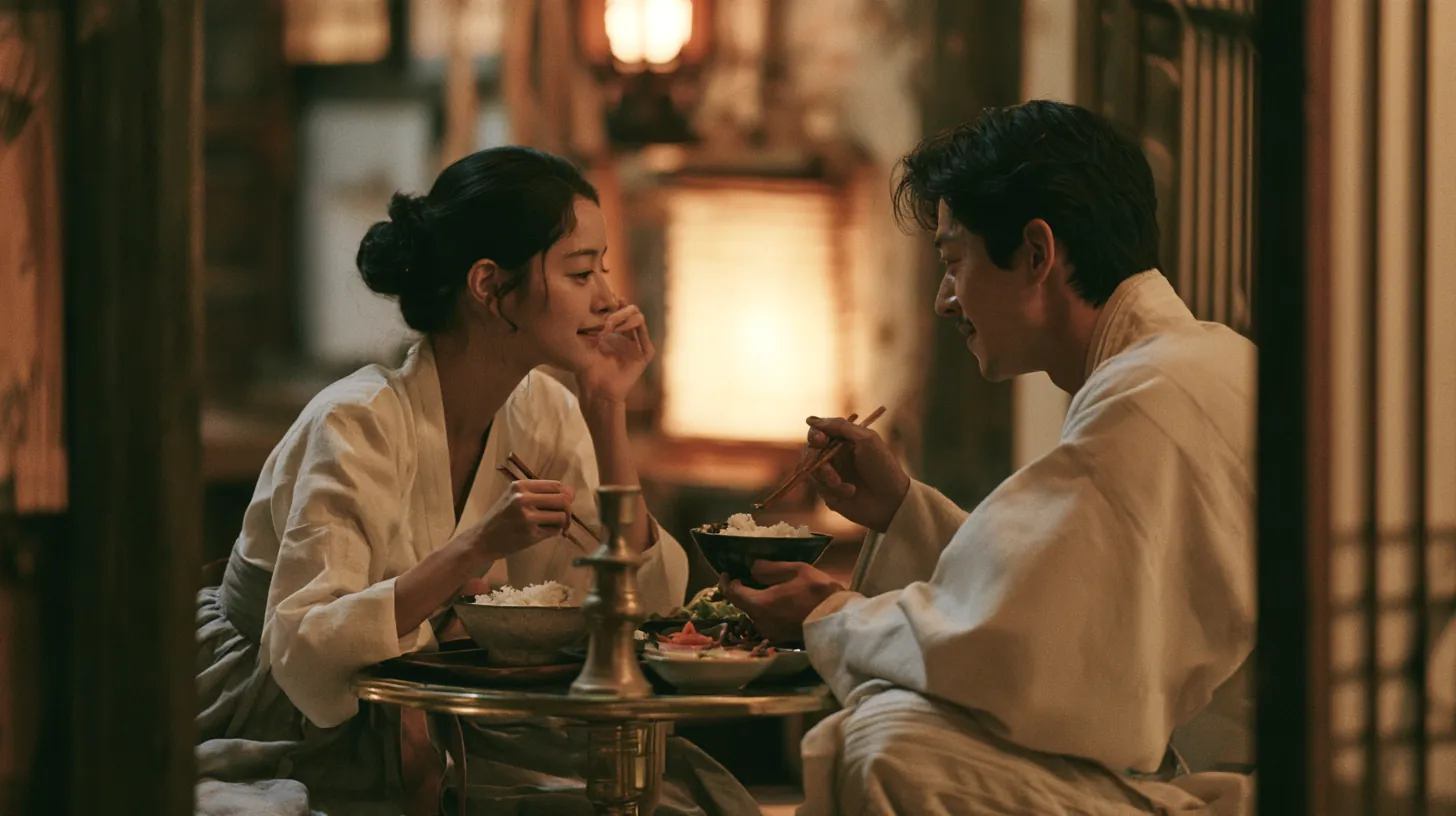
Korea's fall wedding season is no joke. From late September through November, wedding halls across Seoul and Busan are booked solid, sometimes running five or six ceremonies back to back on a single Saturday. If you've ever wondered why Korean couples cluster their weddings in autumn, and more importantly, how they actually pick the specific date, the answer goes way deeper than "the weather is nice."
Yes, the weather matters. Korean autumns are genuinely gorgeous. But the real engine behind date selection is rooted in Saju (사주), the Korean Four Pillars of Destiny system that's been guiding major life decisions for centuries. And honestly, even couples who consider themselves modern and non-superstitious still end up checking their charts before locking in a date. It's that embedded in the culture. If you're curious about your own chart, you can start with a free reading to see what your Four Pillars actually look like.
The process of picking a Korean wedding date isn't random. It's not even primarily aesthetic. There's an entire system behind it, and after doing this work for over 15 years, I can tell you: the system is surprisingly logical once you understand the mechanics.

Why Autumn Dominates Korean Weddings
Let's talk about the elemental backdrop first.
In the Five Elements (오행 Ohaeng), autumn belongs to Metal (금). Metal's movement is inward, condensing, gathering. Think of it as nature pulling energy together before winter. This contrasts sharply with spring's Wood energy, which pushes outward and upward.
So what does this mean for weddings? Metal energy supports structure, commitment, and formalization. You're literally choosing a season whose elemental nature is about solidifying things. Starting a marriage during a time when the universe's energy is about consolidation? That's not an accident. Korean cultural wisdom picked up on this long before anyone wrote blog posts about it.
There's also a practical Saju reason. Summer months carry heavy Fire energy, which melts Metal. Since Metal represents precision and contracts (marriage is essentially a contract of commitment), getting married in peak Fire season can feel energetically unstable. Late summer transitions into Earth, which produces Metal through the productive cycle (상생). So by the time you hit September and October, you're riding a wave where Earth has been feeding Metal, and Metal is at its strongest.
Winter Water season, on the other hand, drains Metal (Metal produces Water). So the window really is autumn. Korean grandmothers might not explain it in Five Element terms, but they know. They just know.
How Couples Actually Pick the Wedding Date
Here's where it gets specific. The process typically involves several layers, and most Korean couples engage with at least two or three of them.
Step 1: Comparing Both Partners' Saju Charts
Before anything else, the couple's birth charts get examined together. Each person has a Day Master (일간 Ilgan), which is the Heavenly Stem of their Day Pillar and represents their core identity. The question is: how do these two Day Masters interact?
Say one person's Day Master is Yang Wood (甲) and the other is Yin Earth (己). Wood controls Earth in the controlling cycle (상극). That's not automatically bad, but it tells you something about the dynamic. A skilled practitioner will look at whether that controlling relationship is supportive (like pruning a garden) or destructive (like uprooting a field), and this depends entirely on what each chart actually needs.
If you're interested in how two charts interact romantically, a Saju love reading digs into exactly this kind of compatibility analysis.
The Ten Gods (십신 Sipsin) between the two charts also matter enormously. If one partner's Day Master shows up as the other partner's Direct Wealth (정재 Jeongjae), that's traditionally considered excellent for marriage because Direct Wealth represents steady, lasting value. But if the interaction produces mostly Hurting Officer (상관 Sanggwan) energy, the practitioner might flag potential friction and suggest dates that introduce balancing elements.
Step 2: Finding the Useful God for the Marriage Itself
This is the part most people don't realize. The wedding date creates its own Four Pillars. The year, month, day, and hour of the ceremony each have a Heavenly Stem and Earthly Branch. So the wedding itself has a birth chart.
A good practitioner will construct this chart and assess its Useful God (용신 Yongsin), the element the marriage chart needs most for balance. Then they'll cross-reference it with both partners' charts.
Here's the thing. If both partners have weak Day Masters that need Resource elements for support, you don't want a wedding date whose pillars are loaded with Output energy that would drain them both further. You want a date that feeds both charts.
This is where it becomes genuinely complex. Finding a date that simultaneously supports both individuals AND creates a strong marriage chart is like solving a three-way puzzle. Some dates look great on the calendar but are terrible for a specific couple. Other dates that seem random turn out to be perfect.
Step 3: The Grand Fortune Check
Both partners' Grand Fortune (대운 Daeun) cycles matter too. These are the 10-year fortune periods that act as the most powerful timing mechanism in Saju.
If someone is entering a Grand Fortune period that brings their Useful God, getting married during that window amplifies the positive energy. The marriage essentially gets launched during a personal golden period. Conversely, if someone is in a Grand Fortune that brings their Hostile God (구신), a practitioner might suggest waiting or carefully selecting a date that counteracts that pressure.
I've seen situations where a couple was dead set on October of a particular year, but one partner's Grand Fortune shift happening in March of the next year would have been dramatically more favorable. Sometimes waiting four or five months makes a meaningful difference in the chart dynamics.
Step 4: Annual Fortune Layer
The Annual Fortune (연운 Yeonun) adds another filter. Each year carries its own Heavenly Stem and Earthly Branch combination, creating a specific elemental energy that overlays everything.
Take a hypothetical couple where both Day Masters benefit from Earth energy. A year with strong Earth stems (like a 戊 or 己 year) would naturally support their union. Marrying in an autumn month of that year? You're stacking favorable energies.
But here's where Korean cultural practice gets really specific: certain day-and-month combinations create what we call "clashing branches" (충 Chung). If the Earthly Branch of the wedding day directly clashes with an Earthly Branch in either partner's chart, that date gets eliminated. No exceptions, usually. Clashes create instability, and nobody wants instability baked into their marriage's birth chart.
The Cultural Side: It's Not Just Astrology
I want to be honest about something. While Saju drives the technical date selection, Korean fall wedding culture has layers that go beyond chart analysis.
Family input is huge. Often it's the parents (sometimes specifically the groom's mother) who insist on consulting a Saju practitioner. Even couples who shrug at the idea of fortune reading will go along with it because refusing would create more friction than just checking the date. Korean wedding planning already involves intense family negotiation. The date selection through Saju actually gives everyone a shared framework for decision-making, which, ironically, can reduce arguments.
There's also the "double lucky" factor. Certain dates carry cultural significance beyond Saju. Dates with repeated numbers, dates that fall on traditionally auspicious days in the lunar calendar, or dates that avoid the "ghost month" period all get factored in. When a Saju-favorable date overlaps with a culturally auspicious one, that date gets snapped up instantly. This is why popular autumn wedding dates book out a year or more in advance.
What Happens When the Chart Says "Not This Year"
Sometimes a practitioner will look at both charts, look at the year's energy, look at the Grand Fortune cycles, and say: this year isn't ideal. What then?
Most couples adjust. They might move the legal registration to the favorable date and hold the ceremony on a convenient weekend, effectively splitting the "birth" of the marriage from the celebration. The legal date is what matters in Saju terms because that's when the commitment formally begins.
Others will pick the least problematic date within their preferred window. No date is perfect. Every date has some tension in its pillars. The goal isn't perfection. It's avoiding major clashes and maximizing support for both partners' charts.
Modern Trends: Gen Z Couples and Date Selection
Here's something I find genuinely interesting. Younger Korean couples are engaging with Saju date selection more, not less. But they're doing it differently.
Instead of having their parents hire a practitioner, they're checking compatibility apps, reading about their Day Masters online, and sometimes doing their own basic analysis before consulting a professional for the final date selection. If you want to start learning these concepts yourself, a free Saju ebook can give you a solid foundation.
The irony is beautiful. A generation that claims to be less traditional is actually more hands-on with the technical Saju mechanics than their parents were. They're not just accepting a date handed down by an elder. They want to understand why that date works.
Frequently Asked Questions
Do all Korean couples use Saju to pick their wedding date?
Not all, but a significant majority do, even if indirectly. Many couples who wouldn't call themselves believers still have a family member (usually a parent or grandparent) who insists on at least checking the date with a practitioner. It's so normalized in Korean culture that skipping it entirely is actually the unusual choice.
Can a bad wedding date actually harm a marriage?
In Saju theory, the wedding date creates a birth chart for the marriage itself. A date with major clashes or unfavorable elemental combinations doesn't doom the marriage, but it can indicate areas of recurring friction. Think of it like starting a road trip with low tire pressure. You can still get there, but the ride might be bumpier than necessary.
Why is autumn specifically better than spring for Korean weddings?
Autumn's Metal energy supports formalization, commitment, and structure, qualities you want in a marriage foundation. Spring's Wood energy is about initiation and growth, which is great for starting projects but less ideal for making binding commitments. Metal condenses and solidifies. Wood expands and explores. Both are valuable, but for a wedding, most practitioners prefer the consolidating energy of Metal season.
What if both partners have charts that conflict with autumn dates?
This happens more than you'd think. If both partners' charts are already Metal-heavy, adding more Metal through an autumn wedding could create imbalance. In those cases, a practitioner might recommend a late summer date (Earth season, which feeds Metal gently) or even suggest specific hours within the wedding day that introduce balancing elements like Water or Wood.
Choosing a wedding date in Korea isn't just about checking venue availability or weather forecasts. It's a layered process that weaves together ancient elemental wisdom, family dynamics, and personal chart analysis. Whether you're planning a Korean wedding or just fascinated by how deeply Saju shapes real life decisions, understanding the mechanics behind date selection reveals something genuinely beautiful about how this tradition stays alive.
Curious how your own chart influences your best timing for major life events?
Discover Your Destiny
Curious about your own chart?
Get a free mini reading, then unlock your full Four Pillars report from a certified Saju master.
Couple Saju Report
Check your real compatibility, not just the elements.
Get a full individual Saju report for each of you, plus your compatibility reading (궁합) at no extra cost. For couples, crushes, or anyone you want to understand.
Get the Couple Report · $72