Love-Hate Star in Korean Saju: What Wonjin Really Means
The love-hate star Wonjin in Korean Saju creates intense push-pull energy in relationships. Learn what it really means for your chart.
Love-Hate Star in Korean Saju: What Wonjin Really Means
If you've ever felt magnetically drawn to someone you also kind of can't stand, Wonjin might be written all over your chart. The love-hate star in Korean Saju is one of those concepts that makes people go "oh, THAT explains everything." It's called 원진 (Wonjin) in Korean, and honestly, it's one of the most misunderstood dynamics in all of Four Pillars reading.
I've had so many clients come in confused about a relationship that feels both electric and exhausting. They can't leave, but they can't fully settle either. Nine times out of ten, there's a Wonjin connection somewhere in the mix. If you want to see how this energy shows up in your own birth chart, you can start with a free reading and see what's actually going on.
Let me break this down properly.
What Is Wonjin (원진)?
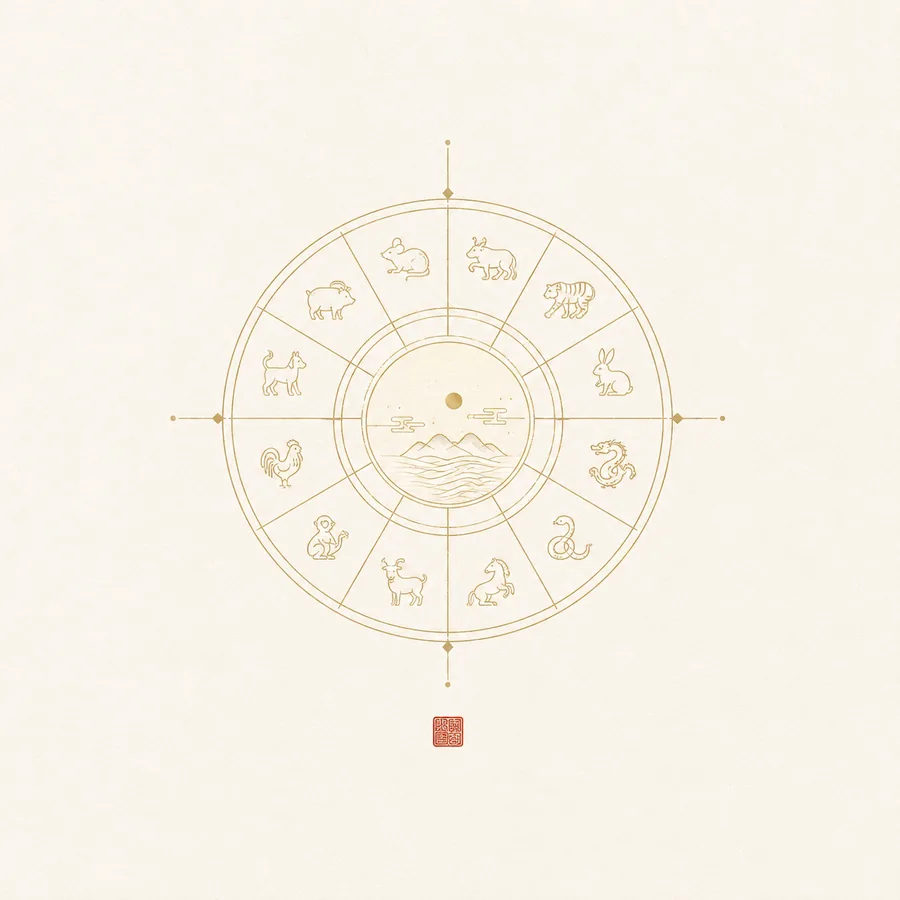
Wonjin is a specific pairing relationship between Earthly Branches in the Four Pillars system. Unlike the productive cycle (상생) or the controlling cycle (상극), Wonjin sits in its own strange category. It's not purely harmonious, and it's not purely destructive. It's both, simultaneously, which is exactly why it creates the "love-hate" dynamic people feel so viscerally in real life.
The Wonjin pairs are:
- Rat (子) and Goat (未)
- Ox (丑) and Horse (午)
- Tiger (寅) and Rooster (酉)
- Rabbit (卯) and Dog (戌)
- Dragon (辰) and Pig (亥)
- Snake (巳) and Monkey (申)
These pairs are six combinations where the Earthly Branches sit in a particular oppositional relationship that creates tension without resolution. Think of it less like a controlling force and more like a chronic low-grade friction that never fully burns out.
Why Does the Love-Hate Star Feel So Intense?
Here's the thing. Wonjin isn't just about conflict. The "love" part is real too. These pairings carry a kind of karmic familiarity. When two people meet and their charts have a Wonjin connection, especially between Day Masters or Year Branches, there's often an immediate recognition. Almost like you've fought with this person before, in another life, and you never quite finished.
In my experience, Wonjin energy is most potent when it shows up between the Day Branches of two people's charts. The Day Pillar represents the most personal layer of who you are, your core self in relationships. A Wonjin hit there means the friction goes deep. It's not surface-level irritation. It gets under your skin because it mirrors something you haven't resolved about yourself.
I remember one client, a Rooster Day Branch woman, who came in asking about her on-again-off-again situationship with a Tiger Day Branch guy. She described it as "he's the only person who actually sees me, but also the person who drives me absolutely insane." That's Wonjin energy in its purest form. The intimacy and the irritation come from the same source.
Wonjin in Your Birth Chart vs. Between Two People
It's worth separating two scenarios here, because they work a bit differently.
Wonjin within your own chart means a Wonjin pair exists between two pillars in your own Four Pillars. For example, if your Year Branch and Day Branch form a Wonjin pair, there can be an internal tension between how your family shaped you and who you are in relationships. This can show up as a pattern of self-sabotage or a tendency to feel conflicted about intimacy.
Wonjin between two people's charts is what most people ask about when they come in for a relationship reading. When your Day Branch or Year Branch forms a Wonjin with the other person's corresponding Branch, you two will likely always have an edge to the relationship. Not necessarily bad. Just never fully comfortable.
If you're trying to figure out how Wonjin plays out in your relationship specifically, a Saju love reading is where you'd look at the actual branch interactions between two full charts.
The Shadow Side of Wonjin Energy
Wonjin relationships have a shadow, and it's worth being honest about it. The word 원진 in Korean carries a connotation of grievance, lingering resentment, complaint. It's the kind of energy that accumulates slowly. Two people can genuinely love each other and still build up a reservoir of unexpressed frustration that eventually overflows.
The patterns I see most often with Wonjin connections:
The relapse cycle. They break up, swear it's over, then get back together within three months. Repeat indefinitely. The pull is real but so is the friction.
Communication as combat. Even casual conversations can tip into argument. It's not that these two hate each other. It's that there's no neutral gear.
Mutual growth through pressure. This is the upside nobody talks about. Wonjin pairs often push each other to grow in ways that more comfortable relationships don't. Metal cuts Wood (상극), but that's also how Wood gets shaped into something refined.
Does Wonjin Always Mean the Relationship Won't Work?
Absolutely not. I want to be clear about this. In Korean Saju, no single star or pairing is a death sentence for a relationship. What matters is the full chart context.
If both people have strong Earth elements in their charts (remember the Five Elements: 오행 Ohaeng), that Earth can act as a buffer between conflicting energies. If one or both charts have a well-placed Nobleman Star (천을귀인), there's external support available when the friction peaks. And if the Grand Fortune (대운) period is favorable, even difficult chart interactions can be managed and even transformed.
Also worth noting: sometimes Wonjin appears in a chart alongside Peach Blossom energy (도화 Dohwa). When those two overlap, you get this intoxicating mix of magnetic attraction and unresolvable tension. That combination shows up in some of the most dramatic love stories, and honestly, in a lot of celebrity relationship chart patterns too.
How to Work With Wonjin Energy Instead of Against It
If Wonjin shows up in your chart or between you and someone important, the question isn't "should I leave?" It's "do I understand what this is asking of me?"
Wonjin relationships tend to demand a specific kind of emotional maturity. You can't coast. You can't assume. You have to actively choose the relationship over and over, because the friction won't disappear on its own. In Five Elements terms, you have to consciously feed the productive cycle (상생) in the relationship while acknowledging the inherent tension.
Some practical things I've seen work for Wonjin pairs: clear, direct communication (no passive accumulation), space to be separate identities, and a genuine curiosity about why this person triggers you the way they do. Because in almost every case, the trigger is a mirror.
If you want to go deeper into understanding Saju dynamics like this one, the free Saju ebook is a solid place to start building that foundation.
Frequently Asked Questions
What exactly is Wonjin in Korean Saju?
Wonjin (원진) is a type of Earthly Branch pairing in the Four Pillars of Destiny system that creates a love-hate dynamic. The six Wonjin pairs are: Rat-Goat, Ox-Horse, Tiger-Rooster, Rabbit-Dog, Dragon-Pig, and Snake-Monkey. Unlike purely harmonious or purely destructive relationships, Wonjin creates simultaneous attraction and irritation.
Is Wonjin always bad for a relationship?
No. Wonjin creates friction, but friction can also drive growth. Whether it's destructive depends on the full chart context, both people's Day Masters, the presence of balancing elements, and their current Grand Fortune (대운) periods. Many long-term couples have Wonjin connections in their charts.
Can Wonjin appear within a single person's chart?
Yes. If two pillars within your own Four Pillars contain a Wonjin pairing, it creates internal tension, often showing up as self-conflict around relationships or a push-pull between different areas of your life, like career versus personal life.
How do I know if I have Wonjin with someone?
You need to compare the Earthly Branches of both charts, typically the Year and Day Branches. If any branch combination matches one of the six Wonjin pairs, that dynamic is present. A professional reading or a detailed chart comparison tool can identify this quickly.
Whether Wonjin energy is currently blessing your life with intensity or just making everything complicated, understanding it is always better than being confused by it. The love-hate star isn't a warning to avoid someone. It's an invitation to understand a deeper pattern.
Discover Your Destiny
Curious about your own chart?
Get a free mini reading, then unlock your full Four Pillars report from a certified Saju master.