Saju vs Western Astrology: Key Differences Explained
Saju vs Western astrology: a Korean fortune telling expert breaks down the key differences and why Korean Four Pillars reading goes deeper than your zodiac sign.

Saju vs Western Astrology: Why Korean Fortune Telling Goes Deeper
Saju vs Western astrology is a comparison I get asked about almost every week. After 15+ years of practicing Korean Four Pillars of Destiny readings, and having studied Western astrology myself early on, I can tell you: these are fundamentally different systems. Not better or worse in a blanket sense, but Saju operates on a level of specificity that most people don't expect until they experience it firsthand.
If you've ever felt like your horoscope was vaguely right but never quite you, there's a reason for that. And it has everything to do with how these two systems are built.
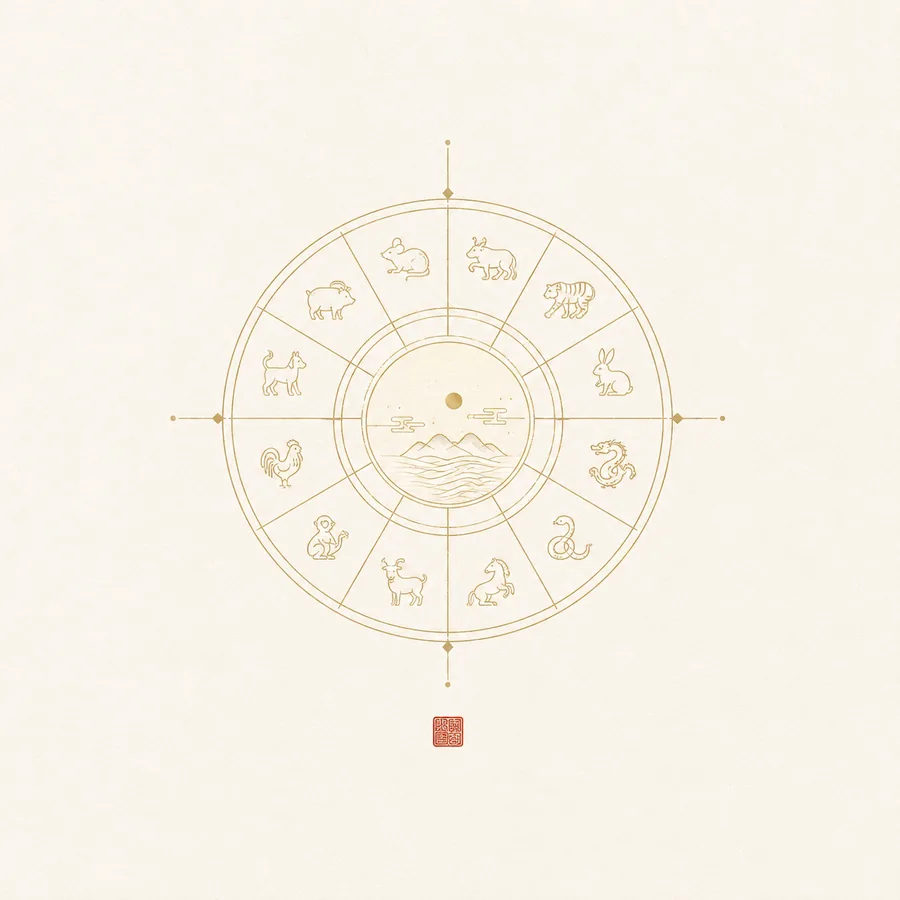
What Is Saju, Exactly?
Saju (사주), also called Saju Palja (사주팔자), translates to "Four Pillars, Eight Characters." It's a Korean fortune telling system rooted in East Asian metaphysics, specifically the Chinese cosmological framework of Yin-Yang and the Five Elements (Wood, Fire, Earth, Metal, Water).
Your Saju birth chart is calculated from four data points: the year, month, day, and hour of your birth. Each of these becomes a "pillar," and each pillar contains two characters, one Heavenly Stem and one Earthly Branch. That gives you eight characters total.
These eight characters interact with each other in complex ways. They clash, they harmonize, they transform. And from that web of interactions, a skilled practitioner can read your personality, career tendencies, relationship patterns, health vulnerabilities, and the timing of major life events.
What Western Astrology Does Differently
Western astrology, the system most people know from newspaper horoscopes and apps like Co-Star, is based on the position of celestial bodies (planets, sun, moon) relative to the twelve zodiac constellations at the time of your birth.
Your sun sign is just the starting point. A full natal chart in Western astrology includes your moon sign, rising sign, planetary houses, aspects between planets, and more. It's genuinely complex when done properly.
I want to be fair here. A skilled Western astrologer doing a full natal chart reading is working with a sophisticated system. The shallow version most people encounter, your "You're such a Gemini" memes, doesn't represent the depth that's actually there.
But even at its deepest, Western astrology and Saju are asking different questions in different languages. Let me break this down.
Key Differences Between Saju and Western Astrology
1. The Foundation: Stars vs. Elements
The most fundamental difference? Western astrology looks up. Saju looks inward.
Western astrology maps the positions of celestial objects, planets, the sun, the moon, against the zodiac belt. The underlying belief is that these cosmic bodies exert influence on human affairs.
Saju doesn't care where Jupiter is. Instead, it's built entirely on the cyclical interaction of the Five Elements and the Yin-Yang polarity. Your chart is a snapshot of the elemental energy present at the exact moment you were born. It's less about what the stars are doing to you and more about what energetic composition you are.
I've always found this distinction hits differently for clients. You're not being influenced by Mars. You literally contain a specific ratio of Fire, Water, Wood, Metal, and Earth. That's your energetic DNA.
2. The Calendar System
Western astrology uses the tropical zodiac, which is tied to the seasons and the spring equinox. Saju uses the traditional East Asian lunisolar calendar combined with the Sexagenary Cycle, a 60-year cycle of Heavenly Stems and Earthly Branches.
This means two people born on the same calendar date can have different Saju charts if one was born before and one after a specific solar term transition. The precision matters enormously.
3. Specificity of Timing
Here's the thing. This is where Saju genuinely goes deeper than most Western astrological practice.
In Saju, we use a system called "Dae-un" (대운), which are 10-year major life cycles, plus yearly, monthly, and even daily pillars that interact with your birth chart. This allows for remarkably specific timing predictions.
I had a client in 2019 who came to me worried about her career. Her Saju chart showed that her current 10-year cycle was dominated by a clashing element against her Day Master (the core of her identity in the chart). But I could see that a shift was coming in 2021, when a new supportive element would enter. She ended up getting a promotion that year that completely changed her trajectory.
Western astrology has transits and progressions that serve a similar function. But in my experience, Saju's timing framework is more structured and, frankly, more actionable.
4. Personality vs. Destiny
Western astrology excels at psychological profiling. It's great at answering "Who am I?" The moon sign reveals emotional patterns. Mercury placement shows communication style. It's beautifully nuanced for self-understanding.
Saju does personality too, but it's equally focused on destiny mapping. What will happen, when, and how you can navigate it. Korean fortune telling has always been practically oriented. Historically, Korean families consulted Saju masters before marriages, business decisions, and naming children. It's not just about knowing yourself. It's about knowing your path.
5. Compatibility Analysis
Both systems do compatibility readings, but the methodology is wildly different.
In Western astrology, you compare two natal charts, looking at how one person's planets aspect the other's. It's called synastry.
In Saju, compatibility (궁합, gunghap) analyzes how the Five Elements in two people's charts interact. Do they support each other? Does one person's excess element fill what the other lacks? Or do their charts create destructive elemental cycles?
I've done hundreds of gunghap readings, and honestly, the level of detail still surprises me. You can see not just whether two people are compatible, but where the friction will show up. Finances? In-laws? Communication? The chart often points directly to it.
Why Korean Fortune Telling Goes Deeper
I'm not here to trash Western astrology. I still think it's a valuable system, and I respect skilled practitioners of it. But when people ask me why Saju goes deeper, here's what I tell them.
It's more individual. Your Western sun sign is shared with roughly 1/12 of the world's population. Even your full natal chart, while unique, groups you with everyone born in your area within a similar time window. Saju's eight-character system, combined with the specific interactions between your pillars, creates a far more granular profile. The number of possible Saju chart combinations is over 500,000.
It's more predictive. Western astrology tends to speak in tendencies and themes. "This is a good period for communication." Saju tells you which specific years, and sometimes months, will bring career changes, relationship shifts, health concerns, or financial opportunity. And it maps this across your entire lifespan.
It's more prescriptive. This is the part that really sets Korean fortune telling apart. Saju doesn't just diagnose. It offers remedies. If your chart is weak in Water energy, there are practical adjustments you can make: career directions, colors, even geographic locations that can help balance your elemental composition. It's fortune telling with an action plan.
One client came to me completely burned out, working in a high-pressure sales role (very Fire and Metal energy). Her chart showed she was fundamentally a Water and Wood person. We talked about career directions that aligned better with her elemental nature, and she eventually transitioned into counseling. Night and day difference in her wellbeing.
Can You Use Both Systems Together?
Absolutely. I know practitioners who reference both, and I've done it myself when clients come in with Western astrology knowledge. The systems don't contradict each other so much as they illuminate different facets of the same person.
Think of it this way: Western astrology gives you a beautiful aerial photograph. Saju gives you the architectural blueprint. Both show you the building. One shows you how it looks. The other shows you how it's built, and where the load-bearing walls are.
If you're curious about what your Saju chart actually looks like, you can try a free Saju reading to get a first glimpse.
The Growing Global Interest in Saju
Something interesting has been happening over the past few years. As Korean culture spreads globally through K-dramas, K-pop, and Korean beauty, more people are finding their way to Saju. I've seen my international clientele triple since around 2020.
And honestly? Many of these clients tell me the same thing: "I've done astrology for years, but this is the first time a reading felt this specific."
That tracks with my experience. Saju's strength has always been precision. It doesn't speak in generalities. When your chart says a particular year is going to challenge your relationships, it means something concrete. And when it says a particular period is ripe for financial growth, you can plan around that.
Frequently Asked Questions
Is Saju more accurate than Western astrology?
Accuracy depends on the practitioner, not just the system. But structurally, Saju uses more precise birth data (especially the exact hour) and generates more individualized results. In my experience reading for thousands of clients, Saju's timing predictions tend to be remarkably specific compared to Western astrological forecasts.
Do I need to know my exact birth time for a Saju reading?
Yes, and this matters a lot. The hour pillar is one of your four pillars, and it significantly affects the reading. Without it, a practitioner is working with only 75% of your chart. If you don't know your birth time, some practitioners can work with the remaining three pillars, but the reading will be less precise.
Can Saju tell me my future?
Saju maps the energetic cycles that will influence your life across different time periods. It can identify when favorable or challenging periods are coming and in what life areas (career, relationships, health, finances). It doesn't predict exact events like "you'll meet someone on March 15th," but it can tell you that a specific year is highly favorable for new relationships.
Is Saju the same as Chinese astrology?
Not exactly. Saju shares roots with Chinese Bazi (八字), which also uses the Four Pillars framework. But Korean Saju has developed its own interpretive traditions, emphasis areas, and cultural nuances over centuries. Think of it like how American English and British English share the same roots but have evolved differently. A Saju reading from a Korean practitioner will feel different from a Bazi reading from a Chinese practitioner.
Your Birth Chart Is Waiting
If you've only ever known yourself through your Western zodiac sign, you're looking at a fraction of the picture. Saju reveals the elemental blueprint you were born with, the cycles that shape your life, and the practical steps you can take to align with your natural energy.
Whether you're navigating a career crossroads, wondering about a relationship, or just genuinely curious about what Korean fortune telling can show you that Western astrology hasn't, your Four Pillars chart has answers.
Discover Your Destiny
Curious about your own chart?
Get a free mini reading, then unlock your full Four Pillars report from a certified Saju master.