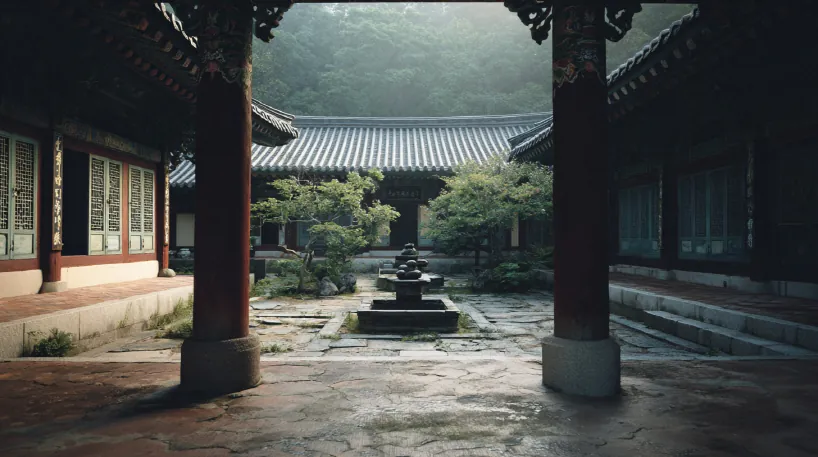
Why Young Koreans Book Fortune Tellers Years in Advance
Young Koreans are booking Saju readers years ahead. Here's the cultural logic, the timing system behind it, and why it actually makes sense.
Why Young Koreans Book Fortune Tellers Years in Advance
If you've seen the headlines, you already know something unusual is happening in Korea. Young people, not their grandparents, are filling up waitlists for fortune tellers. Some of the most sought-after Saju readers have queues stretching 12, 18, even 24 months out. And these aren't older generations holding onto tradition. These are people in their 20s and 30s booking appointments the way you'd reserve a table at a Michelin-star restaurant. So what's actually going on?
The short answer: it's not superstition. It's timing strategy. And once you understand how Korean fortune reading works under the hood, the behavior makes complete sense. If you're new to Saju and want to see what your own chart looks like, you can grab a free reading to get oriented before we go deeper.

The Cultural Shift Nobody Saw Coming
Korea has always had a living relationship with Saju, the Four Pillars of Destiny. But for a long time, seeking a reading carried a certain stigma among younger generations. It felt old-fashioned, rural, something your grandmother did. That started changing around the mid-2010s, then accelerated hard during the pandemic years.
The reasons are layered. Economic pressure, a fiercely competitive job market, and a general sense of "what is even happening" collectively pushed a lot of young people toward any framework that might offer clarity. Saju offered exactly that: a structured, personalized system rooted in your exact birth data, not vague sun sign horoscopes.
Then social media made it aesthetic. Fortune telling became content. And suddenly booking a Saju reading wasn't embarrassing. It was something you talked about.
The Real Reason the Waitlists Are So Long
Here's the thing. The demand spike explains some of the wait time. But there's a deeper reason young Koreans are booking so far in advance, and it has everything to do with how Saju actually works.
Saju operates on a system of layered timing cycles. The most powerful is called 대운 (Daeun), the Grand Fortune. These are 10-year periods that shift the fundamental energy of your life. Each period is derived from your Month Pillar and moves either forward or backward through the calendar depending on your gender and birth year's polarity.
Here's what that means practically: your 20s might run under one Grand Fortune, and your 30s under a completely different one. The elements active during each period can either support your Day Master (일간, Ilgan), which is the core of your identity in Saju, or work against it. When your Useful God (용신, Yongsin) arrives in a Grand Fortune? That's when life opens up. Opportunities feel easier, relationships click, career momentum builds.
When an unfavorable period arrives, the opposite happens. Not doom, exactly, but friction. More effort for less return.
Young Koreans who've gotten into Saju understand this. They're not just booking a reading to hear "this year will be good." They're trying to map out the next decade, understand when their Useful God periods are active, and plan accordingly. That kind of reading takes time and expertise. Hence, the waitlist.
Grand Fortune vs. Annual Fortune: The Climate vs. Weather Model

This is a concept I keep coming back to because it explains so much about why Saju feels more useful than a generic yearly horoscope.
Think of your Grand Fortune (대운) as the climate of a 10-year stretch. It sets the baseline conditions. Annual Fortune (연운) is the weather within that climate. A good decade with one rough year? Totally manageable. You stay warm even on a cold day. But a difficult decade compounded by a difficult year? That's when things get genuinely hard, and knowing it in advance lets you prepare rather than panic.
For young Koreans navigating massive life decisions, this framework is genuinely useful. When should I apply for grad school? Is this a good time to start a business? Should I get married this year or wait? These aren't abstract spiritual questions. They're practical ones, and Saju gives a systematic way to think about timing.
That's why people aren't just booking a quick session. They want a practitioner who will walk them through their upcoming Grand Fortune transitions, overlay the annual energies, and give them a real map.
What Gets Read in These Sessions
A thorough Saju reading for a young adult usually covers several things. The Day Master analysis comes first, identifying which of the Five Elements (오행, Ohaeng) anchors their identity and how that element is supported or challenged by the rest of the chart.
Then there's the balance check. Take a chart heavy in Water and Metal with almost no Fire. That person's chart is cold and sharp. If their Day Master needs warmth to function well, Wood and Fire years will feel like finally breathing. Metal-heavy years will feel like drowning in pressure. Understanding your elemental imbalances isn't fatalism. It's self-awareness with a calendar attached.
The Ten Gods (십신, Sipsin) come into it too. These are the 10 relationship archetypes that describe how each element in your chart interacts with your Day Master, covering everything from wealth and power to creativity and relationships. A good reading will tell you which Ten God is dominant in an upcoming period and what that means for career, love, and personal growth.
For love and compatibility specifically, a dedicated Saju love reading can go even deeper into how your elemental makeup interacts with a partner's chart.
Is It Actually Effective, or Just Anxiety in a Nice Package?
Honest answer? Both, and that's not a dismissal.
There's real psychological value in having a structured framework for uncertainty. Korea's younger generations are facing a genuinely difficult landscape: housing costs that feel impossible, job competition that is brutal, relationship timelines that feel socially pressured from every direction. Booking a Saju reading gives people a sense of agency. They're not passively waiting to see what happens. They're gathering information and making plans.
But beyond the psychology, Saju does have an internal logic that holds up. The elemental cycle system, the productive (상생, Sangsaeng) and controlling (상극, Sangguk) relationships between elements, the precise timing of Grand Fortune transitions. These are real mechanics that a trained practitioner applies consistently. It's not random.
When someone books a reading 18 months out, they're often timed it around a Grand Fortune transition they already know is coming. "My Daeun shifts when I'm 27. I want to understand what's coming before I get there." That's not anxiety. That's planning.
The Global Spillover
What's happening in Korea isn't staying in Korea. Korean pop culture exports have made Saju globally visible. People who got into K-dramas, K-pop, or Korean beauty content are now finding themselves genuinely curious about the philosophical system behind the fortune telling scenes they keep seeing.
The interest is real, and it's growing. If you want to understand the actual mechanics before your first reading, I'd point you toward the free Saju ebook as a solid starting point.
Frequently Asked Questions
Why are young Koreans going to fortune tellers instead of therapists?
It's not really an either/or. Many young Koreans use both. But Saju specifically offers something therapy doesn't: a timing framework. It's not about processing the past. It's about understanding when conditions are likely to shift, and structuring decisions around that. For a generation obsessed with optimization, that's genuinely appealing.
How far in advance do Koreans book Saju readings?
Waitlists vary by practitioner, but some of the most well-known Saju readers in Seoul have queues of 12 to 24 months. During high-demand periods like late autumn and early spring (popular times for annual readings), even lesser-known practitioners fill up months ahead.
What does a Saju practitioner actually tell you?
A thorough reading covers your Day Master (core identity element), the balance of Five Elements in your chart, your current and upcoming Grand Fortune periods, the Annual Fortune overlay, and how all of this maps to specific life areas like career, relationships, and health timing.
Is Saju the same as Chinese astrology?
They share roots. Saju is the Korean adaptation of the Four Pillars of Destiny system, which originated in Chinese metaphysics. Korea has developed its own interpretive traditions and terminology over centuries, so while the foundational structure is similar, Korean Saju has its own distinct character and approach.
The waitlist culture around Korean fortune reading isn't a fad. It's a symptom of something real: a generation looking for a reliable map in genuinely uncertain terrain. Saju, at its best, offers exactly that. Not predictions carved in stone, but a timing system sophisticated enough to actually help you decide.
Discover Your Destiny
Curious about your own chart?
Get a free mini reading, then unlock your full Four Pillars report from a certified Saju master.