Yin Wood Energy in When My Love Blooms Explained
Why does the female lead in When My Love Blooms feel so deeply rooted yet heartbroken? Her Saju Yin Wood energy explains everything.

Why the Female Lead in When My Love Blooms Has Such Strong Yin Wood Energy
If you've watched When My Love Blooms and found yourself unable to shake off the feeling that Yoo Ji Soo lives her entire life around other people, quietly anchoring herself to everyone except herself, you're not imagining things. That pattern has a name in Saju. It's called Yin Wood, or 乙木 (Eulmok), and once you see it, you genuinely can't unsee it.
I've done free readings for hundreds of clients over the years, and when someone describes themselves as "the person who holds everyone together but falls apart alone," I already know what I'm looking for in their chart before they finish the sentence. Yin Wood. Every time.
So let's talk about why Ji Soo is practically a textbook case, and what Saju actually tells us about why women like her survive heartbreak the way they do.
What Is Yin Wood, and Why Does It Feel So Different From Yang Wood?
Here's the thing most people get wrong about Wood energy in Korean astrology. They assume all Wood types are the same: ambitious, growth-oriented, driven. And sure, that's partly true. But 甲木 (Galmok, Yang Wood) and 乙木 (Eulmok, Yin Wood) are about as similar as an oak tree and a wisteria vine.
Yang Wood grows straight up. It wants to be the tallest thing in the room. It has a plan and it's going there.
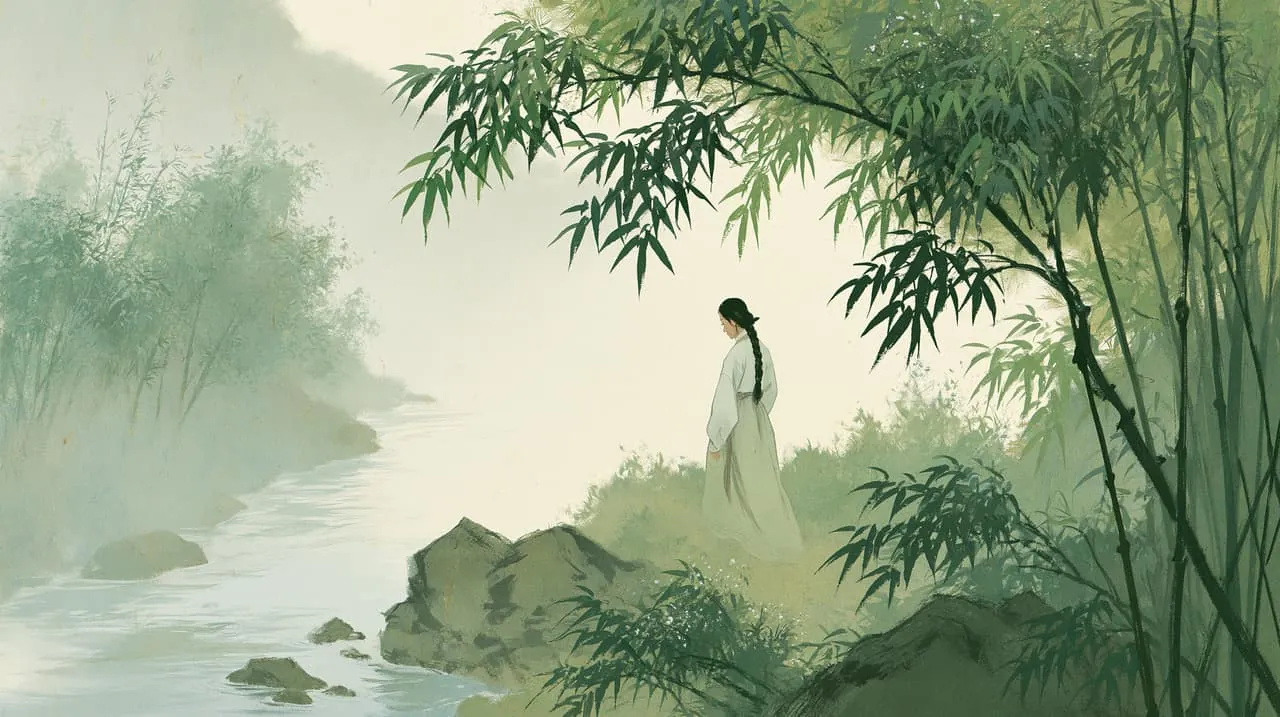
Yin Wood grows around things. It wraps. It attaches. It finds structures already standing and uses them to reach the light. This isn't weakness. This is one of the most adaptive survival strategies in the natural world. Vines outlive trees all the time.
Ji Soo's entire arc in the drama is basically a Yin Wood chart in motion. She weaves herself through the lives of people she loves, through her husband, her son, her past lover, her community. Not parasitically. More like... she needs a trellis to grow upward. Without connection, Yin Wood doesn't die. But it doesn't fully bloom either.
The Heartbreak Pattern: Why She Roots Herself in Others Instead of Herself
Okay, this is the part that hits differently when you understand the Five Elements (오행 Ohaeng).
Wood's core emotional energy in Saju is tied to movement: upward, outward, toward the light. Wood people are driven by purpose and direction. When that direction gets cut off, which is what heartbreak does, they don't collapse the way Fire types do (dramatic, total meltdown). They redirect.
Yin Wood especially. Because the nature of 乙木 is to find another surface and keep climbing.
Watch Ji Soo carefully across the drama. When Ji Ho breaks her heart the first time, she doesn't disappear into herself. She builds a life. A whole, carefully tended life that centers on her child, on quiet service, on being necessary to others. She becomes indispensable to everyone around her before she even begins to figure out what she needs.
I see this in my clients constantly. The Yin Wood woman in my practice who stayed in her hometown to care for her aging parents while quietly letting her own dreams get smaller. She told me, "I don't know when I stopped mattering to myself." That's the shadow side of this element. The vine can grow so attached to its trellis that it forgets it was reaching for the sun.
In Saju, the Useful God (용신 Yongsin) is the element a chart needs most for balance. For someone running heavy Yin Wood energy, the Yongsin is often Fire. Because Fire is what Wood produces. It's the natural next step. You root and grow, and then you shine. Ji Soo's tragedy in the drama is that her Fire keeps getting extinguished before it can ignite.
The Water Connection: Why Her Love Story Feels Fated
There's another layer here that's fascinating from a Four Pillars perspective.
Water nourishes Wood. In the productive cycle (상생), Water feeds Wood's roots, allows it to grow deep and strong. This is why Ji Soo and Ji Ho's love story feels so fated and so painful at the same time. He represents that nourishing energy, the one that makes her feel most alive, most like herself. But Water+Wood dynamics carry a real risk: Water can give so much that it loses its own shape.
The drama shows us this from both directions. Ji Soo becomes more of herself around Ji Ho. And yet the circumstances that keep them apart are exactly the kind of external pressure (think Metal controlling Wood in the 상극 controlling cycle) that forces Yin Wood to adapt, bend, and reroute itself.
Metal controls Wood. Obligation, society, family expectations, her husband's world, all of that functions like Metal energy pressing down on her natural growth. Yin Wood doesn't fight Metal the way Yang Wood does. It finds the crack in the fence and quietly grows through it. That's Ji Soo's entire second half of the drama.
If you're curious how this dynamic plays out in real relationship charts, a Saju love reading can actually show you which element your partner represents to you and whether the dynamic nourishes or costs you something.
Why Yin Wood Survives Heartbreak (Without Ever Looking Like It's Surviving)
Here's what makes Yin Wood energy genuinely one of the most resilient types in Korean astrology, even though it rarely gets credit for that.
Yang Wood breaks dramatically under pressure. Think of a tree in a storm: it either holds or it snaps. There's a defining moment.
Yin Wood bends. And bending is not the same as breaking, even when it looks that way from the outside.
Ji Soo spends years looking like a woman who has quietly accepted a smaller life. She married someone who was safe. She raised her son with a kind of fierce, focused love. She shows up for other people's crises with steadiness. To outside observers, it might look like she gave up.
But that's not what's happening in her chart energy. She's been in a long 대운 (Daeun, Grand Fortune) period that required consolidation, endurance, quiet strength. The 12 life stages in Saju include a phase called Nurture (양), where growth is invisible from the outside but happening in the roots. Ji Soo is in that stage for most of the drama.
The payoff of Yin Wood resilience is that when the right season finally arrives, the growth is sudden and staggering. Because the roots were always there.
What Her Story Teaches Us About Living With Yin Wood in Our Own Charts
If you recognize yourself in Ji Soo, whether you know your birth chart or not, a few things are worth sitting with.
Yin Wood people are not weak for needing connection. That's literally how the element works. The vine doesn't climb a wall because it's dependent. It climbs because that's how it gets to the light.
But the healthiest Yin Wood charts I've read are the ones where the person has found at least one structure that's genuinely theirs. A creative practice, a purpose, a relationship that nourishes them back. When Yin Wood only roots in others and never in something of its own, that's when the heartbreak goes chronic.
Ji Soo's arc is ultimately about finding her own trellis. Watching her do that, quietly and without announcement, is why the drama hits so hard for so many people.
Want to understand what element runs through your own chart and how it shapes your love patterns?
Frequently Asked Questions
What is Yin Wood (乙木) in Korean Saju?
Yin Wood, or 乙木 (Eulmok), is one of the Ten Heavenly Stems in Saju (Four Pillars of Destiny). It represents the flexible, adaptive energy of vines and climbing plants rather than the upright power of trees. Yin Wood types are relational, resilient, and grow by connecting to people and structures around them. They tend to be emotionally intelligent, quietly strong, and deeply loyal in relationships.
Why do Yin Wood people survive heartbreak by focusing on others?
In Saju theory, Wood energy is fundamentally directional: it grows upward toward purpose and light. When Yin Wood's primary emotional direction is blocked (by heartbreak, loss, or circumstance), the energy doesn't collapse. It reroutes, finding connection in other relationships and roles as a way to keep growing. This isn't avoidance. It's a survival strategy built into the element's natural movement.
What element is most compatible with Yin Wood in a love reading?
Water naturally nourishes Wood in the productive cycle (상생), making Water types often feel fated and deeply connective to Yin Wood people. Fire is also significant, since Wood produces Fire, meaning Yin Wood feels most fully realized when they can inspire or energize someone. The Heavenly Stem compatibility pairing of 乙+庚 (Yin Wood + Yang Metal) is also strong, showing that sometimes what challenges you most is also what draws you.
Does having Yin Wood energy in your Saju chart mean you'll always put others first?
Not necessarily, but it's a strong tendency without self-awareness. The shadow pattern of Yin Wood is rooting so deeply in others that personal dreams shrink. The goal for Yin Wood charts is to find structures that are genuinely their own alongside relationships. The Useful God (용신 Yongsin) concept in Saju can help identify what element balances this tendency and brings the chart into fuller expression.
Ji Soo is one of those characters who will stay with you not because she's extraordinary, but because she's so recognizably, achingly human. And if understanding her through the lens of Korean astrology and Yin Wood energy makes you want to look at your own chart with the same curiosity, that's exactly the point.
Discover Your Destiny
Curious about your own chart?
Get a free mini reading, then unlock your full Four Pillars report from a certified Saju master.