Benefactor Star in Korean Saju: Cheonul Gwiin Explained
What is the Benefactor Star (천을귀인) in Korean Saju? Learn how Cheonul Gwiin works, who has it, and what it means for your fortune.
Benefactor Star in Korean Saju: What Cheonul Gwiin Actually Does for You
There's a star in Korean Saju that I genuinely get excited about every time I spot it in a client's chart. It's called 천을귀인 (Cheonul Gwiin), and in English it's often translated as the Nobleman Star or Benefactor Star. The concept is simple on the surface: certain people, at the right moments in life, will show up and help you. But the way this actually plays out in real charts is way more nuanced than that. If you want to check whether your own chart carries this star, start with a Saju reading and then come back here to understand what you're looking at.
The Cheonul Gwiin is classified under what Saju practitioners call 신살 (Shinsal), the mystical stars. These aren't the same as the Five Elements or the Ten Gods. They're overlay patterns, additional signals that color how your Four Pillars express themselves in real life. And this particular star? It's considered one of the most auspicious you can have.

What the Benefactor Star Actually Means
Let me be direct here. Cheonul Gwiin doesn't mean you'll be handed success on a silver platter. That's the pop-astrology version, and it misses the real point.
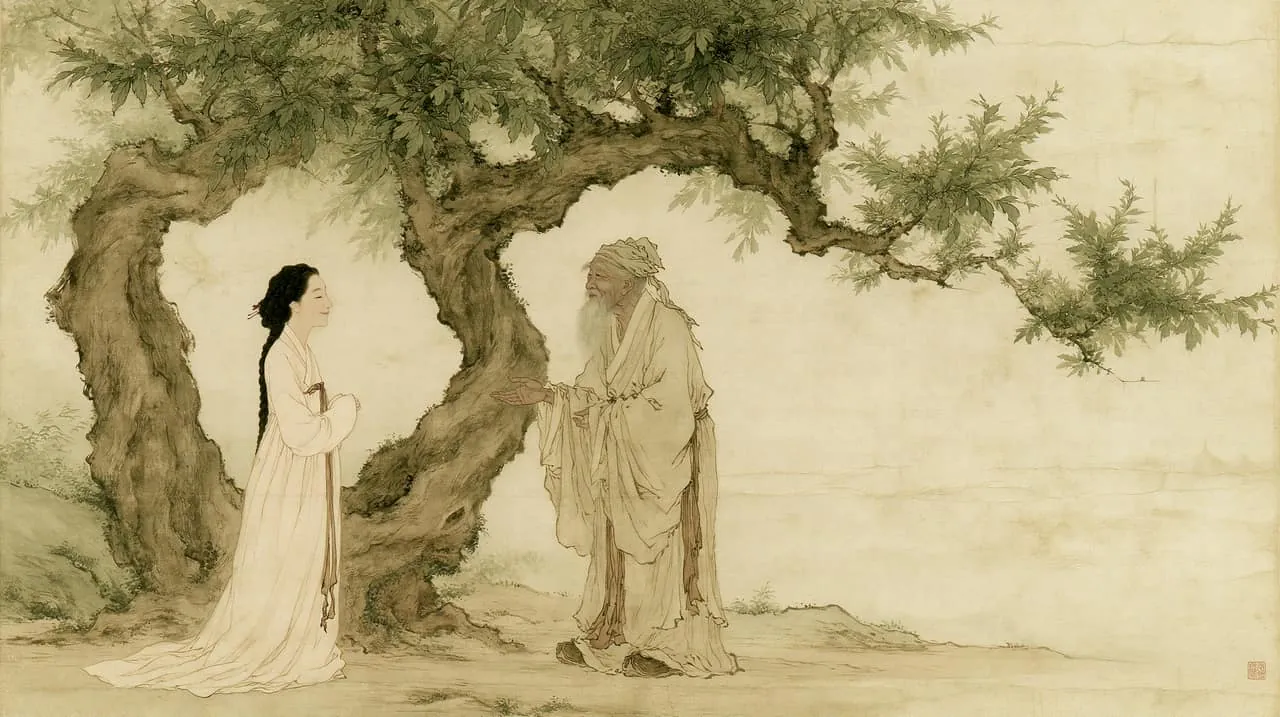
What it means is that at critical turning points in your life, help tends to arrive. A mentor who vouches for you when you didn't expect it. A stranger who connects you to exactly the right opportunity. A person in a position of power who notices your talent and opens a door. These aren't coincidences for people carrying this star. It's a structural feature of their fortune.
I've read charts for hundreds of clients over the years, and the Cheonul Gwiin pattern is one of the most consistently observable things I track. People with it often describe their careers as "one lucky break after another," but when you actually map their timeline against their Grand Fortune (대운 Daeun) periods, you can see exactly when those "lucky breaks" were activated.
How Cheonul Gwiin Is Calculated in Your Chart
Here's where it gets technical, and honestly, this is the part most English-language blogs get wrong.
Cheonul Gwiin is determined by your Day Master (일간 Ilgan), which is the Heavenly Stem of your Day Pillar. Your Day Master represents your core identity in Saju, the fundamental "you." Depending on which of the ten Heavenly Stems your Day Master is, there are specific Earthly Branches that activate the Benefactor Star.
The pairings work like this:
- Day Master Gab (甲) or Wu (戊): Ox (丑) and Goat (未)
- Day Master Eul (乙) or Gi (己): Rat (子) and Monkey (申)
- Day Master Byeong (丙) or Jeong (丁): Pig (亥) and Rooster (酉)
- Day Master Gyeong (庚): Ox (丑) and Goat (未)
- Day Master Shin (辛): Tiger (寅) and Horse (午)
- Day Master Im (壬) or Gye (癸): Snake (巳) and Rabbit (卯)
So if your Day Master is Byeong Fire and your Year Pillar's Earthly Branch is Pig, you carry Cheonul Gwiin in your Year Pillar. Where it appears in your chart matters. A lot.
Where the Star Falls Changes Everything
This is something I always explain to clients before they get too excited. Having Cheonul Gwiin is one thing. But where it sits in your Four Pillars tells a different story.
Year Pillar: Benefactors tend to come through family connections, social networks, or early life circumstances. Your surname or lineage might carry unusual weight.
Month Pillar: This is the career and social pillar. Nobleman energy here shows up most strongly in professional life. Bosses, mentors, influential colleagues. This placement often correlates with people who rise through institutions rather than going it alone.
Day Pillar: The Day Pillar governs your closest relationships. Cheonul Gwiin here can point to a romantic partner who is also genuinely your greatest supporter. For some people, marriage itself is the "lucky break." I've seen this pattern many times in Saju love reading sessions where one partner's chart clearly shows benefactor energy flowing from the relationship itself.
Hour Pillar: This covers children, later life, and personal aspirations. Benefactor energy here often shows up in the second half of life, or through the success of children who open doors for the parents.
Multiple Cheonul Gwiin in One Chart
Some charts carry the star twice. Three times is exceptionally rare but it happens.
When I see double Cheonul Gwiin, I tell clients to pay close attention to their social connections, not because they're lucky in some vague cosmic sense, but because their chart is specifically wired to attract influential allies. This isn't passive. The chart rewards active networking, genuine relationship-building, and being visible in the right circles.
The shadow side here is something I want to name clearly. People with strong Nobleman Star energy can sometimes over-rely on external help. They get so accustomed to doors opening that they underinvest in their own fundamental skills or grit. The star helps you get in the room. What you do once you're there is still on you.
Cheonul Gwiin and Timing: When the Star Actually Activates
This is where Saju gets really specific. The Benefactor Star doesn't just sit in your natal chart and passively bless you. It interacts with time.
When your Grand Fortune (대운) or Annual Fortune (연운) brings in Heavenly Stems or Earthly Branches that harmonize with your Cheonul Gwiin, that's when benefactor energy spikes. Think of it like a signal that gets amplified. The underlying frequency is always there in your chart, but certain years or decade-long periods turn up the volume.
I had a client, a woman in her mid-thirties who felt stuck in her career for years. Nothing dramatic was wrong, she was just invisible. Then she entered a new Grand Fortune period that directly activated her Cheonul Gwiin. Within 18 months she had a new boss who championed her publicly, got a promotion she hadn't even applied for, and was tapped for an international project. She didn't do anything radically different. The timing just shifted.
Does Everyone With Cheonul Gwiin Experience the Same Thing?
Absolutely not. And this is the part that separates serious Saju study from fortune-cookie astrology.
The Benefactor Star's expression depends entirely on the overall balance of your chart. If your chart is chaotic, heavily conflicted, or dominated by elements that clash, even Cheonul Gwiin can't fully express itself. It might show up as people who try to help you but can't, or opportunities that arrive at the wrong moment.
The concept of 용신 (Yongsin), your Useful God, is central here. The Useful God is the single element your chart needs most to find balance. When your Cheonul Gwiin aligns with your Yongsin element, that's when you see the most powerful benefactor experiences. This is genuinely advanced territory. If you want to go deeper into how all these layers interact, the free Saju ebook is a solid starting point.
Frequently Asked Questions
What is Cheonul Gwiin in Korean Saju?
Cheonul Gwiin (천을귀인) is the Nobleman or Benefactor Star in Korean Saju (Four Pillars of Destiny). It's a mystical star (신살 Shinsal) that indicates a person tends to attract help from influential or powerful people at critical moments in their life. It's calculated based on your Day Master and the Earthly Branches present in your birth chart.
How do I know if I have the Benefactor Star in my chart?
The Benefactor Star is determined by pairing your Day Master (일간 Ilgan) with specific Earthly Branches. If any of your Four Pillars contain the matching Earthly Branches for your Day Master, you carry Cheonul Gwiin. A full chart reading can identify this clearly.
Is having Cheonul Gwiin rare?
It's not extremely rare, but having it in multiple pillars is less common, and having it align strongly with your Useful God (용신 Yongsin) is genuinely special. Most people have at least one Shinsal star. What matters more is where it falls and how it interacts with the rest of your chart.
Can the Benefactor Star be blocked or weakened?
Yes. If your overall chart has heavy elemental conflicts, or if the Earthly Branch carrying Cheonul Gwiin is in a clash (충 Chung) or harm (해 Hae) relationship with other pillars, the star's expression is limited. It doesn't disappear, but it may manifest as near-misses rather than full breakthroughs.
The Benefactor Star is one of those chart features that makes Saju feel genuinely magical. But like everything in this system, it's not destiny handed to you. It's potential that needs the right timing, the right chart balance, and honestly, the right choices from you.
If you want to know exactly where your Cheonul Gwiin sits, how strong it is, and when it's most likely to activate in your current fortune cycle, the best next step is to get a proper analysis done.
Discover Your Destiny
Curious about your own chart?
Get a free mini reading, then unlock your full Four Pillars report from a certified Saju master.