Excess Metal Element and Lung Health in Korean Saju Explained
Excess metal element in your Saju chart can signal lung health vulnerabilities. Learn how Five Element imbalances affect your body and what to do about it.

How Excess Metal Element Affects Lung Health in Korean Saju
Excess metal element and lung health is one of the most practical, body-level topics in Saju that rarely gets discussed in English. In Korean Four Pillars of Destiny, every element maps to an organ system, and Metal (금, Geum) governs the lungs, respiratory tract, skin, and large intestine. When your birth chart is overloaded with Metal energy, it doesn't just shape your personality. It can point to real physical tendencies that show up over a lifetime.
I've read thousands of charts over the past 15+ years, and I can tell you: the people who come to me with chronic sinus issues, persistent coughs, or skin sensitivities almost always have a Metal-heavy chart. Coincidence? Maybe. But the pattern is too consistent to ignore. If you're curious about your own elemental balance, you can start by checking your free Saju reading to see where Metal sits in your Four Pillars.
Before we get into the health implications, let me be clear. Saju is not a medical diagnostic tool. It's a framework for understanding tendencies and vulnerabilities. Think of it like knowing your family medical history. It doesn't guarantee anything, but it tells you where to pay attention.
What "Excess Metal" Actually Means in Your Chart
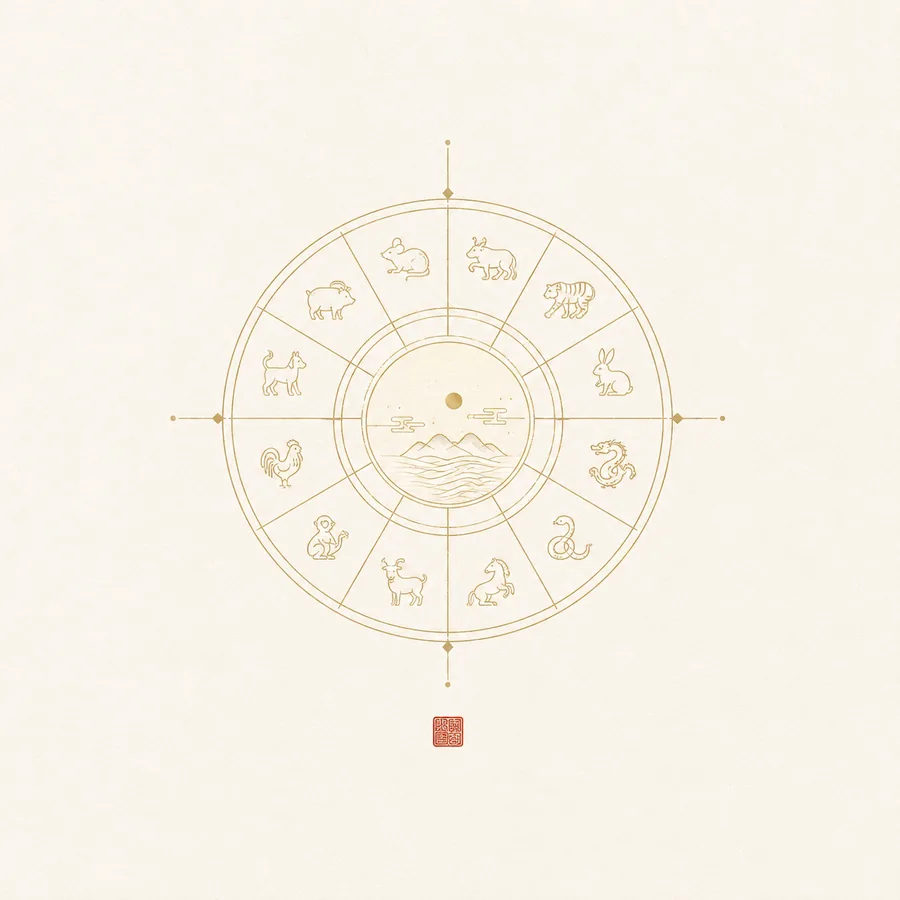
Your Saju chart (사주) is built from four pillars: Year, Month, Day, and Hour. Each pillar has a Heavenly Stem and an Earthly Branch, giving you eight characters total. Each of those characters carries an elemental value. When we say someone has "excess Metal," we mean Metal shows up disproportionately across these eight positions.
Here's where it gets specific. The Heavenly Stems 庚 (Gyeong, Yang Metal) and 辛 (Sin, Yin Metal) are pure Metal energy. The Earthly Branches 申 (Sin, Monkey) and 酉 (Yu, Rooster) are Metal branches. But Metal also hides inside certain branches as a secondary or tertiary element. 丑 (Chuk, Ox) and 戌 (Sul, Dog) both contain buried Metal.
So someone born in an autumn month (Metal's peak season), in a Metal year, with Metal in their Day or Hour pillar? That chart is saturated. I had a client born in September 1980 (庚申 year, Metal Monkey) with 辛 as her Day Master and 酉 in her Hour Branch. Four out of eight characters were Metal-dominant. That's a textbook case.
The Metal-Lung Connection in Five Element Theory
In the Five Elements system (오행, Ohaeng), the organ correspondences have been part of East Asian medicine for over two thousand years. They aren't random assignments. They follow the same logic as the elemental movements.
Metal's movement is inward and condensing. Think of autumn: leaves contract, energy pulls inward, things dry out. The lungs mirror this. They take in air, extract what's needed, and release the rest. The large intestine does the same with food. The skin is your body's outer boundary, the membrane between inside and outside. All of these are Metal organ systems.
When Metal is excessive in your chart, the theory goes like this: that condensing, contracting energy becomes too strong. The lungs tighten. The skin overreacts. The large intestine gets sluggish or irritable.
Here's the thing. I'm not a doctor. But I've sat across from enough people to notice the patterns. Clients with heavy Metal charts tend to report:
- Asthma or shortness of breath, especially in autumn
- Dry skin, eczema, or psoriasis
- Chronic sinus congestion
- Sensitivity to air quality (pollution, dust, mold)
- Constipation or IBS-type symptoms
- A tendency to hold grief in the body (Metal's associated emotion)
That last one is important. In Saju, Metal's emotion is grief (비, Bi). When Metal is excessive and unbalanced, there's often a pattern of unprocessed sadness that manifests physically in the chest and breathing.
Why the Controlling and Productive Cycles Matter for Health
You can't understand excess Metal without understanding the elemental cycles. In the productive cycle (상생), Earth produces Metal (mountains contain ore) and Metal produces Water (cold metal gathers condensation). In the controlling cycle (상극), Fire controls Metal (fire melts metal) and Metal controls Wood (metal cuts wood).
So when Metal is excessive in your chart, several things happen simultaneously:
Metal over-controls Wood. Wood governs the liver and gallbladder. Excess Metal can suppress Wood energy, leading to liver qi stagnation in traditional East Asian medical terms. In plain language: frustration, tension headaches, tight shoulders, eye strain.
Metal overproduces Water. Water governs the kidneys and bladder. Too much Metal feeding Water can create what practitioners call "cold dampness" in the lower body. Think frequent urination, lower back coldness, or fatigue.
Fire becomes the critical balancing element. Since Fire controls Metal, someone with excess Metal desperately needs Fire energy to keep things in check. Fire governs the heart and small intestine. When Fire is weak and Metal is strong? The lungs dominate the heart. In both metaphorical and physiological terms, that imbalance shows up.
This is exactly why the concept of Useful God (용신, Yongsin) matters so much. For someone with excess Metal, their Yongsin is often Fire or Wood, the elements that either control or drain Metal. Knowing your Yongsin isn't just about career advice or timing. It can inform how you take care of your body.
Seasonal Vulnerability: When Excess Metal Gets Worse
Metal's season is autumn. Direction: West. Time of day: late afternoon into evening (3pm to 7pm in traditional divisions).
I cannot overstate how much season matters for Metal-heavy people. Every single year, around late August through November, my Metal-dominant clients start reaching out about respiratory flare-ups. Allergies get worse. Old coughs return. Skin dries out and cracks.
Why? Because the ambient elemental energy of autumn amplifies what's already excessive in the chart. It's like turning up the volume on a speaker that's already too loud. The Annual Fortune (연운, Yeonun) and even the monthly energy add Metal on top of Metal.
And then there's the Grand Fortune (대운, Daeun), the 10-year cycles that shift your elemental balance. If someone with excess Metal enters a Metal-heavy Grand Fortune decade? That's when chronic conditions often emerge or intensify. I've seen clients who were fine for years suddenly develop adult-onset asthma when their Daeun shifted into a Metal period.
Practical Ways to Balance Excess Metal Energy
Okay, so you've checked your chart and Metal is everywhere. What do you actually do? Here's what I recommend based on both Saju principles and what I've seen work for clients over the years.
Bring in Fire Energy
Fire melts Metal. This is the controlling cycle at work. Practically speaking:
- Warm foods and drinks over cold ones (seriously, this makes a difference for Metal-heavy people)
- Cardiovascular exercise that gets your heart rate up and your body hot
- Red, orange, and warm-toned colors in your environment
- South-facing living spaces or workspaces when possible
- Social connection and laughter. Fire's emotion is joy, and it's the direct antidote to Metal's grief
Support Wood Energy
Wood drains Metal by forcing Metal to spend energy controlling it. Wood also represents the liver, which supports respiratory function indirectly.
- Spend time in forests or around living plants. This isn't woo. Forest bathing (shinrin-yoku) has documented effects on respiratory markers
- Eat green, leafy vegetables
- Morning activity. Wood energy peaks in early morning
- Set growth-oriented goals. Wood is about rising, expanding, starting new things
Protect the Lungs Directly
- Invest in an air purifier if you live in a city. Metal-heavy people are more sensitive to particulate matter
- Practice breathing exercises or pranayama. The lungs in a Metal-excess chart tend to be tight and shallow
- Stay hydrated. Metal's drying quality is real
- Autumn is your vulnerable season. Plan for it. Stock up on moisturizer, herbal teas, and humidifiers before September hits
Mind the Grief Connection
Metal's emotion is grief, and I've seen this play out so many times it's impossible for me to dismiss. People with excess Metal who carry unprocessed loss or sadness often have the worst respiratory symptoms. The chest tightens. Breathing gets shallow. Sometimes a good cry is literally what the chart is asking for.
If you're interested in learning more about how your emotional patterns connect to your elemental makeup, our free Saju ebook covers the basics of element-emotion mapping in more depth.
When to Pay Extra Attention
Not all excess Metal charts are created equal. The severity depends on several factors:
Is your Day Master also Metal? If your core identity (일간, Ilgan) is 庚 or 辛, and the rest of your chart is also Metal, you're essentially living inside a Metal echo chamber. The imbalance hits harder because there's no internal counterweight.
Is Fire completely absent? A chart with tons of Metal but zero Fire is more concerning than one with some Metal and a little Fire to keep things balanced. Even one Fire element can make a big difference.
What's your current Grand Fortune? A Metal-heavy person in a Fire or Wood Daeun might actually feel great for that decade. The timing cycles can temporarily correct what the natal chart lacks.
Are there Metal combinations forming? Certain branch combinations (like 巳酉丑, the Metal three-harmony) amplify Metal energy beyond what the individual characters suggest. These are technical to spot, but a good Saju reader will catch them immediately.
Frequently Asked Questions
Can excess Metal in my Saju chart actually cause lung disease?
Saju doesn't cause disease. It highlights constitutional tendencies and vulnerabilities. Think of it as a predisposition map, not a diagnosis. Someone with excess Metal isn't guaranteed lung problems, but they may be more susceptible to respiratory issues, especially during Metal-heavy periods (autumn, Metal Grand Fortune years). It's a signal to be proactive about lung care, not a sentence.
What element should I strengthen if I have too much Metal in my chart?
Fire is typically the most important element to bring in because it directly controls Metal through the controlling cycle (상극). Wood is the secondary recommendation because it forces Metal to expend energy. Your specific Useful God (용신) depends on the full context of your chart, but for most Metal-excess cases, Fire is the priority.
Does the Metal element affect mental health too?
Absolutely. Metal's associated emotion is grief (비). Excess Metal can create a tendency toward melancholy, perfectionism, and difficulty letting go. The inward, condensing movement of Metal can make someone emotionally guarded or prone to holding sadness in the body, particularly in the chest and lungs. Balancing with Fire (joy, connection) and Wood (growth, forward movement) helps on both physical and emotional levels.
How do I know if my chart has excess Metal?
You need to map out all eight characters of your Four Pillars and count the elemental distribution. Look at both Heavenly Stems and Earthly Branches, including hidden elements within the branches. Being born in autumn (especially Monkey or Rooster years) in a Metal month is a strong indicator, but the full picture requires looking at all four pillars together. A proper Saju reading will break this down clearly for you.
Your Chart, Your Body, Your Choice
The connection between excess Metal and lung health in Korean Saju is one of the most tangible, real-world applications of this ancient system. It's not about fear. It's about awareness. Knowing your elemental makeup gives you a head start on taking care of yourself in ways that are specific to you, not generic wellness advice from a magazine.
If you want the full picture of your elemental balance, including which elements are excessive, which are missing, and what your Useful God is, a detailed reading will lay it all out.
Discover Your Destiny
Curious about your own chart?
Get a free mini reading, then unlock your full Four Pillars report from a certified Saju master.