How One Zodiac Animal Splits Into Five Different Types
Each Chinese zodiac animal has 5 elemental versions in Saju. Discover how your birth year's element changes your personality completely.
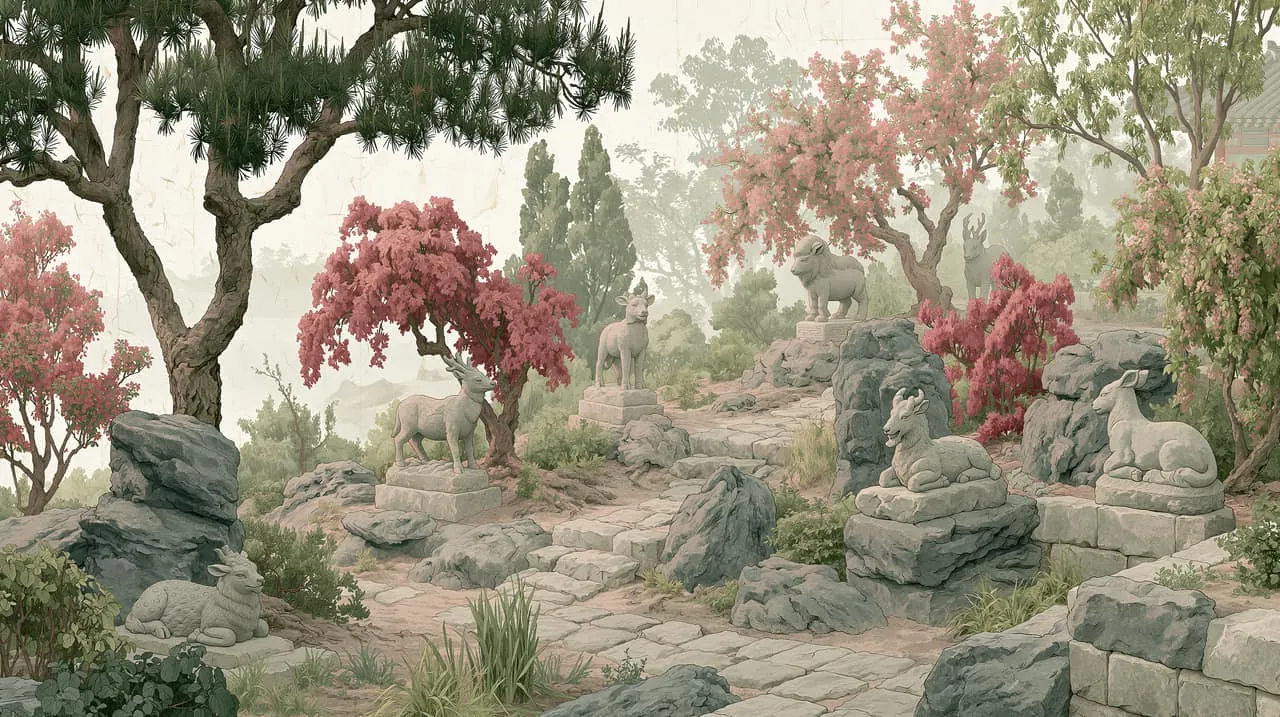
How One Zodiac Animal Splits Into Five Different Types
Most people think they know their Chinese zodiac sign. "I'm a Dragon." "I'm a Rabbit." They say it like that's the whole story. But in Korean Saju, that's barely the first sentence.
Here's the thing: every zodiac animal actually comes in five completely different versions, one for each of the Five Elements (오행 Ohaeng): Wood, Fire, Earth, Metal, and Water. A Wood Dragon and a Fire Dragon are not the same creature. They share a skeleton, sure, but the energy, the personality, the strengths and blind spots? Totally different.
This is one of the most eye-opening things I explain to new clients. If you've ever felt like your zodiac description only half-fits you, this is probably why. (If you want to see what your full chart actually looks like, grab a free reading and we'll map it out properly.)

Why the Same Animal Feels Different Every 12 Years
The zodiac cycle repeats every 12 years, which is why we say the Year of the Tiger comes around in 2022, 2034, 2046, and so on. But the Five Elements cycle across a span of 60 years, not 12. This is what creates the 60-year cycle called the 甲子 (Gapja) in Korean tradition.
Within that 60-year span, each of the 12 animals pairs with each of the five elements exactly once. So a Tiger year only meets Wood energy once every 60 years, and the same goes for Fire, Earth, Metal, and Water.
This means: two people born in different Tiger years are both Tigers, yes, but one might be a Water Tiger and the other a Wood Tiger. The animal sets the foundational archetype. The element is the modifier that changes everything.
What the Element Actually Does to the Animal
Think of it this way. The animal sign (Earthly Branch, or 지지 Jiji) is like the body of a song. The element tied to that year is like the key it's played in. Same melody, completely different feeling.
The Five Elements aren't static labels. They're dynamic movements. Wood energy rises and pushes upward. Fire radiates and spreads outward. Earth centers and settles. Metal condenses inward. Water flows downward. Each one gives the animal a different energetic direction.
Let me walk through a real example. Take the Rabbit (卯 Myo), which is naturally a Wood animal. A Wood Rabbit (born 1975) is pure, concentrated Wood energy, someone who rises, initiates, and follows instinct. Almost restless with creative drive. But a Metal Rabbit (born 1951 or 2011)? Metal controls Wood in the controlling cycle (상극 Sangguk). That internal tension makes the Metal Rabbit more disciplined, precise, even a little conflicted, a Rabbit with an edge.
Same fluffy exterior, very different inner wiring.
Walking Through Each Element Type
Wood Version of Any Animal
Wood energy is upward movement. Spring energy. It brings ambition, growth, and a strong initiating drive. Wood versions of any animal tend to be the most idealistic expression of that sign. They start things easily but finishing them is the challenge. They're morning people who need clear goals or they get frustrated fast.
If the animal is already a Wood sign (like Rabbit or Tiger), you get a very concentrated, undiluted version of those traits. Raw, sometimes overwhelming in its directness.
Fire Version of Any Animal
Fire radiates. It spreads. Fire versions of an animal tend to be the most charismatic, expressive, and outwardly visible version. They're the ones in the spotlight. The social magnetism of the base animal gets amplified significantly.
But Fire burns hot and burns out. The Fire version tends toward impulsivity and emotional peaks that the other elemental versions don't have as strongly. They need recognition to stay motivated. Without it, that fire dims fast.
Earth Version of Any Animal
Earth settles and centers. Earth versions of any animal tend to be the most grounded, most reliable, and least flashy expression of that sign. They're the ones people actually call when things go wrong because they just... hold steady.
The downside is slowness to change and a tendency to stagnate if there's no external challenge. Earth animals are the providers of the zodiac, but they can get stuck in patterns long past their usefulness.
Metal Version of Any Animal
Metal condenses and cuts inward. Metal brings precision, discipline, and a kind of quiet authority to whatever animal it touches. Metal versions tend to be the specialist type, the ones who go deep rather than wide.
They can also be harsher. There's a sharpness in Metal energy that, depending on the animal, reads as either focused or inflexible. Metal Rabbit, Metal Dog, Metal Horse: each one has that particular condensed quality that makes them both impressive and a little intense to deal with.
Water Version of Any Animal
Water flows downward and inward. Water versions of any animal are often the most intuitive, the most emotionally complex, and the most internally oriented of the five types. They pick up on what others miss. They process deeply rather than quickly.
But Water can also be the most passive and the hardest to read. Water animals often need solitude to recharge in ways the other elemental versions don't quite understand. Their emotional intelligence is their superpower and their hiding place.
This Is Why Zodiac Descriptions Never Fit Perfectly
Honestly, this is one of the most misunderstood things in popular Chinese and Korean astrology. When someone reads a generic "Year of the Horse" description and thinks "that doesn't sound like me at all," it's usually because they're a Water Horse reading a description written for the broad archetype, or maybe the Fire Horse, and those two are almost opposite personalities.
I've had clients who felt completely unseen by their zodiac sign for years. When I show them which elemental version they are in their Saju chart, the recognition on their face is immediate. "That's actually me."
The animal sign lives in the Year Pillar (연주 Yeonju) of your Four Pillars. It's one piece. The element attached to that year is what makes it specific to you.
If you're curious about how all four of your pillars interact, including your Day Master (일간 Ilgan), which is really your core identity in Saju, a free Saju ebook is a great place to start learning how these layers stack.
The Year Pillar Is Just the Beginning
Here's something I say to almost every new client: the Year Pillar tells you about your roots, your early environment, your social face. It's the most visible layer, which is why it became the popular "zodiac sign." But it's not your personality in full.
Your Day Master (the Heavenly Stem of your Day Pillar) is your actual identity in Saju. The Year Pillar animal is more like the house you grew up in. Important context, absolutely. But not the whole you.
The relationship between your Year Pillar's element and the rest of your chart is where it gets interesting. Does your year element support your Day Master? Challenge it? When you run Grand Fortune periods (대운 Daeun), does the energy of your animal's element help or create friction? That's where the real reading lives.
For love compatibility questions, this matters a lot too. Two Snakes might be incredibly compatible or constantly clashing depending on their elemental versions and how those interact with their Day Masters. If you want to explore that angle, a Saju love reading goes into this in real depth.
Frequently Asked Questions
How do I find out which elemental version of my zodiac animal I am?
Your elemental version is determined by your birth year. Each year has a specific Heavenly Stem (천간 Cheonjgan) and Earthly Branch (지지 Jiji). The Heavenly Stem carries the element. For example, 1984 is 甲子, a Wood year, so anyone born in 1984 is a Wood Rat. A proper Saju chart will show you this immediately.
Does the animal's elemental version change my compatibility with other signs?
Yes, significantly. Two people with the same animal sign but different elements can have very different compatibility dynamics. Element interactions (whether they produce, control, or simply coexist) affect how two people's energy flows between them. This is why a simple "Tiger and Dragon are compatible" statement can be misleading without the elemental layer.
Is the Year Pillar element the same as my Day Master element?
Not necessarily, and this is a common point of confusion. The Year Pillar element comes from your birth year's Heavenly Stem. Your Day Master element comes from your birth day's Heavenly Stem. These are often different, and the relationship between them is part of what makes each person's chart unique.
Why does the 60-year cycle matter in Saju?
Because it takes 60 years for all 12 animals to pair with all 5 elements exactly once. This 60-year cycle, the Gapja cycle, is considered a full completion of life's elemental experience in Korean tradition. Turning 60 is a major celebration (환갑 Hwangap) precisely because you've lived through every combination once.
Understanding which elemental version of your zodiac animal you carry is genuinely one of the first steps toward a reading that actually fits. The broad zodiac descriptions you find online are averaging across five very different types. Your specific version tells a much more precise story.
Discover Your Destiny
Curious about your own chart?
Get a free mini reading, then unlock your full Four Pillars report from a certified Saju master.