Lucky Colors by Element in Korean Saju Explained
Discover how Korean Saju assigns lucky colors to your element. Find your Day Master's power color and how to use it in real life.
Lucky Colors by Element in Korean Saju Explained
Lucky colors in Korean Saju aren't random. They're rooted in a system that's been refined over thousands of years, and if you understand why a color works for you, it starts making a lot more sense than generic horoscope advice. Your lucky color is tied directly to your Day Master (일간, Ilgan), the Heavenly Stem in your Day Pillar, which represents your core identity in the Four Pillars of Destiny. Get that right, and everything else follows.
Before we get into the colors themselves, if you don't know your Day Master element yet, go grab your free reading first. You'll need it to make sense of what I'm about to share.
Here's the thing: colors in Saju are really just another way of talking about elemental energy. The Five Elements (오행, Ohaeng) each carry a set of colors that resonate at the same frequency as that element's movement and quality. It's not superstition. It's pattern recognition applied to your daily environment.
How Saju Maps Color to the Five Elements
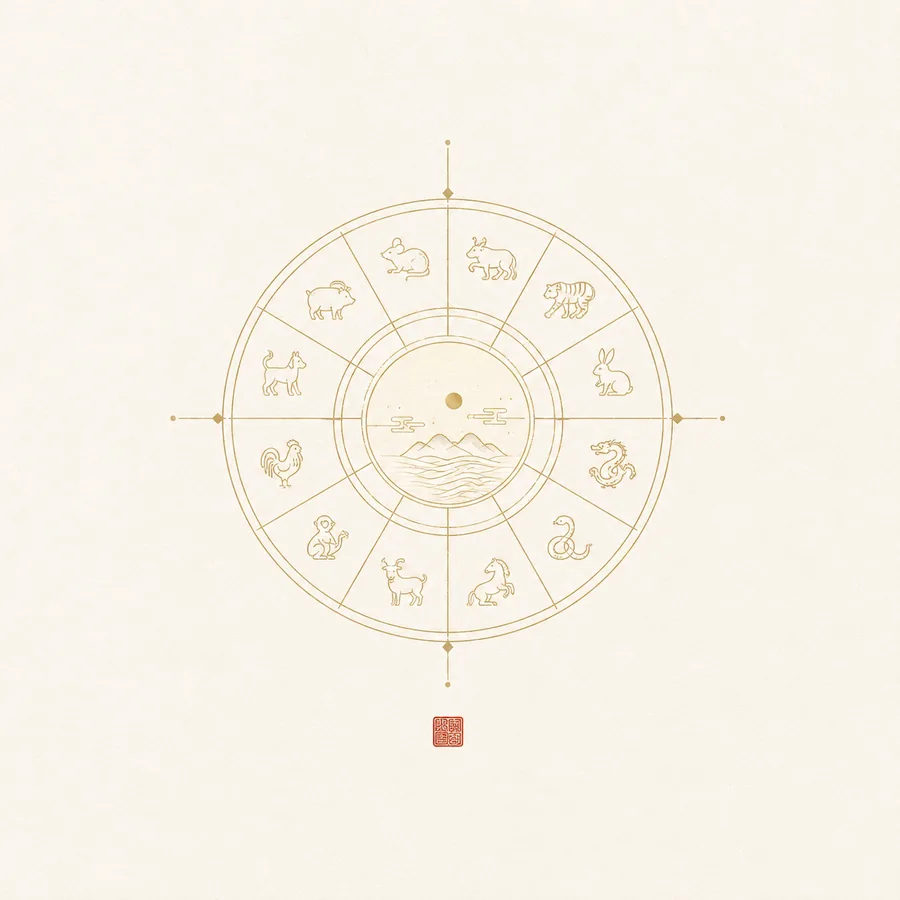
Each of the five elements, Wood, Fire, Earth, Metal, and Water, has a traditional color association that comes from classical Chinese cosmology and Korean interpretive tradition. Wearing or surrounding yourself with your element's color is essentially a way to reinforce or support that elemental energy in your daily life.
But here's where it gets interesting. Your lucky color isn't always your own element's color. Sometimes, the most powerful color for you is actually your Useful God's (용신, Yongsin) color, which is the element your chart needs most for balance. I've seen clients who are strong Wood Day Masters actually thrive when they incorporate Fire colors, because their chart runs cold and needs that warming energy.
Let me walk you through each element and its associated colors, then I'll explain how to actually use this.
Wood Element (목, Mok): Green and Blue-Green
Wood moves upward. It's spring energy, expansion, growth, new beginnings. In my experience, Wood Day Masters are natural starters. They get excited about projects fast, and green keeps that momentum alive for them.
Primary colors: Green, teal, blue-green, forest green Avoid when you need grounding: Overly bright or neon greens can amplify Wood's already restless energy
Wood is controlled by Metal (금, Geum), so if your chart is overly Metal-heavy and you're feeling crushed by that controlling pressure, leaning into your Wood colors can be a subtle act of self-affirmation.
I had a client once, a designer in her early 30s, classic strong Wood Day Master, who kept gravitating toward gray and white (Metal colors) in her wardrobe. She said she felt exhausted all the time. Once she started wearing more forest green and earthy teals, she described it as "finally breathing." That's the Wood element finding room to rise.
Fire Element (화, Hwa): Red, Orange, and Bright Yellow
Fire radiates outward. It's summer energy, passion, visibility, personal brand. Red is the headline color here, and Fire Day Masters often feel naturally drawn to it even before they know their Saju chart.
Primary colors: Red, orange, coral, bright yellow, hot pink The nuance: Not all reds are equal. Deep burgundy reads more like Metal energy. You want vivid, radiant reds that feel alive.
Fire Day Masters peak between roughly 9am and 1pm, and they're at their best when they're seen. Color is part of that visibility strategy. I genuinely believe that the reason red is considered lucky across so many Asian cultures comes from this exact Fire energy principle. It's not cultural superstition; it's elemental resonance that became encoded into tradition.
If your chart is Water-heavy and you're constantly feeling like your enthusiasm gets dampened, Fire colors worn intentionally can serve as a small daily reset.
Earth Element (토, To): Yellow, Beige, and Brown
Earth settles and centers. Its energy is stabilizing, nurturing, and transitional. Yellow is the classic Earth color, specifically the warm, golden, mustard-toned yellows, not the sharp neon kind.
Primary colors: Golden yellow, ochre, mustard, terracotta, beige, tan, brown Avoid: Cool grays or crisp whites, which can make Earth types feel unmoored
Earth Day Masters are providers. They show up for people. And honestly, the colors that work best for them reflect that grounded, reliable quality. There's nothing flashy about brown or beige, but that's the point. Earth energy isn't about flash.
One thing I always tell Earth Day Masters: if you're going through a period of intense transition or anxiety (Earth's shadow emotion is worry), adding terracotta or warm yellow to your space, even just a candle or a cushion, can help you anchor faster. It sounds small, but environmental cues matter more than people admit.
Metal Element (금, Geum): White, Silver, and Gray
Metal moves inward. It condenses, refines, and clarifies. White and silver are its signature colors, which makes sense because Metal energy is about precision, quality, and cutting through noise.
Primary colors: White, silver, light gray, cream, gold (in some Korean traditions) The gold question: Yes, gold gets complicated. In some lineages it's Metal, in others it crosses into Earth. Context matters.
Metal Day Masters are the specialists of the Saju world. They're not trying to be everything; they want to be really good at one thing. White and silver support that focused, refined energy. Think of a clean white workspace versus a cluttered colorful one. Metal types breathe differently in that clean space.
If your chart is Fire-heavy and you're constantly overwhelmed by too much stimulation and demand, Metal colors can help you feel like yourself again. White especially has a cooling, clarifying effect.
Water Element (수, Su): Black, Deep Blue, and Navy
Water flows downward. It's winter energy, depth, wisdom, quiet power. Black is the primary Water color, and deep navy blues follow closely. There's a reason Water Day Masters often naturally gravitate toward dark, rich tones even without knowing their Saju.
Primary colors: Black, navy blue, deep indigo, charcoal The misconception: Black is not unlucky. In Western culture there's this association of black with darkness or negativity, but in Saju, black is pure Water energy, which means depth, intelligence, and flow.
Water Day Masters recharge through solitude and depth. They're the advisors, the pattern recognizers. Wearing black or navy doesn't drain them; it actually helps them settle into their natural rhythm. I've met so many Water Day Masters who feel completely unlike themselves when they're pressured into wearing bright, cheerful colors for work or social settings.
If you're a Water Day Master and you're always told your wardrobe is "too dark," you're not being dramatic or depressive. You're just dressed for your element.
How to Actually Use Your Saju Lucky Color
Knowing your element's color is one thing. Using it well is another.
Start with your Useful God (용신, Yongsin). If your chart is imbalanced, your lucky color might actually be your Useful God element's color rather than your own Day Master's. A very strong Water Day Master might benefit more from Earth colors (to dam the excessive flow) than from more black and navy.
Think about what you're trying to achieve. Heading into a big meeting where you need to project authority? Metal (white, silver). Want to be warm and approachable at a social event? Earth (warm yellow, terracotta) or Fire (coral, orange). Need focus for a creative sprint? Wood (green).
Color is also useful in your environment, not just your wardrobe. A Water Day Master working from home might keep a navy or black accent piece at their desk. A Fire Day Master's workspace probably already has pops of red without them even thinking about it.
For relationships, elemental colors get really interesting when you're thinking about chemistry and compatibility. If you want to go deeper on that, a Saju love reading can show you how your Day Master interacts with someone else's, and which colors might actually help or hinder your dynamic.
Frequently Asked Questions
What is my lucky color in Korean Saju?
Your lucky color in Saju is determined by your Day Master element (일간, Ilgan), the Heavenly Stem of your Day Pillar. Wood = green, Fire = red and orange, Earth = yellow and brown, Metal = white and silver, Water = black and navy. However, your Useful God (용신, Yongsin) element's color may be even more powerful for you if your chart is imbalanced.
Can I wear colors from other elements, or just my own?
Absolutely. In Saju, you sometimes want to wear a different element's color intentionally, especially your Useful God's color. If your chart has too much of one element and not enough of another, wearing the color that supports balance is more beneficial than reinforcing what you already have in excess.
Is black an unlucky color in Korean Saju?
No. Black is the primary color of the Water element in Saju, representing depth, wisdom, and adaptability. It's considered lucky and powerful for Water Day Masters and for anyone whose chart needs more Water energy. The idea that black is unlucky comes from other cultural traditions, not Korean Saju.
How do Grand Fortune periods affect my lucky colors?
Your Grand Fortune (대운, Daeun) brings a dominant elemental energy for a 10-year period. If your current Grand Fortune element is your Useful God, leaning into that element's colors during those years can amplify the positive effects. If the Grand Fortune brings an unfavorable element, you might instinctively want to use colors that counter or balance it.
Want to Know Your Exact Element and Lucky Color?
Figuring out your Day Master is the first step, and then understanding whether your chart is balanced or needs a specific Useful God takes it further. If you want a personalized breakdown of your Five Elements balance and what that means for your colors, timing, and energy, I cover all of this in depth in a full reading.
Discover Your Destiny
Curious about your own chart?
Get a free mini reading, then unlock your full Four Pillars report from a certified Saju master.