Solitary Star in Korean Saju: Gosin and Gwasuk Explained
Learn what the Solitary Star (Gosin & Gwasuk) means in Korean Saju, how it affects relationships, and why it's deeply misunderstood.
What Is the Solitary Star in Korean Saju?
The Solitary Star, known in Korean Saju as Gosin (고신) and Gwasuk (과숙), is one of the most feared and misunderstood mystical stars (신살 Shinsal) in Four Pillars of Destiny reading. If you've been told you carry this star in your chart and immediately panicked about dying alone, take a breath. I've been reading charts for over 15 years, and I can tell you that the reality of Gosin and Gwasuk is far more nuanced than the doom-and-gloom reputation suggests.
Before we get into the details, if you're curious whether this star appears in your own birth chart, you can start with a free reading to see the basic structure of your Four Pillars.
These two stars are often grouped together because they share a common theme: solitude. But they are distinct from each other, and understanding the difference matters. A lot. Let me break this down properly.
Gosin (고신) vs. Gwasuk (과숙): They're Not the Same Star
Here's where most surface-level explanations fail. People lump Gosin and Gwasuk together as "the lonely star" and call it a day. But traditionally, they carry different energies.
Gosin (고신) literally translates to something like "orphan spirit" or "solitary spirit." It points to a sense of isolation in youth or early life. Think of someone who felt emotionally distant from family, maybe moved around a lot as a kid, or just always felt like the odd one out at the dinner table.
Gwasuk (과숙) leans toward solitude in later life, particularly in old age. The classical interpretation involves a person who ends up without a partner or companion in their later years. Historically, this was associated with widowhood or separation.
When both appear in the same chart? That's when traditional practitioners would raise their eyebrows. But honestly, I've seen people with both stars living perfectly fulfilling lives. The stars describe a tendency toward solitude. They don't write your destiny in permanent ink.
How Gosin and Gwasuk Are Determined in Your Chart
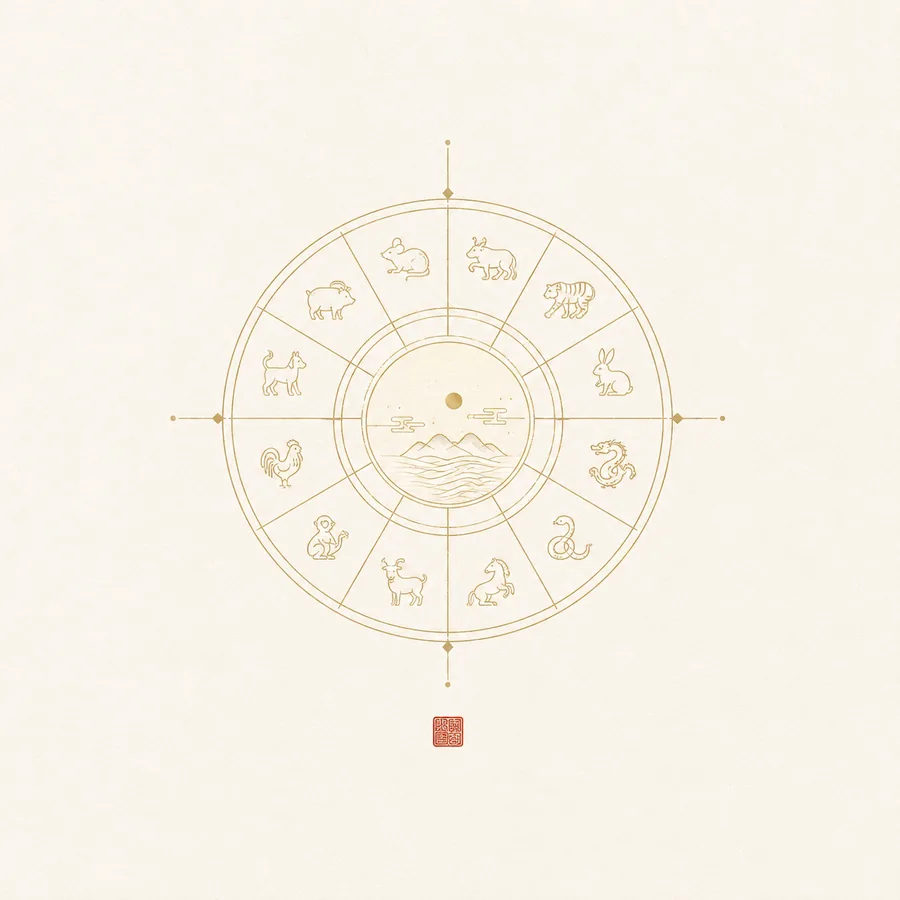
These mystical stars are derived from the Earthly Branches (지지) in your Four Pillars. Specifically, they're calculated based on the Year Pillar's Earthly Branch, and then you look for certain branches appearing in the other three pillars (Month, Day, Hour).
The calculation follows the twelve Earthly Branches grouped into their three-harmony (삼합) combinations. Without getting too deep into the math (because honestly, the tables are easier to reference than memorize), here's the general idea:
- Each Year Branch has a corresponding Gosin branch and a Gwasuk branch
- If that specific branch shows up in your Day or Hour Pillar, the star activates
- The pillar where it appears tells you which area of life it affects most
For example, if your Year Branch is 寅 (Tiger/In) and certain branches appear in your Day Pillar, Gosin might activate in the area of your spouse palace. That's a very different reading than if it shows up in your Hour Pillar, which represents children and later life.
This is why I always say: don't just Google "do I have the Solitary Star" and freak out. The placement matters enormously.
Why the Solitary Star Gets Such a Bad Reputation
Let's be real about the historical context. Traditional Korean and Chinese astrology developed in societies where being unmarried or childless was considered a catastrophe. A woman without a husband had no social standing. A man without heirs had failed his ancestors.
So of course a star that suggested someone might be alone was treated like a curse.
But we're not living in Joseon Dynasty anymore.
In modern life, solitude isn't always suffering. Some of the most creative, spiritually aware, and independently successful people I've read for carry Gosin or Gwasuk prominently in their charts. The star doesn't mean "you will be lonely." It means "you have a relationship with solitude that most people don't."
I had a client a few years back, a woman in her early 40s, very successful architect, who came to me worried because a different practitioner had told her the Gwasuk star in her Day Pillar meant she would lose her husband. She was happily married with two kids. What I saw in her chart was different: she had a deep need for personal space and independent creative work. Her husband, as it turned out, traveled for work frequently. The Gwasuk energy manifested as comfortable separateness within a strong marriage, not as loss.
Context is everything.
The Solitary Star and Your Day Master
You can't read any mystical star (신살) in isolation. It always interacts with your Day Master (일간 Ilgan), the Heavenly Stem of your Day Pillar that represents your core self.
If your Day Master is strong, meaning well-supported by the Five Elements (오행) in your chart, Gosin or Gwasuk tends to manifest as healthy independence. You're the person who recharges alone, who does their best thinking in silence, who doesn't need external validation to feel whole.
If your Day Master is weak and the Solitary Star is present, that's when the more difficult expressions can show up. Difficulty maintaining close relationships. Feeling unseen by others. A persistent sense of not belonging anywhere.
This is also why the Useful God (용신 Yongsin), the element your chart most needs for balance, becomes so important when reading these stars. If your Yongsin supports connection and warmth (say, Fire for a chart that's too cold and isolated with excess Water or Metal), then actively bringing that element into your life through career choices, relationships, or environment can significantly soften the star's harsher edges.
Gosin, Gwasuk, and Relationships
Okay, let's address the elephant in the room. Does having the Solitary Star mean your love life is doomed?
No. But it does mean your love life might look different from what society expects.
People with strong Gosin energy often partner later in life, or they go through significant periods of being single that are actually necessary for their growth. They tend to need partners who respect their autonomy. Clingy, codependent relationship dynamics will suffocate them.
Gwasuk in the Day Pillar (the spouse palace) can indicate marrying someone who is frequently absent, either physically through travel or emotionally through personality. It can also mean choosing to stay single by preference, not by failure.
I've read for couples where one person carries Gwasuk and the other has a strong Traveling Horse star (역마 Yeokma). These two actually complement each other beautifully. One partner's need for space is met by the other's need for movement. It works.
If you're curious about how these stars play out in your romantic connections, a Saju love reading can help you see how your chart interacts with a partner's on a deeper level.
The Hidden Gift of the Solitary Star
Here's what I genuinely believe after years of practice: Gosin and Gwasuk carry a spiritual gift that most people overlook because they're too busy being scared of the "lonely" label.
These stars share energetic DNA with the Void/Empty star (공망 Gongmang). Both point to emptiness in some area of life. And both, when embraced rather than resisted, open the door to unusual spiritual depth.
Many monks, artists, healers, and deeply introspective people carry these stars. The solitude isn't punishment. It's the space required for inner work that most people never do because they're too busy filling every moment with noise and company.
Some of the most profound Saju charts I've ever read belonged to people with the Solitary Star who had learned to sit comfortably in their own presence. They had a stillness about them that was magnetic. Which is ironic, right? The "lonely" star creating its own form of quiet charisma.
How Grand Fortune Periods Activate the Solitary Star
The Solitary Star doesn't just sit there doing the same thing your entire life. It gets activated or quieted by your Grand Fortune (대운 Daeun) periods, those powerful 10-year cycles that shift the elemental energy of your chart.
When you enter a Daeun that brings the Earthly Branch associated with your Gosin or Gwasuk, the star's themes become louder. You might feel a strong pull toward solitude during that decade, even if you're normally social. Relationships might feel more strained. The desire to withdraw and reflect increases.
Conversely, a Daeun that brings the Peach Blossom star (도화 Dohwa) or Nobleman Star (천을귀인) energy can counterbalance the Solitary Star significantly, bringing new connections and social warmth into your life during those years.
Annual Fortune (연운 Yeonun) works the same way on a smaller scale. Some years feel more isolating than others for Solitary Star carriers. Knowing the timing helps you stop blaming yourself and start working with the cycles.
Practical Advice for People With Gosin or Gwasuk
After reading thousands of charts, here's what I tell clients who carry these stars:
Stop fighting the solitude. Schedule alone time deliberately so it doesn't ambush you in destructive ways (like blowing up a perfectly good relationship because you felt "suffocated").
Choose partners who are independent. Someone with strong Traveling Horse (역마) energy or their own need for space will understand you in ways that a clingy partner never will.
Lean into creative or spiritual practices. Meditation, writing, art, nature walks. These stars thrive when given contemplative outlets.
Watch your Grand Fortune transitions. Knowing when a Daeun shift is coming helps you prepare emotionally for periods of intensified solitude.
If you want to learn more about how these concepts connect, our free Saju ebook is a solid starting point for understanding the basics of how stars, elements, and pillars interact in your chart.
Frequently Asked Questions
Does having the Solitary Star mean I'll never get married?
Absolutely not. Gosin and Gwasuk indicate a tendency toward independence and periods of solitude, but they don't prevent marriage. Many people with these stars have long, stable partnerships. The key is choosing a partner who respects your need for personal space and understanding that your relationship style may look different from conventional expectations.
Can both Gosin and Gwasuk appear in the same chart?
Yes, it's possible to have both stars present in your Four Pillars. When they appear together, the theme of solitude is amplified, but it also suggests significant potential for spiritual depth and creative independence. The chart's overall elemental balance and the strength of your Day Master will determine how these stars actually manifest in your life.
Is the Solitary Star always negative in Saju readings?
Not at all. Traditional readings from centuries past treated it negatively because those societies valued marriage and family above all else. In modern context, many practitioners (myself included) view it as a star that grants inner strength, spiritual sensitivity, and the capacity for deep self-awareness. It becomes negative mainly when a person resists the solitude it asks for and tries to fill the space with unhealthy attachments.
How do I know if Gosin or Gwasuk is in my birth chart?
The Solitary Star is calculated from the Earthly Branch of your Year Pillar in relation to the branches in your other three pillars. The calculation involves the three-harmony groupings of the twelve Earthly Branches. Because it requires knowing your exact birth data and referencing traditional tables, the most reliable way is to get a proper Saju reading rather than trying to guess from general descriptions.
The Solitary Star in Korean Saju is one of those topics where a little knowledge can cause a lot of unnecessary anxiety. If it's showing up in your chart, don't let old stereotypes define what it means for your life. Understand it. Work with it. Let the stillness be a source of power, not fear.
Ready to see the full picture of your chart, including all your mystical stars and how they interact with your elements and timing cycles?
Discover Your Destiny
Curious about your own chart?
Get a free mini reading, then unlock your full Four Pillars report from a certified Saju master.