The Twelve Life Stages in a Saju Chart: Birth to Tomb Explained
Learn the twelve life stages in a Saju chart, from Birth to Tomb and beyond. A practitioner breaks down what each energy phase really means.
What Are the Twelve Life Stages in a Saju Chart?
The twelve life stages in a Saju chart are one of the most fascinating (and most misunderstood) layers of Korean Four Pillars of Destiny reading. They map energy phases, not literal life events. If you've ever seen a stage called "Death" or "Tomb" in your chart and panicked, this post is especially for you. These stages describe how elemental energy rises, peaks, declines, and regenerates. It's a cycle, not a sentence.
Before we get into each stage, it helps to know your own chart first. You can get a free reading to see which life stages appear in your Four Pillars and what element drives your Day Master (일간, Ilgan).
I've been reading Saju charts for over fifteen years, and I still think the twelve life stages are where the real magic happens. They show you the quality of energy available to you at different points, whether that's in your natal chart or through the Grand Fortune (대운, Daeun) periods that shift every ten years. Let me walk through all twelve.
The Cycle Is a Circle, Not a Line
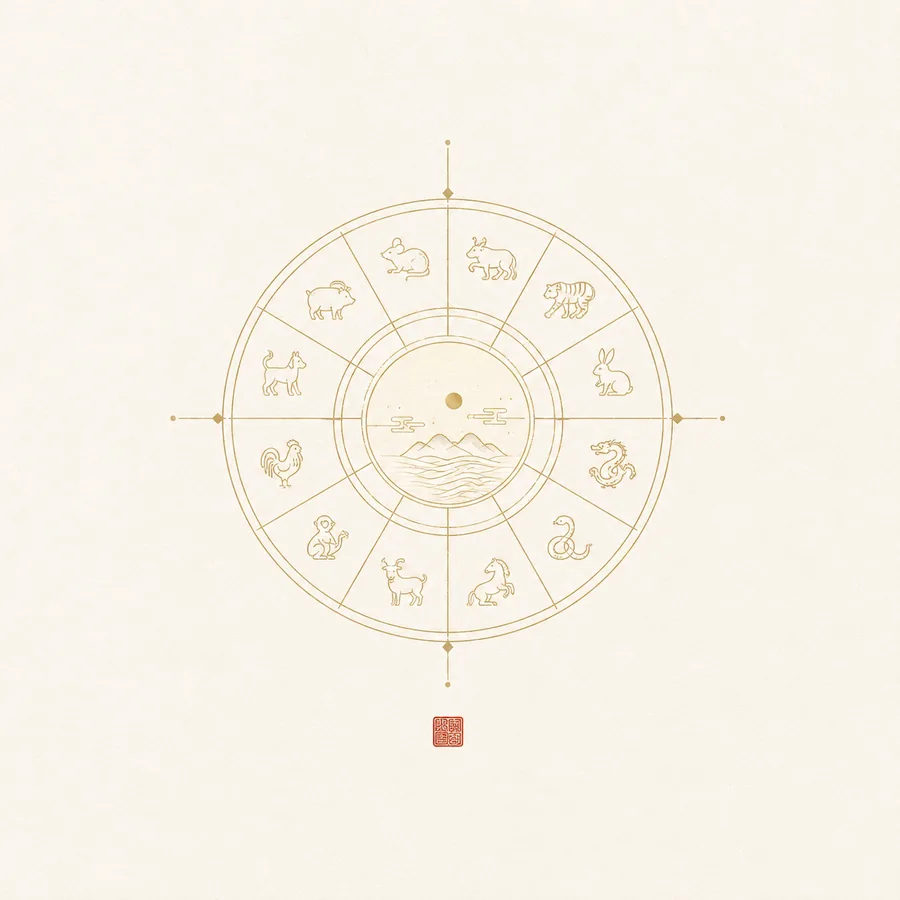
Here's the thing most people miss. The twelve life stages aren't a timeline from good to bad. They form a loop. Think of them like seasons that keep cycling, or like the breath of a single element as it goes from spark to full blaze to embers to ash to the soil that feeds the next seed.
Each of the Five Elements (오행, Ohaeng) in your chart goes through these stages depending on which Earthly Branch it lands on. So your Day Master might be in "Prime" stage in one pillar but "Tomb" stage in another. That tension is where the reading gets interesting.
No stage is inherently good or bad. I really need you to sit with that.
The Rising Stages: Building Momentum
Birth (장생, Jangseang): Fresh Potential
Birth is exactly what it sounds like. New energy entering the world. It's raw, unformed, full of possibility but without direction yet. Think of a newborn's first breath or the very first green shoot pushing through frozen soil in early spring.
When Birth stage shows up prominently in a chart, I usually read it as someone who carries a sense of freshness about them. There's optimism here. Naivety too, but the good kind. The kind that lets you try things without overthinking.
Say someone has their Day Master in Birth stage. They might come across as perpetually curious, always starting new things. The shadow side? They can struggle with follow-through.
Bathing (목욕, Mogyok): Emotionally Turbulent and Attractive
This stage has a reputation. In classical texts, Bathing was associated with peach blossom energy (도화, Dohwa), meaning romantic allure. And honestly, there's something to it. People with strong Bathing stage energy tend to be magnetic. They draw attention.
But the core meaning is turbulence. Like a newborn being washed for the first time. It's uncomfortable. Vulnerable. The energy is exposed and sensitive. Emotionally, Bathing stage people can be intense. Relationships tend to run hot. If you're curious how this plays into romantic compatibility, a Saju love reading can show whether Bathing energy between two charts creates chemistry or chaos.
Crown (관대, Gwandae): Identity Solidifies
Crown stage is where you start to know who you are. The energy has stabilized enough to take shape. Think of someone in their early twenties who's finally figured out their style, their values, what they won't tolerate.
This is a stage of presentation. It literally translates to "wearing the crown" or "putting on formal clothes." The energy is about showing up in the world with intention. Charts heavy in Crown stage often belong to people who care about how they're perceived, not out of vanity, but because identity matters to them deeply.
Prime (건록, Geonrok): Sustainable Power
Now we're cooking. Prime is the stage where energy is strong, stable, and productive. This isn't a flash-in-the-pan burst. It's sustainable. Think peak career years, where you're competent, confident, and your efforts actually produce results.
Prime stage in the Day Pillar often indicates a self-made quality. There's a DIY energy to it. People with this placement tend to rely on themselves first. They build things.
The catch? Prime can make someone resistant to help. "I'll do it myself" can become a limitation when collaboration would serve them better.
Peak (제왕, Jewang): Maximum Energy, Nowhere to Go But Down
Peak is the absolute zenith. Full moon. Midsummer noon. Every bit of energy has been deployed. It sounds amazing, right?
Here's where my reading diverges from what beginners expect. Peak is powerful, yes. But it's also precarious. When you're at the very top, the only direction left is down. I often see Peak stage in charts of people who experience dramatic reversals, not because they're doomed, but because maximum intensity is hard to sustain.
A chart with Peak stage needs awareness. The energy is "use it wisely or get burned by it." Fire at Peak doesn't just warm. It can scorch.
The Falling Stages: Descent as Wisdom
Decline (쇠, Soe): Wisdom Replaces Force
Decline doesn't mean falling apart. It means the energy has crested and is now shifting from action to reflection. Think of a seasoned professional who doesn't need to prove anything anymore. They've done the work. Now they operate from experience.
People fear this stage, but honestly, some of the most capable individuals I've seen in charts carry Decline energy. They're efficient. No wasted movement. They've learned what matters.
Sickness (병, Byeong): Turning Inward, Becoming Perceptive
OK, this is the stage where people really freak out. "Sickness" in my chart? Does that mean I'll get sick?
No. Not necessarily. Sickness stage describes energy that has turned inward. It's contemplative, sensitive, perceptive. Think of how when you're physically unwell, your senses sharpen. You notice things you'd normally miss. That's the quality of this energy.
Artists, writers, spiritual practitioners often have Sickness stage prominent in their charts. It gives depth. The energy isn't outwardly powerful, but it's incredibly rich internally. Some of the most emotionally intelligent charts I've ever analyzed had Sickness stage in the Month Pillar.
Death (사, Sa): Dormant, Not Dead
Let me be absolutely clear. Death stage in Saju does not mean physical death. Full stop.
Death stage means the energy has gone dormant. Like a deciduous tree in winter. The leaves are gone. The branches look bare. But the roots are alive underground, and spring will come.
This is a stage of letting go. Release. If you're clinging to something that no longer serves you, Death stage energy in your Grand Fortune or Annual Fortune (연운, Yeonun) is the universe saying: "It's time."
Take a hypothetical chart where someone's Day Master is Wood and they enter a Death stage Daeun period. This doesn't mean catastrophe. It means the old version of their identity is composting. Something new is being prepared beneath the surface.
Tomb (묘, Myo): Hidden, Compressed Potential
Tomb stage is storage. Think of a seed vault or a treasure chest buried underground. The energy isn't gone. It's compressed and preserved, waiting for the right conditions to re-emerge.
Charts with Tomb stage often correlate with people who have hidden talents or resources that surface later in life. There's a "late bloomer" quality to Tomb energy. Or sometimes it shows up as someone who holds things inside, whether emotions, skills, or ambitions, until the pressure builds enough to crack the surface.
The classical texts sometimes call Tomb the "storage" or "treasury." That framing is useful. It's not a dead end. It's a vault.
Extinction (절, Jeol): The Absolute Reset
Extinction sounds terrifying but think of it as a blank canvas. This is the most radical stage. Everything is stripped away. Zero point. The slate is wiped clean.
Why would this ever be good? Because sometimes a complete reset is exactly what's needed. Extinction stage in a ten-year Grand Fortune can mark the period where someone reinvents themselves entirely. New career, new city, new identity. It's not comfortable. But it's clean.
The Renewal Stages: The Invisible Beginning
Conception (태, Tae): The First Invisible Spark
Before birth, there's conception. A spark so small you can't see it yet. This is potential in its most embryonic form. An idea that hasn't become an idea yet. A feeling before it has a name.
Conception stage in a chart brings a dreamlike, intuitive quality. Sometimes when this stage is active, people report vivid dreams or sudden intuitive hits. If that resonates, you might find the Korean dream dictionary useful for decoding what your subconscious is processing.
Nurture (양, Yang): Growing Invisibly
Nurture is the stage right before Birth. The energy is developing but can't be rushed. Like the last trimester of pregnancy or the weeks before a seed breaks soil. Everything is happening, but none of it is visible yet.
People in a Nurture stage Daeun period often feel frustrated. "Nothing is happening!" But things are happening. They're just underground. Patience is the lesson here, and it's a hard one.
How to Read Life Stages in Your Own Chart
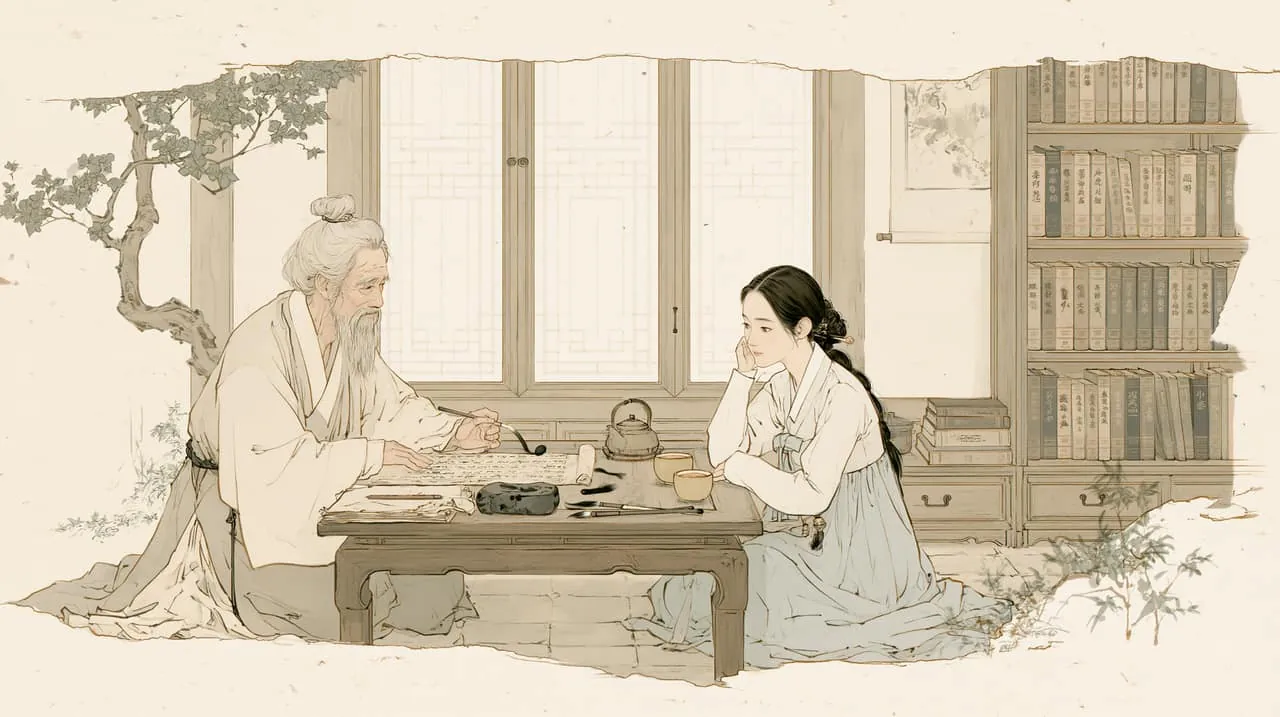
Each of your Four Pillars (Year, Month, Day, Hour) places your Day Master's element at a different life stage based on the Earthly Branch in that pillar. So you might see Birth in your Year Pillar, Prime in your Month Pillar, Tomb in your Day Pillar, and Peak in your Hour Pillar. That's four different energy qualities operating simultaneously.
The Grand Fortune cycles then move you through these stages in sequence over decades. This is the most powerful timing mechanism in Saju. A ten-year stretch in Tomb stage will feel fundamentally different from a ten-year stretch in Prime stage, and knowing which one you're in changes everything about strategy.
If you want to go deeper into understanding how these mechanics actually work together, the free Saju ebook is a solid starting point.
Frequently Asked Questions
Does "Death stage" in my Saju chart mean I will die?
Absolutely not. Death stage (사) refers to the dormancy of elemental energy, not physical death. It represents a period of release and transformation, like a tree shedding its leaves before winter. Many people go through Death stage in their Grand Fortune and emerge with a completely renewed sense of purpose.
Which life stage is the best one to have in a Saju chart?
There's no single "best" stage. Prime (건록) and Crown (관대) are often considered favorable because they carry strong, stable energy. But a chart loaded with Peak (제왕) can lead to burnout, while a chart with Tomb (묘) might indicate hidden resources that surface later in life. Balance and context matter more than any individual stage.
How do I find out which life stages are in my chart?
Your life stages are determined by the interaction between your Day Master's Heavenly Stem and the Earthly Branches across your Four Pillars. You need your exact birth date and time (year, month, day, hour) to calculate them accurately. A proper Saju reading will map these out for you.
Do life stages change over time?
Your natal chart's life stages stay fixed. But the Grand Fortune (대운) cycles move you through different life stages every ten years, and the Annual Fortune (연운) adds yearly shifts. So yes, the active energy stage you're experiencing does change, which is why timing matters so much in Saju.
The Stages Are a Map, Not a Verdict
The twelve life stages are one of the most elegant systems in Korean astrology. They remind us that energy is never static. It rises, peaks, falls, goes underground, and rises again. Whatever stage you're in right now, whether it feels powerful or dormant, it's temporary. And it's purposeful.
Stop fearing the "bad" stages. Start understanding what each one is asking of you.
Discover Your Destiny
Curious about your own chart?
Get a free mini reading, then unlock your full Four Pillars report from a certified Saju master.