The Long Season
On timing, and the honest question of whether a slow, inward, healing-oriented path is a real direction or a delay.
From the editor
Most people who write to us at a crossroads are not asking whether things will turn out well. They already suspect the answer is complicated. What they want to know is whether the direction they have chosen, the quieter one, the one bent toward healing or recovery or simply catching their breath, counts as a real life or only as a pause before the real life resumes. I want to be plain about this. Saju, the Korean practice of reading a life from the birth moment, does not measure your choices against a productive ideal. It reads timing, and timing includes the years when the sensible thing is to slow down, tend to your health, and stop pretending you are further along than you are. This issue is about those years. It is written for readers who feel behind and are half convinced that feeling is a verdict. It is not a verdict. It is often just the weather of a particular stretch of a life, and weather changes. What I will not do here is tell you the slow years are secretly the productive ones in disguise. They are the slow years. They still belong to you, and they still count.
The Case for Sitting Still
My Mister (나의 아저씨) takes two people at the bottom, a middle-aged engineer worn thin by his own life and a young woman flattened by debt and cruelty, and refuses to rush either of them toward a fix. What the drama understands, and what most advice about your trajectory hides, is that recovery is not a detour taken between two periods of achievement. For a long stretch it is the whole content of a life, and it moves at the speed it moves. The show never pretends the healing is efficient. It lets the two of them be useless at the ordinary measures of progress for a long time, and it treats that as an honest way to spend a season rather than a failure to launch. Readers who fear their inward years are wasted years should notice how much living happens inside that supposedly empty stretch.
The slow years are still yours. Being behind is a description of a stretch of road, not a sentence passed on the traveler.
When the Clock Is Not Yours to Set
My Brilliant Life (두근두근 내 인생), drawn from Kim Ae-ran's novel My Palpitating Life, puts a boy with a condition that ages his body far ahead of his years beside parents who were barely more than children when they had him. Set My Mister next to it and the difference sharpens. My Mister asks whether you may choose to slow down. This film asks what happens when the choosing is taken from you, when illness sets the pace and you have to build a full life inside a timetable you did not agree to. The honest thing it offers is not comfort about outcomes. It is the reminder that a life measured in fewer years is not a smaller life, and that timing you cannot control still leaves you the whole question of how to live inside it.
On the Scene · What Comes Across the Table
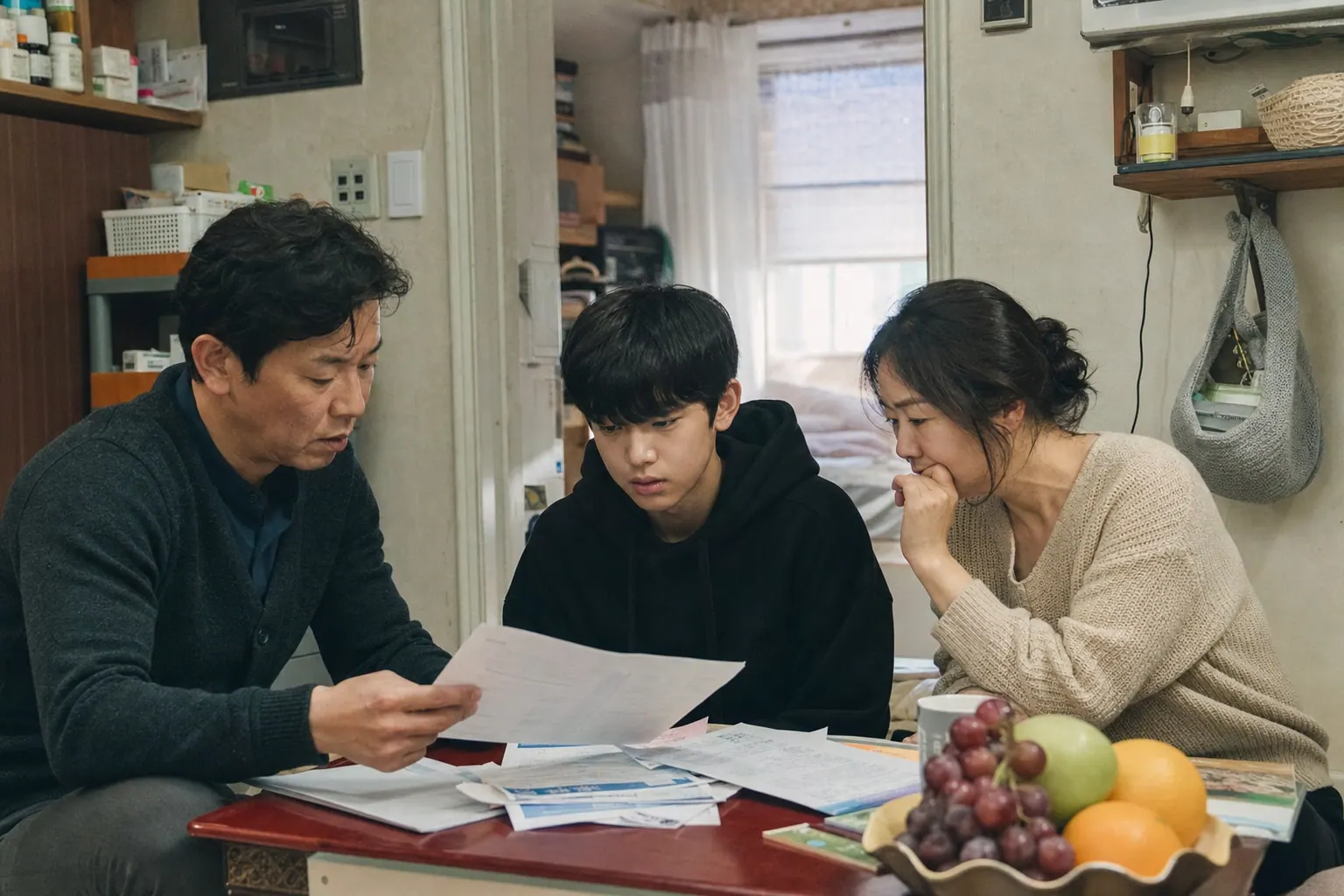
Two patterns arrive often enough that I can describe them from memory. The first is the reader who has left a demanding path, or lost it, and now spends their days on something slower, therapy, study, caregiving, a small recovery of health, and who sits down mostly to be told whether this counts. Roughly one in six readings this season carries that shape. They rarely say it directly. They ask about their overall trajectory in a careful voice, and what they are really asking is whether the last two years were a gap in the story or part of it. When the chart shows a stretch weighted toward rest and consolidation rather than expansion, I tell them plainly, and the relief is almost physical. Not because the reading promised riches later, but because someone finally agreed that the quiet stretch was not a character flaw. The hard truth I do not soften is the other half. A slow season is real, and it also ends, and some readers have grown so attached to the permission to rest that they flinch when the chart begins to point outward again. Part of an honest reading is naming that turn when it comes, so the shelter does not quietly become the ceiling.
The second pattern is heavier. These are readers living with a health question, their own or someone they love, and the crossroads is not a career at all. It is the fear that the illness has already written the rest of the story and that planning anything is foolish. They come wanting to know if there is a future worth aiming at. I do not read a chart to predict a diagnosis, and I say so at once. What the chart can speak to is the shape of the years, where the pressure sits, where there is room to breathe, when the demanding stretches ease. For a person braced for the worst, hearing that the coming years still hold ordinary texture, work and affection and small plans, can loosen something that has been clenched for a long time. The truth I keep in front of them is that timing they did not choose is still timing they can live inside. That is not a smaller life. It is the same-sized life, held under different conditions.
Reading Timing Without Flattering It
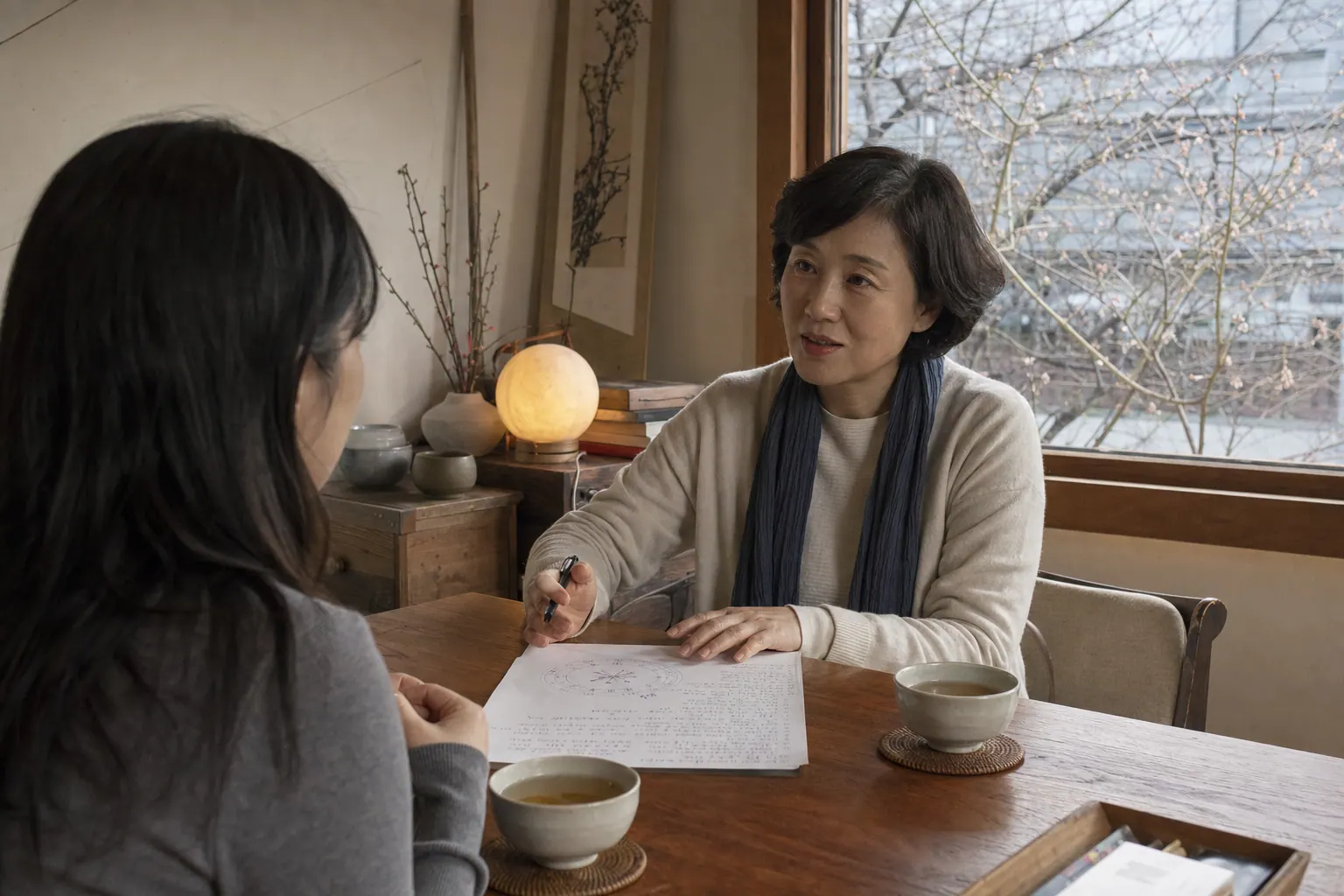
Both stories refuse the lie that a life is only as good as its fastest year. My Mister honors a season given over to repair, and My Brilliant Life honors a life measured against a clock nobody would have chosen. A Saju reading of your general fortune works the same way when it is done honestly. It does not rank your years against a picture of constant advancement. It tells you which stretch you are standing in, whether this is a time to build outward or to gather yourself inward, and it declines to pretend the gathering years are wasted. The direct value is that you stop arguing with the season you are in and start deciding what to do inside it.
If you are reading this while unsure whether your slower, inward, healing-oriented path is a direction or a delay, I hope the issue has at least made the question feel less like an accusation. The years you spend recovering, tending your health, or simply learning to stand again are part of the trajectory, not an interruption of it. When you are ready to see the shape of your own stretch, where the pressure sits and where the room to breathe is coming, you are welcome to sit down and have your Saju read plainly, no flattery, just the timing as it stands.
If this sounds like you
Read your own timing.
Start with a free mini reading. When you want the full picture, a certified Saju master writes your complete Four Pillars report.