The Other Career
On the second path, the one you keep folding away, and how a Korean birth chart reads the timing of a change you have not yet made.
From the editor
Most people who write to us about work are not asking whether to quit. They already suspect the answer. What they want is permission to trust the suspicion, and some sense of when. This issue gathers the questions we hear most, the ones that arrive folded inside larger worries about love, about health, about whether the years ahead will feel like theirs. We take Saju, the Korean practice of reading a life from the birth moment, as a way of listening to those worries at their proper scale, not to promise a destination but to describe the terrain honestly. The register here is patient on purpose. A career change rarely rewards panic, and it almost never punishes a person for waiting one more season to be sure. If you came looking for a push, you may leave with something steadier instead, which is a clearer picture of what is already moving underneath the surface of an ordinary week.
The Chart Does Not Name the Job
Readers often arrive expecting a title to appear on the page, a profession spelled out plainly. A birth chart does not work that way, and the honest counselors say so early. What the chart describes is temperament and timing, the kind of effort a person sustains without resentment and the seasons when that effort tends to find open ground. A person suited to careful, solitary detail will read as that in a dozen fields at once. The work of the reading is narrowing, not naming, and it belongs to the reader as much as the counselor.
Direction Is a Question of Weather, Not Distance
The second thing readers want is a date, a clean threshold after which the new path becomes safe. Timing in Saju is closer to weather than to a fixed line on a calendar. Certain years favor building and certain years favor holding still, and a change attempted against the grain of a holding year often costs more than the same change made two winters later. This is not superstition about luck. It is a reminder that the same decision carries different weight depending on what else in a life is already under strain.
They rarely ask if they should change. They ask whether they are allowed to want it.
Work and Love Are Read on the Same Page
Readers who ask about a career change almost always mention a partner, a parent, or a marriage in the next breath, and they apologize for it as if they had wandered off topic. They have not. A chart is read whole, and the counselor who separates the working life from the loved one is usually the one who understands neither. A change of work reshapes the hours a household shares, the money it counts on, the version of a person who comes home in the evening. To ask about the career alone is to ask half a question, and the better readings answer the whole of it.

On the Scene · Two Patterns From the Consulting Room
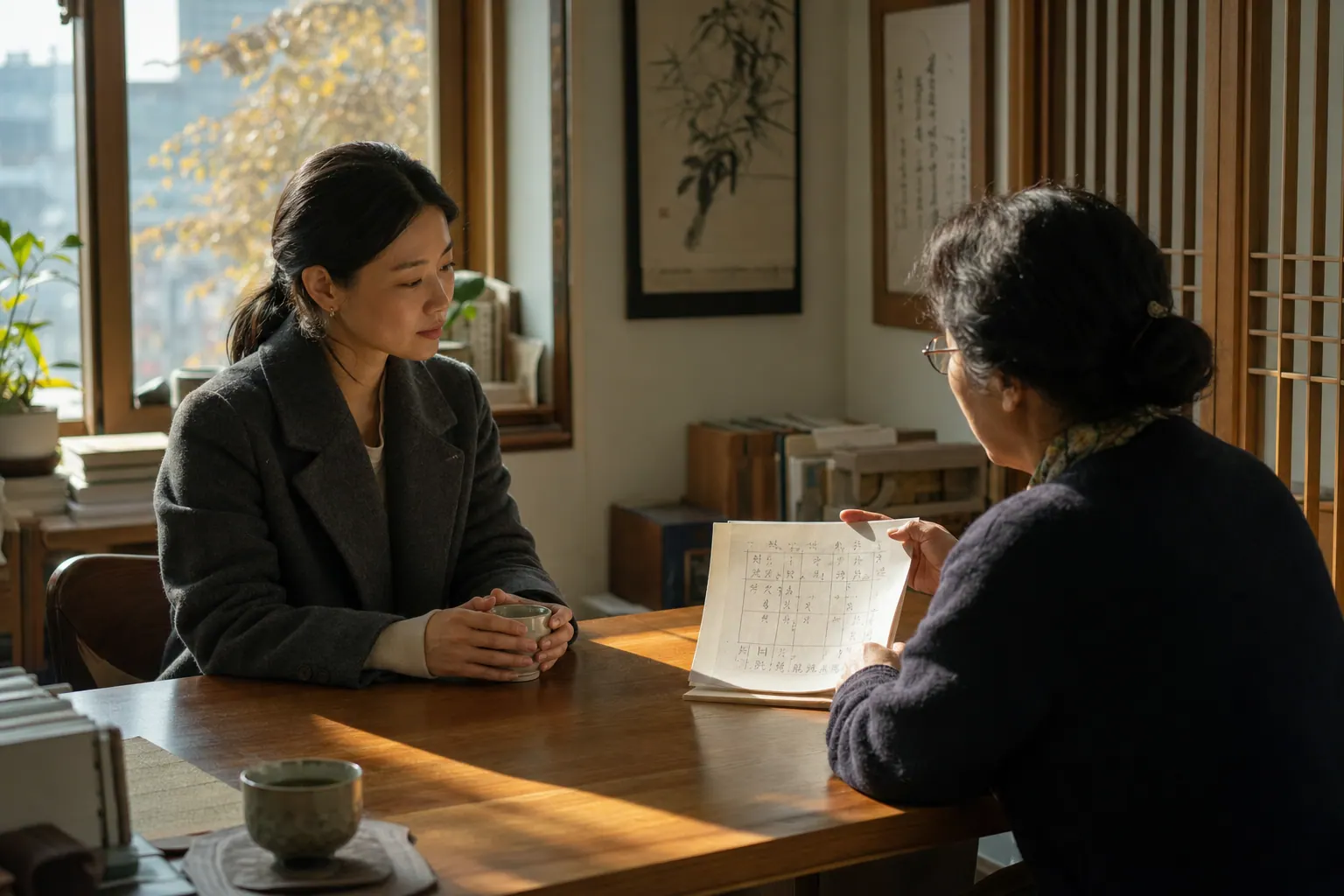
The first pattern arrives more often than any other, roughly one in six readings during the seasons when people take stock of themselves. A person in their late thirties or early forties sits down and describes a career that works. The salary is fine, the title is respectable, colleagues would call them competent. And yet they have spent three or four years quietly rehearsing an exit into something smaller and more personal, a shop, a studio, a craft, a practice of their own. What they carry into the room is not doubt about the new thing. It is guilt. They feel they have no right to abandon a life that so many people would envy, and they want the chart to either release them or scold them. The patient reading does neither. It looks instead at whether the restlessness is a passing tax on a stable stretch or a genuine mismatch that has been building since their twenties, and it asks what the coming years actually support. Very often the honest answer is that the change is sound but the moment is early, that one more year of preparation is not cowardice but ordinary care, and that the guilt itself is worth setting down regardless of when they move.
The second pattern is quieter and harder to hear. A person, sometimes younger and sometimes well past fifty, comes in asking about work but keeps returning to health and to the shape of their later years. They have watched a parent grow old inside a job that used them up, and the real question underneath the career question is whether they are heading toward the same ending. Here the reading slows down considerably. It is not enough to point at a favorable field or a promising year. The counselor has to describe how this particular person spends their strength, where they tend to overwork past the point of sense, and what a sustainable pace would actually look like across decades rather than quarters. These readings rarely produce a dramatic decision. They produce a small correction, a decision to protect one evening a week, to stop treating rest as something earned only after collapse. The change of career they came asking about often turns out to be a change of pace they needed first.
If you recognized yourself in either pattern, take it as a good sign rather than a warning. The people who ask these questions early are usually the ones who make the gentler landings. Nothing in a chart forces a hand, and nothing here is meant to. A reading at its best simply gives you back your own situation with the noise turned down, so the next step looks like a step and not a cliff. When you feel ready, and only then, you are welcome to sit with us and have your own chart read slowly, with your career and your love and your later years all kept on the same page where they belong.
If this sounds like you
Read your own timing.
Start with a free mini reading. When you want the full picture, a certified Saju master writes your complete Four Pillars report.