When, and With Whom
A patient look at the questions people carry about marriage timing, and what a Korean reading can and cannot promise about them.
From the editor
Most of the letters we receive this season ask a version of the same thing. When will I meet someone who stays. Will I marry at all, and if I do, how many times, and what will they be like. There is worry underneath the words, and sometimes a quiet fear that the answer is no. I want to begin by saying that the question is ordinary and honorable, and that asking it does not mean you are behind. Saju, the Korean practice of reading a life from the birth moment, does not hand anyone a date circled on a calendar. What it offers is closer to a description of your own weather, the years when partnership tends to find easier footing and the years when it asks more of you. This issue is written in a steady voice on purpose. We are not here to hurry you toward a wedding or to warn you off one. We are here to sit with the timing, to name what tends to be true, and to let you decide what to do with it. Read slowly. There is time.
The Man Who Would Rather Not
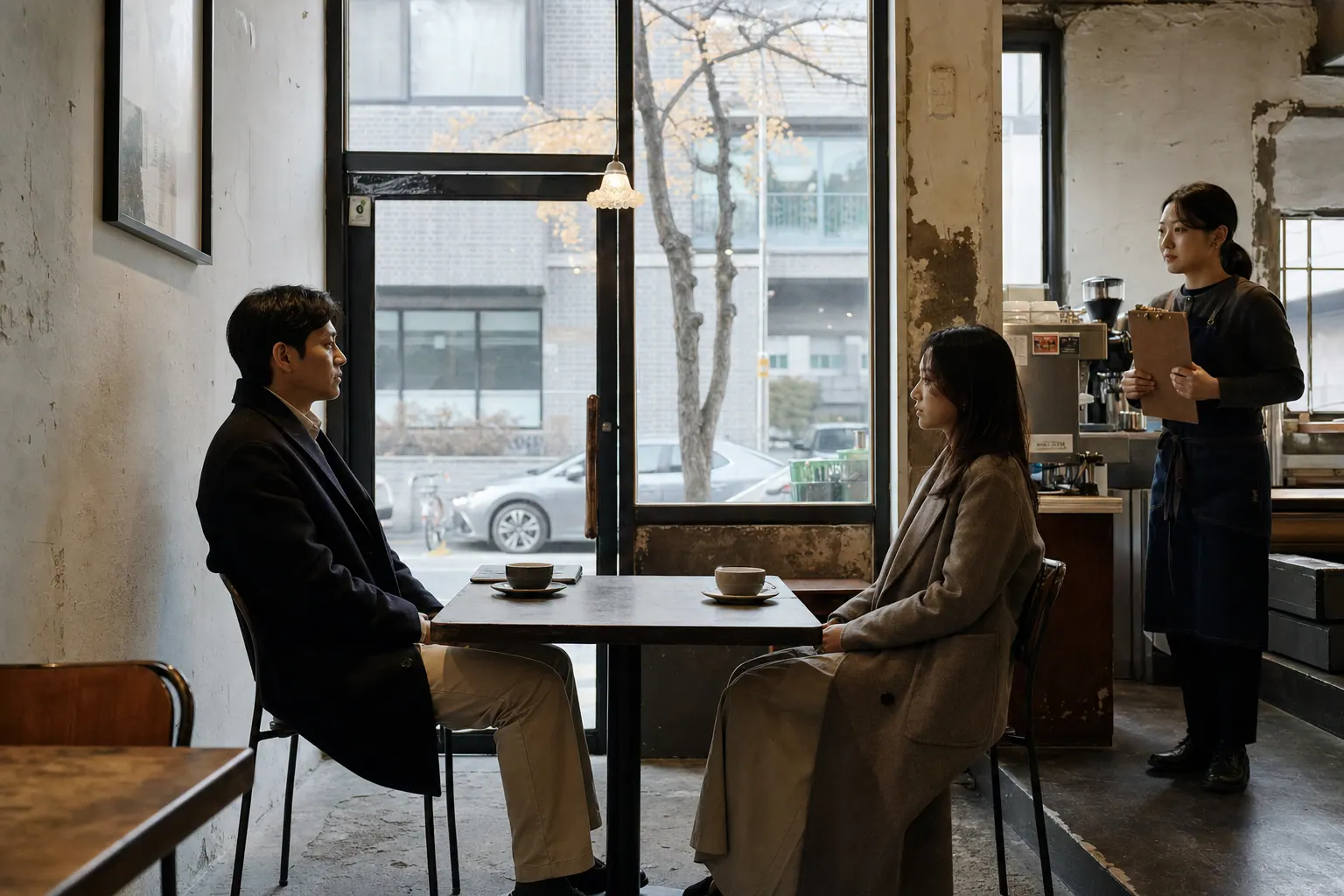
In Marriage, Not Dating (연애 말고 결혼), a man so averse to commitment that he hires a fake girlfriend to quiet his family is the one the story follows most closely. What that premise reveals is easy to miss. The person who insists he never wants to marry is usually the person most preoccupied by marriage, arranging his whole life around avoiding it. Set his loud refusal against the woman he recruits, who wants a real marriage and cannot seem to find one. Between them the show names the truth that many readers already sense. The wish and the resistance are often held by the same hand, and timing has less to do with whether you want partnership than with when you stop bracing against it.
How Many Times, and Whether at All
Readers often ask not only when but how many. Once, twice, or never. In a Saju reading these are not verdicts. The chart may show a strong pull toward partnership early, or a pattern where commitment settles later and holds, or years scattered with meetings that do not last before one that does. A person who fears the answer is no tends to read every quiet season as proof. It rarely is. What the reading describes is tendency and season, not sentence. Someone told they marry late is not being told they marry poorly, and someone who has parted before is not being told they will keep parting.
Timing is not the day it happens. It is the stretch of years when the door is easier to open.
What Kind of Person
The other steady question is who. People want a description of the one they will end up with. A reading can sketch the temperament that tends to fit yours, whether you settle more easily with someone calm or someone driving, whether you are drawn to those older or steadier or to those who unsettle you. It cannot supply a name or a face. This is where the drama's fake arrangement is honest despite itself. The couple that begins as a performance discovers the fit only by living close to it. Character shows itself in ordinary weeks, not in a forecast, and the reading points you toward the kind of person who wears well rather than the one who arrives first.
On the Scene · Two Patterns from the Room
Roughly one in six readings this season carries the first pattern, and it belongs almost always to someone in their early thirties who arrives certain they have missed their window. They have watched friends marry, sat through the questions at family dinners, and begun to read their own single years as a failure of some kind. When we lay out the chart, the partnership years are often not behind them at all. They fall a little later, in a stretch these clients have not reached yet, and the earlier quiet was never emptiness but preparation they could not see while inside it. The relief in the room is visible, though I am careful with it. I tell them the later season is a tendency and not a promise, and that arriving there braced and bitter is different from arriving open. The work is not to wait harder. It is to loosen the grip that fear puts on the years in between, so that when the easier stretch comes they are still soft enough to meet it. Many of them have been living as the man in Marriage, Not Dating lives, refusing loudly while wanting quietly, and naming that out loud does more than any date could. The second pattern is different and arrives less often, perhaps one in ten. These are people who have already married once and parted, and who come not asking when but asking whether it can happen again without breaking the same way. They carry a private verdict that they are the kind of person who does not get to keep things. The chart rarely agrees. What it usually shows is a first partnership that came in a hard season, under pressure or too early, and a later stretch with steadier ground beneath it. I do not tell them the past was fated to fail, because that steals something from them. I tell them that timing shaped the first attempt more than character did, and that the person they become after a parting is often the one better suited to what comes next. Both patterns end in the same place. The question changes from will it happen to how do I stay ready, and that is a question a person can actually live inside.
If you took one thing from this issue, let it be that the timing of marriage is a season and not a scoreboard. Whether it comes early or late, once or more than once, the reading describes weather you can prepare for rather than a fate you must accept. Be patient with your own stretch of waiting, and gentle with the years that feel quiet. When you are ready to look more closely at your own chart, at the seasons where partnership tends to settle and the kind of person who tends to fit, the door here is open, and there is no hurry in walking through it.
If this sounds like you
Read your own timing.
Start with a free mini reading. When you want the full picture, a certified Saju master writes your complete Four Pillars report.