The Arithmetic of Two
On compatibility, and the plain question of whether the person across the table can share a life with you.
From the editor
Most people who ask about compatibility already know the answer and want it overturned. They describe a partner in careful sentences, list the good days, and then wait for someone to tell them the doubt is nothing. I will not do that here, and neither will a good reading. Saju, the Korean practice of reading a life from the birth moment, does not promise that a difficult match becomes easy because two people love each other. It shows where two natures meet without friction and where they will grind against each other for years. Compatibility is not a verdict of yes or no. It is a description of the specific work a pair will have to do, and an honest account of whether both people are willing to do it. This issue is written for readers who want the description rather than the reassurance. We will name the obstacles plainly, because a partner you cannot name your problems with is not a partner you can keep.
What the Lease Reveals
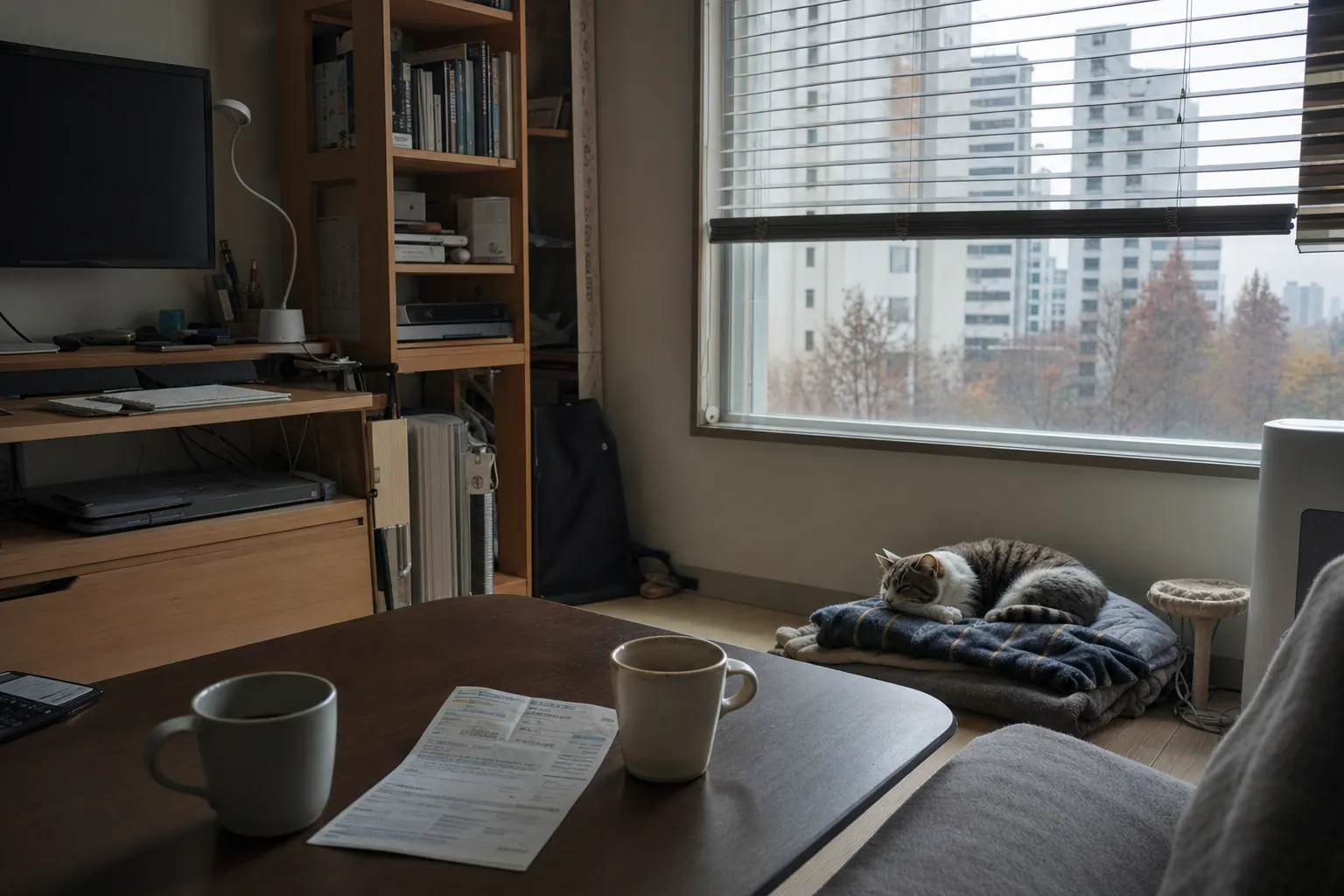
Because This Is My First Life opens with a housing arrangement rather than a romance. Nam Se-hee needs a tenant to help pay his mortgage, and Yoon Ji-ho needs a place to live, so they agree to marry as a contract, splitting rent and chores before they split any feeling. The premise looks cold, but it exposes something a love-first story keeps hidden. Before affection, two people who share a life are dividing money, space, sleep, and a cat. The show insists that compatibility is first a matter of whether the daily logistics fit, and only later a matter of the heart. A pair who agree on how to live can grow into love. A pair who love and cannot agree on how to live tend to lose both.
Compatibility is not whether you love the same things. It is whether you can survive the same ordinary Tuesday.
The Long Couple and the Waiting Question
Set beside the contract pair, the drama gives us Yang Ho-rang and Sim Won-seok, together for years and stalled at the edge of marriage. Their premise is the opposite of the lease. They have all the feeling and none of the decision. What their story reveals, which the arranged pairing hides, is that time spent together is not proof of compatibility. A couple can be comfortable for seven years and still discover they want different sizes of life. The question that finally divides them is not whether they love each other but whether one person's patience is being mistaken for agreement. Readers who ask if long dating guarantees a lasting partner should sit with this couple for a while.
On the Scene · Two Patterns From the Counseling Room
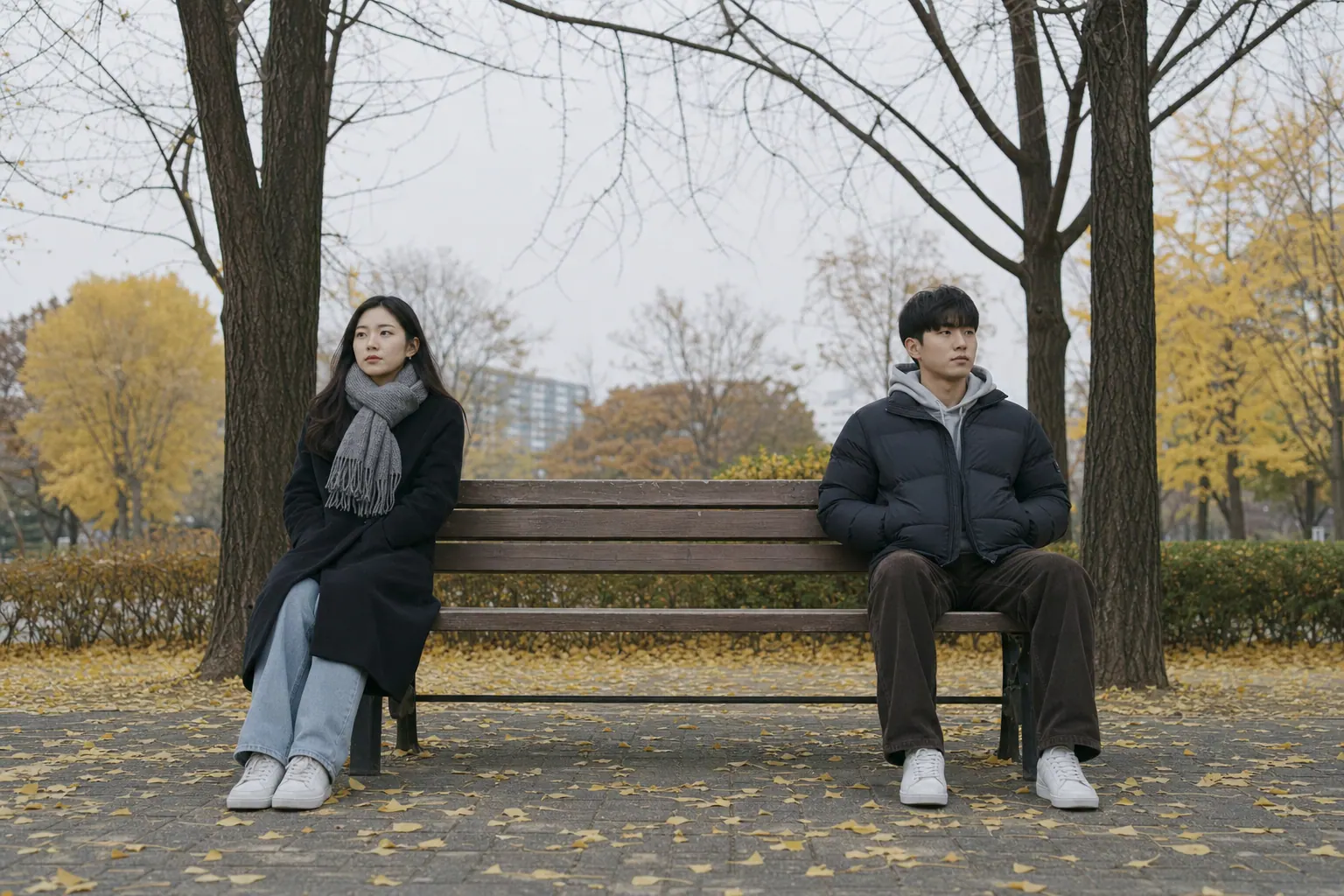
The first pattern arrives more often than any other, roughly one in six readings during a season. A person comes in with a partner they describe as good, kind, steady, and then admits that something feels effortful in a way they cannot explain. When we lay the two charts side by side, the picture is usually not conflict but drain. One nature spends energy freely and needs response, and the other conserves and needs quiet. Neither is wrong. On paper they are not enemies. The trouble is that the giving one reads silence as withdrawal, and the quiet one reads demand as pressure, and both spend the relationship translating the other person instead of resting in them. I tell these readers the plain truth. This match can last a lifetime, but only if both stop expecting the other to change their basic rhythm and start naming the misreading out loud the moment it happens. The ones who leave disappointed are the ones who wanted me to say the effort would disappear. It does not disappear. It becomes manageable, which is a different and more honest thing.
The second pattern is quieter and harder to say. A reader brings a partner who looks, by every measure, complementary. The charts fit. The families approve. The timing is right. And yet the reader keeps asking the same question in three different ways, which is a sign that they already feel the answer and are hoping the birth data will contradict them. In these cases the incompatibility is rarely between the two charts. It is between the reader and the life this partner represents. They are being offered a settled, predictable path with a person who will not surprise them, and some part of them is grieving the version of themselves that wanted something less safe. My work here is not to bless or forbid the match. It is to separate two questions that people arrive fused together. Is this person wrong for me, or am I afraid of what choosing them makes permanent about who I am becoming. Those readers usually go silent for a long minute. That silence is the reading.
The Older Woman, the Younger Man
The drama's third couple, Woo Soo-ji and Ma Sang-goo, carries the match the world most likes to warn against. She is older, guarded, and successful, and he is younger and openly devoted. Their premise pushes back on a quiet assumption the other couples let stand, that a suitable partner must arrive with matching status and matching pace. What their story reveals is that compatibility is not measured by whether a pairing looks correct from outside. It is measured by whether each person makes the other braver rather than smaller. Read against the stalled long couple, they make the point sharp. Years and approval mean little. What lasts is the pair who keep choosing the same direction after the first feeling wears thin.
If you came to this issue holding a name, you probably already sense which pattern is yours. The steady partner who tires you, the correct partner who frightens you, the long love that will not become a decision. None of these are sentences. They are descriptions of the work in front of you, and the point of naming them plainly is so you can choose with your eyes open rather than choose by hoping. Compatibility does not ask whether two people are perfect for each other. It asks whether both are willing to stay honest through the parts that are not. If you would like your birth data and a partner's read side by side, quietly and without a verdict pressed on you, the door here is open whenever you are ready to ask the real question.
If this sounds like you
Read your own timing.
Start with a free mini reading. When you want the full picture, a certified Saju master writes your complete Four Pillars report.