Will I Meet Someone? Notes on Timing, Matchmakers, and the Person Next Door
This issue reads birth charts and Korean dramas side by side to ask when a partner arrives, why set-ups disappoint, and how often that person was already at the family dinner.
From the editor
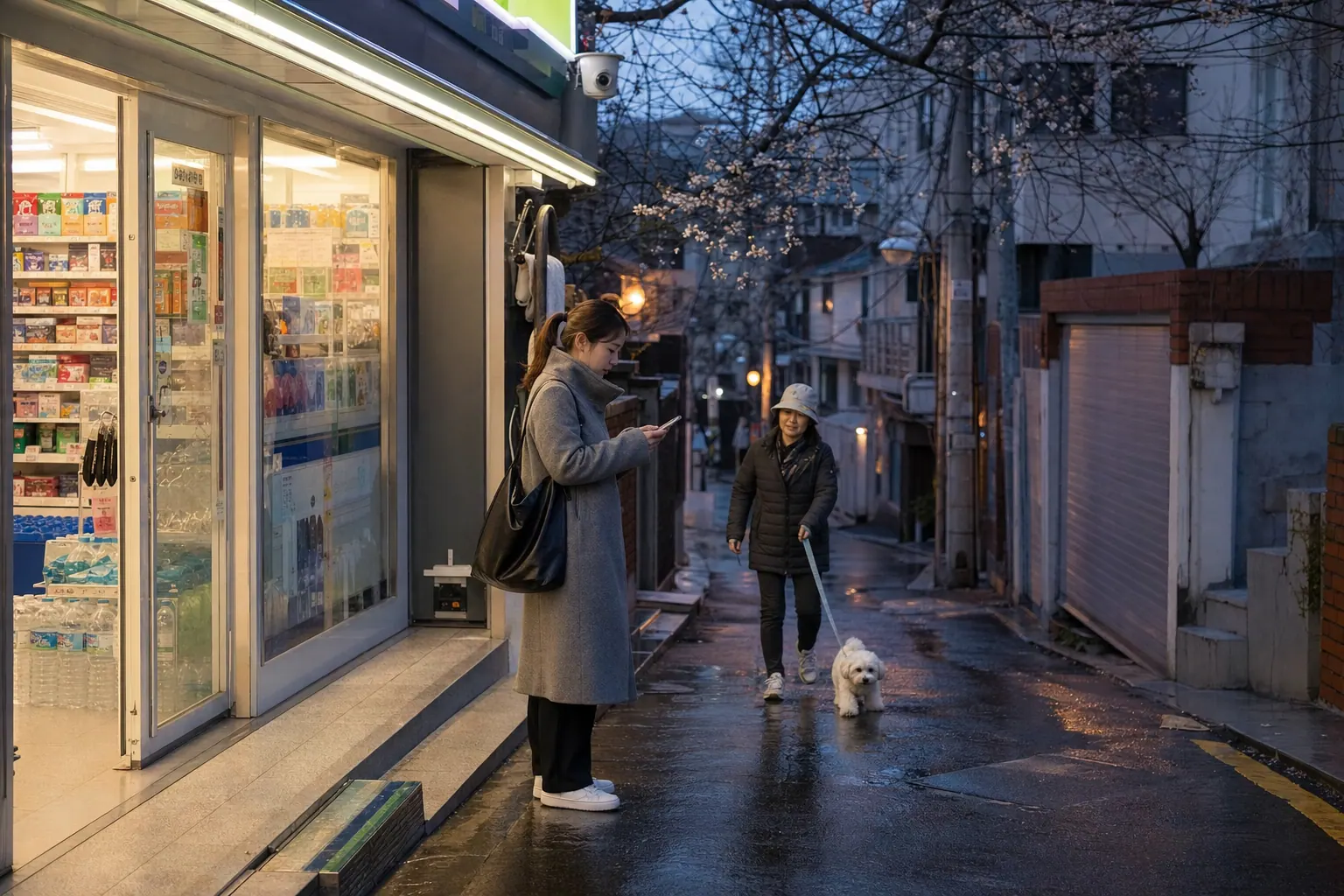
Every season brings its own version of the question, and this one has brought it in volume. Will I meet someone? When? Will they be kind, will they be tall, will my mother approve, and is it greedy to want all three? We read these letters with sympathy and, now and then, a raised eyebrow, because the person asking whether love exists for them has often also attached a list of thirty-one requirements. This issue is for them, and for the rest of us. Saju, the Korean practice of reading a life from the birth moment, has always had a great deal to say about partnership. It looks at the spouse palace, the earthly branch sitting under the day you were born, and at the stars that stand for a partner in your chart. It looks at ten-year luck cycles and at the single years when those stars come forward. What it does not do is hand over a name and an address. We spent the month watching Korean television, playing one stubborn K-pop track on repeat, and sitting in counseling rooms, to see where the charts and the stories agree. Mostly they agree that timing matters, and that people are worse at noticing who is around them than they think.
The Alarm and the Neighbor
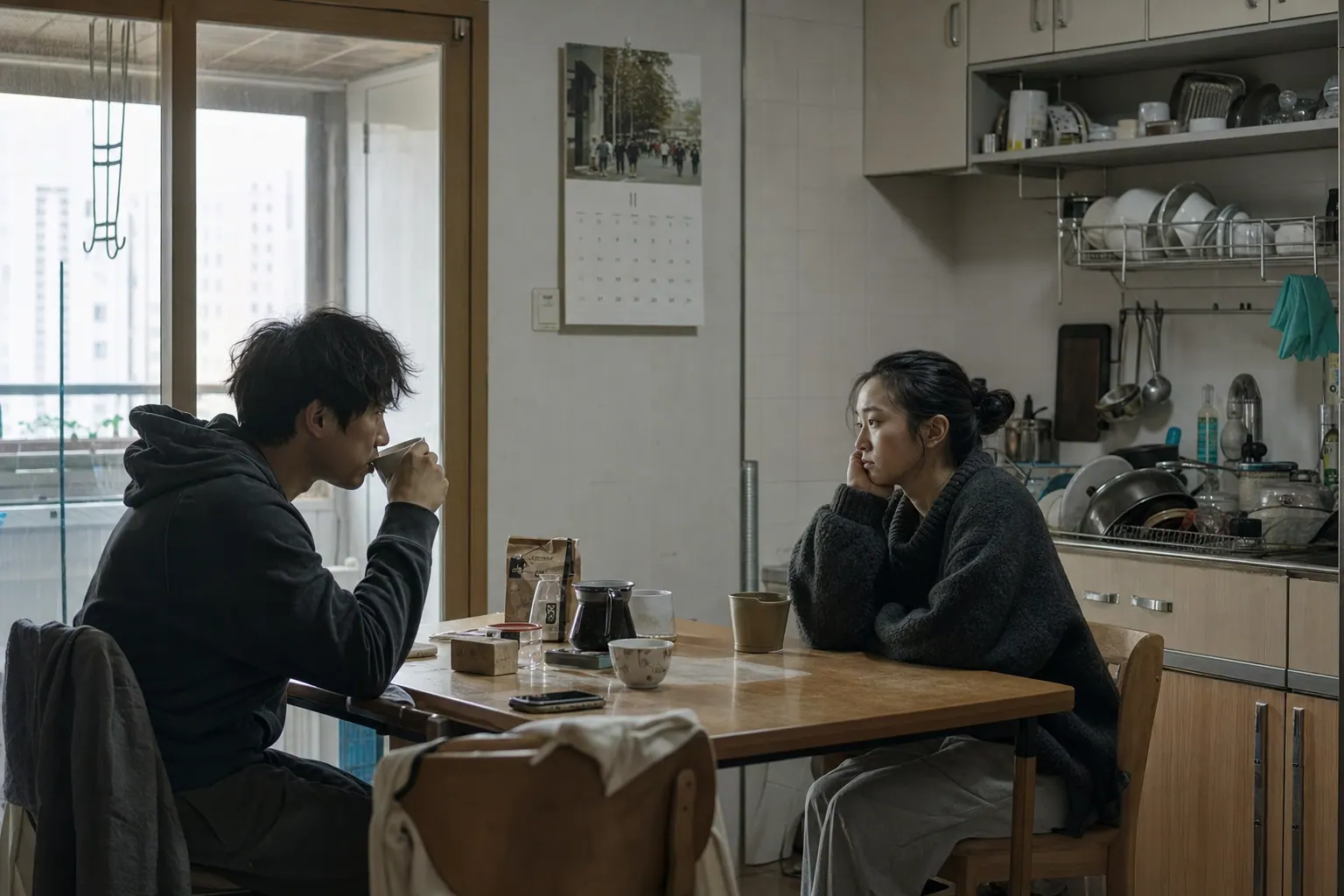
Love Alarm builds its whole world around a wish most single readers will admit to after the second cup of tea: a phone that rings when someone nearby likes you. The premise reveals that much of the fear is about not knowing, rather than about being alone. Nobody in that story is asking for a better partner. They are asking for confirmation. Love Next Door, the 2024 tvN comedy with Jung Hae-in and Jung So-min, quietly answers the app. Its leads have known each other since childhood, through mothers who are friends, and no device is needed because the information has been available for decades. What that story shows, and what Love Alarm keeps hidden behind its notifications, is that knowing someone likes you is rarely the actual problem. In Saju terms, a partner star sitting in the month pillar, which covers family and early surroundings, often describes exactly this situation: the partner is already among the people you see every week, and the luck cycle decides when anyone says so out loud.
On the Scene · From the Counseling Room
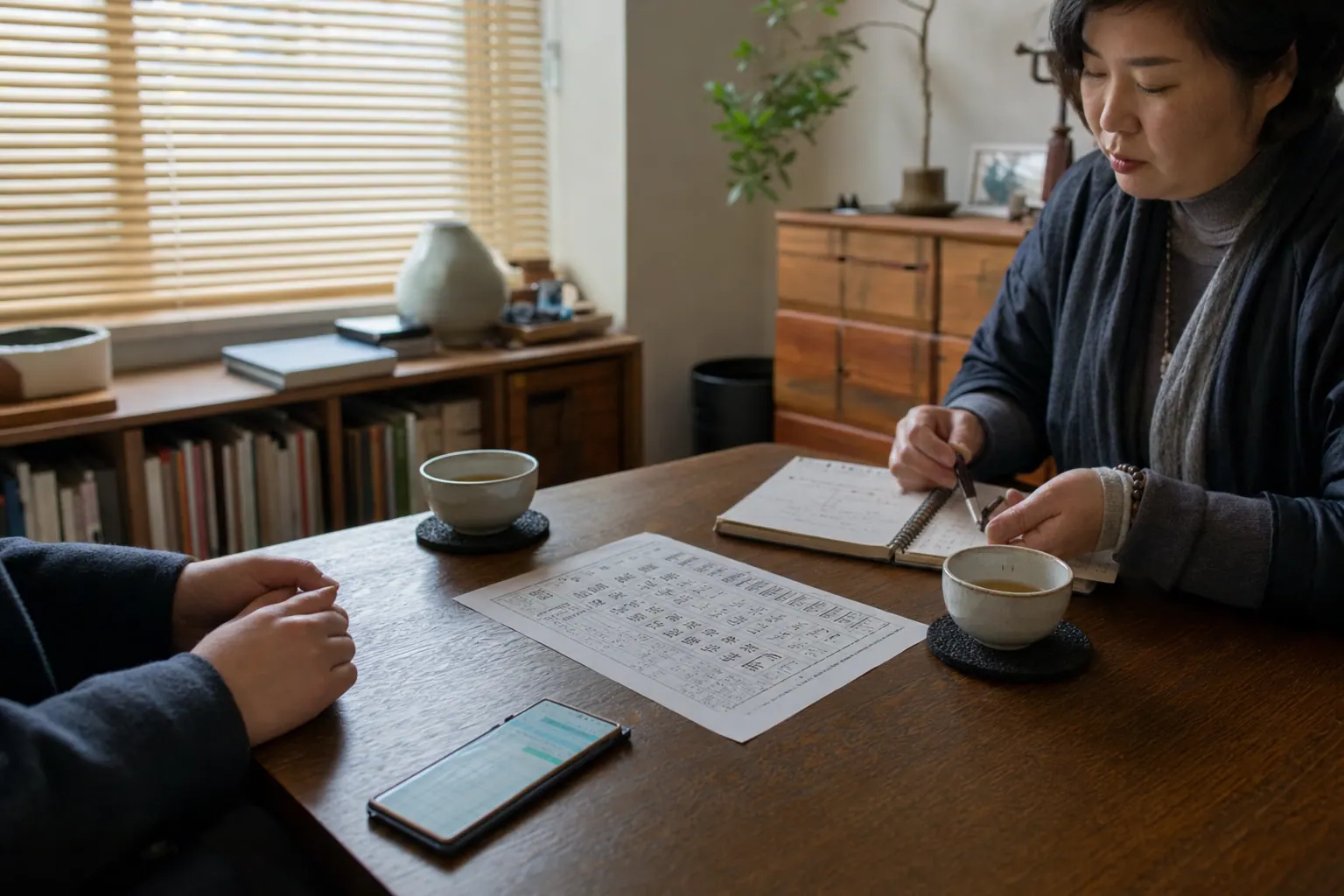
Two patterns account for a large share of the relationship questions we see, and both arrive looking like bad luck. The first appears in roughly one in six readings on this subject. A woman in her mid-thirties, a hospital pharmacist in the composite we will describe, brings a printed chart and a spreadsheet. The spreadsheet lists every introduction she has accepted since she turned twenty-nine, with dates, the name of the friend or aunt who arranged it, and a short note on why it ended. Most of the notes say some version of nothing wrong, just nothing. Her chart is not empty of partnership. The officer star, which classical texts read as a husband for a woman, sits clearly in her hour pillar, the pillar concerned with private matters and the later half of life, and her current ten-year luck cycle has been running wealth and output elements that keep her busy, well paid, and uninterested. The counselor's job in a case like this is mostly arithmetic. Her next luck cycle begins in about two years and brings the officer element into the open, and several annual pillars in that stretch repeat it. We tell her plainly that the introductions of the past six years were not failures of judgment, and that her spreadsheet is an accurate record of a period in which her chart was pointed at work. She laughs and asks whether she should stop going. Usually we suggest the opposite: keep going, keep the spreadsheet, and notice when the notes start getting longer. The second pattern is more common, closer to one in four readings, and it tends to arrive with a man, though not always. He is thirty-eight, works in logistics, and reports with some pride that he has met nobody in four years. When we ask whom he does see, he lists coworkers, his sister, his sister's colleague who has come to the last three family birthdays, and a former classmate he plays badminton with on Thursdays. In his chart the wealth star, read as a wife for a man, sits in the month pillar beside his own day, and the branch under his day stem, his spouse palace, forms a friendly combination with it. Charts like this describe a partner found through ordinary, repeated contact rather than through introductions or apps. So the reading becomes a slow conversation about the people on his own list. Somewhere around the badminton partner or the sister's colleague he goes quiet, then says she isn't really someone he would date, which is the sentence counselors hear most often shortly before a client changes his mind. We do not tell him who it is, because the chart cannot. We tell him the current year supports the combination, and that he should probably attend the next birthday. Both cases share a detail worth repeating. Neither person lacked a partner star. One was in the wrong decade, and the other had not looked carefully at the people he already knew.
The chart can tell you which years you will be more inclined to say yes. Getting yourself to the dinner is still your job.
Sabotage as a Strategy
Business Proposal begins with a woman going to a blind date in disguise on behalf of a friend, planning to be so unpleasant that the man gives up early. It does not go as planned. Set beside Love Alarm, the drama exposes something the app conveniently skips. The app spares everyone the risk of trying. Business Proposal shows feelings starting while someone is trying very hard to fail, which suggests that effort and outcome are less tightly linked than the anxious reader assumes. We hear from many people who say set-ups never work for them, and when we look closer they have often arrived at each one with an exit already planned. In charts, the years when a partner star comes forward through the annual pillar tend to produce introductions whether or not the person cooperates. The drama agrees, with a better wardrobe budget.

What the Song Means by Destiny
Destiny (나의 지구), from Lovelyz's 2016 album A New Trilogy, is sung by someone who cannot look away from one particular person and calls that destiny. It is a useful correction to how readers often use the word. In the song, destiny is a state of attention. The narrator does not know the future, has no app, and is not being set up by anyone's mother. Set against Love Next Door, where fate is mostly a matter of shared history and very persistent parents, the song reveals what the drama leaves out: the feeling of fatedness tends to arrive first, and the explanation is supplied afterward. This bears on the question of what a future partner will be like. Saju describes the partner through the spouse palace, so a reader with a fire branch there tends to be drawn to someone warm, quick, and slightly impatient, while a metal branch points toward someone exacting and orderly. That is a description of qualities, not a face. Readers who want the face will have to do what the song does and pay attention.
Most of the people who write to us about love are not as unlucky as they feel. Some are in a decade that has been busy with other things. Some have already met the person at family birthdays. A few are wearing a disguise to blind dates and should probably stop. If you would like to know which of these describes you, and which years in your chart bring a partner star forward, we are offering a short free reading to readers this season. Send your birth date, your birth hour if you know it, and the question in your own words. We will read it with care, and with only a little teasing.
If this sounds like you
Read your own timing.
Start with a free mini reading. When you want the full picture, a certified Saju master writes your complete Four Pillars report.