The Ledger and the Season: Wealth Luck for Working Lives
On money, career, and the patient reading of when effort finally pays, seen through Saju and three Korean dramas about sudden fortune.

From the editor
Almost every letter that reaches this desk carries the same quiet worry underneath its questions about jobs and money. People want to know whether the thing they have chosen, the small business, the writing, the move into a new field, the money set aside for investment, will hold. They have worked hard and often feel unpaid for it, and they write asking not only what will happen but when it will happen. This issue takes that worry seriously. We read wealth luck through Saju, the Korean practice of reading a life from the birth moment, and we sit with the fact that recognition and money rarely arrive on the schedule we want. What we can offer is a clearer sense of season and timing, and the reminder that a slow year is not a failed one. I hope these pages meet you where the effort has been real and the reward has been late.
What Wealth Luck Actually Names
In Saju, wealth is not a single lucky mark stamped on a chart. It is a relationship between what a person produces and what the surrounding years allow them to keep. A chart can show strong earning capacity and still describe stretches where the money moves out as fast as it comes in, and it can show modest capacity that compounds quietly over decades. This is why the honest answer to the question of financial prospects is usually two answers at once. Yes, there is money indicated, and no, it may not arrive in the year you are asking about. Reading it well means separating the size of the potential from the timing of its release, and being truthful about both.
The Stuck Feeling and the Effort Gap
The most common complaint is the sense of being financially stuck despite hard work. In practice this often reflects a period where the chart favors building rather than harvesting. Skills deepen, a reputation forms, contacts accumulate, and none of it yet shows on a bank statement. This is not wasted labor, though it feels like it. When people ask whether creative work, publishing, or a business will lead to stability, the reading frequently confirms the direction while pushing back on the expected date. The frustration is real and deserves respect. It usually means the effort is early rather than wrong, and the return is delayed rather than denied.
Yes, there is money indicated, and no, it may not arrive in the year you are asking about.

Three Dramas and the Fantasy of Sudden Fortune
Korean television keeps returning to the dream of wealth arriving all at once, and it is worth watching that dream carefully. Start-Up (스타트업) follows people trying to turn ambition and talent into a working company, and it is honest about how much failure sits between the idea and the payoff. Reborn Rich (재벌집 막내아들) imagines a man who already knows the future and can therefore time every move perfectly, which is exactly the certainty no real chart provides. Becoming a Billionaire (부자의 탄생) traces a rise built through struggle rather than inheritance. Watched together, they show the appetite for a shortcut and the quieter truth that most wealth stories are made of many ordinary years. Saju tends to describe the second kind.

On the Scene · On the Scene at the Reading Desk
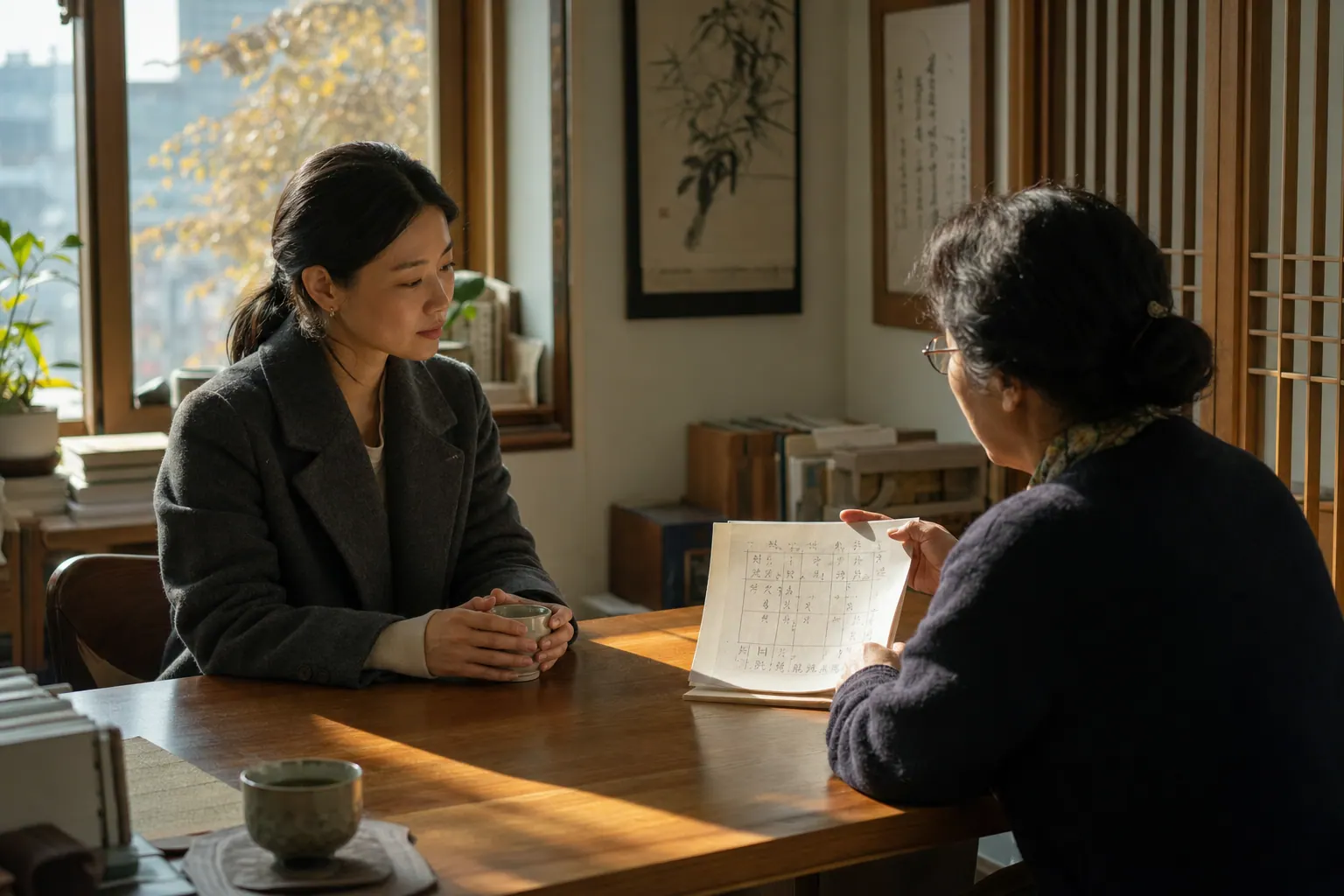
Roughly one in six readings this season came from someone weighing a career transition, usually out of stable but unrewarding work and toward something they cared about more. Sitting across from these visitors, the pattern was steadier than they expected. Their charts often supported the move, but placed the real reward two or three years past the leap, in a window they had not asked about because they were focused on the immediate risk. One woman leaving a corporate role to publish her own writing kept asking about next year. The reading pointed further out, to a later stretch where the same work finally paid, and her relief at hearing the direction confirmed was mixed with impatience at the wait. That mix is the ordinary shape of wealth luck as it lands in a real life.
If this issue leaves you anywhere, let it be with a little more patience for your own timing and a little less shame about a year that has not yet paid you back. The effort is being recorded even when the account looks empty. If you would like to know how the seasons sit in your own chart, and when your work is likely to turn into something you can keep, you are welcome to write in for a reading whenever you feel ready.
If this sounds like you
Read your own timing.
Start with a free mini reading. When you want the full picture, a certified Saju master writes your complete Four Pillars report.